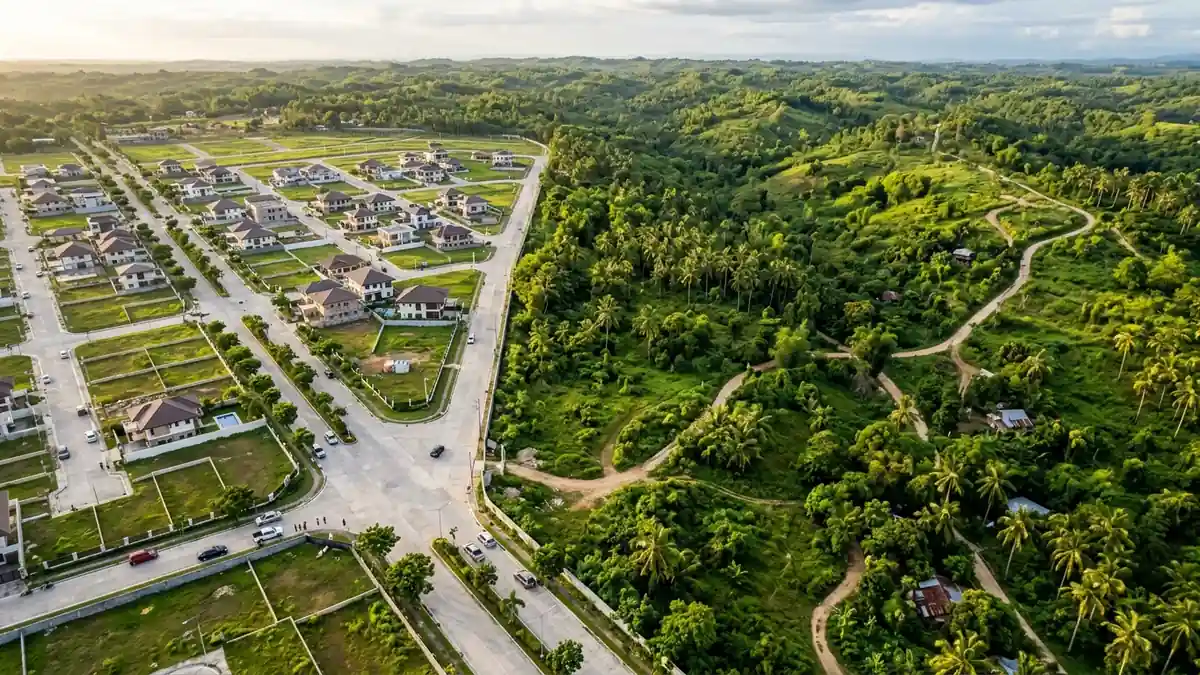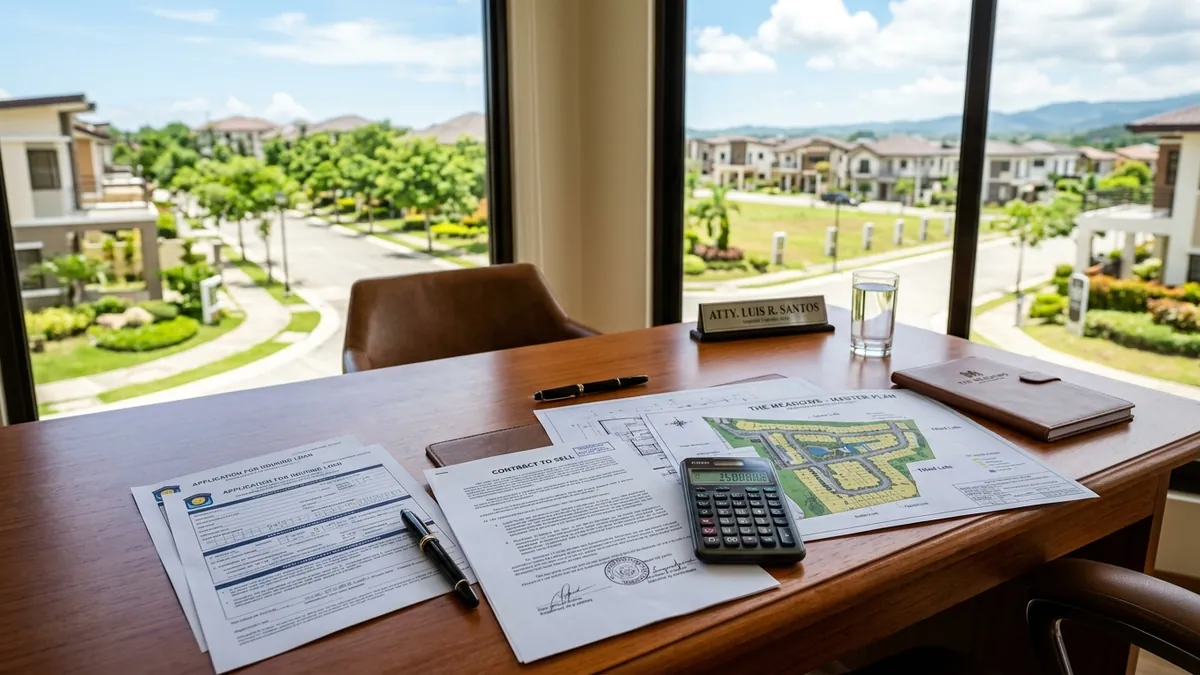
Yes. Former natural-born Filipino citizens who have acquired foreign citizenship and have not reacquired Philippine citizenship under Republic Act No. 9225 are legally permitted to acquire and own private land in the Philippines, subject to strict statutory area limits and mandatory disclosure rules. Under Batas Pambansa Blg. 185, a former natural-born citizen can acquire up to 1,000 square meters of urban land or 1 hectare (10,000 square meters) of rural land for residential dwelling. For commercial, business, or investment ventures, Republic Act No. 8179 expands these limits to a maximum of 5,000 square meters for urban land or 3 hectares (30,000 square meters) for rural land.
Every year, thousands of natural-born Filipinos naturalize as citizens of the United States, Canada, Australia, the United Kingdom, and European nations. While many assume that taking a foreign oath of allegiance forfeits all future rights to own Philippine soil, the 1987 Philippine Constitution provides an explicit constitutional exception under Article XII, Section 8. This exception ensures that former natural-born citizens maintain a legal pathway to purchase retirement homes, family estates, or commercial properties in their country of birth without having to immediately reacquire Philippine citizenship.
However, navigating conveyancing under Batas Pambansa Blg. 185 and Republic Act No. 8179 is substantially more complex than buying property as a resident Filipino or an RA 9225 dual citizen. The Registry of Deeds and the Land Registration Authority (LRA) enforce rigorous compliance checks. Buyers must execute a mandatory Sworn Statement of Landholding affirming their total past and current Philippine real estate holdings, submit verified proofs of former natural-born citizenship, and register restrictive covenants on the new Transfer Certificate of Title (TCT). As a licensed real estate appraiser and conveyancing practitioner handling provincial acquisitions across Ilocos Sur and Northern Luzon, I have structured this comprehensive guide to deconstruct the exact legal limits, sworn affidavit requirements, spousal titling rules, worked financial closing costs, and operational closing pipelines for former Filipino citizens worldwide.
Acquiring Philippine Property as a Former Filipino Citizen?
LandMaster Realty provides licensed, end-to-end land acquisition and title verification services across Ilocos Sur and Northern Luzon. We handle Registry of Deeds due diligence, LRA sworn landholding compliance, Hague apostille coordination, and BIR ONETT tax clearance for overseas expatriates.
1. Constitutional Foundation: Article XII, Section 8 of the 1987 Constitution
To grasp why former Filipino citizens are granted land acquisition rights when foreign nationals are completely barred, we must examine the constitutional architecture of the Republic of the Philippines.
The General Constitutional Prohibition on Foreign Freehold Land
The Philippines enforces one of the strictest constitutional regimes in the world regarding real property ownership. Under Article XII, Section 7 of the 1987 Philippine Constitution:
“Save in cases of hereditary succession, no private lands shall be transferred or conveyed except to individuals, corporations, or associations qualified to acquire or hold lands of the public domain.”
Because only citizens of the Philippines (or corporations with at least 60 percent Filipino equity) are qualified to acquire lands of the public domain, purely foreign nationals cannot purchase or hold direct freehold title to private land in the Philippines. Any contract attempting to transfer freehold title to an unqualified foreign national is void ab initio (void from the beginning) under Article 1409 of the Civil Code of the Philippines.
The Explicit Exception for Former Natural-Born Citizens
Immediately following the general prohibition, the framers of the Constitution recognized the enduring cultural, emotional, and economic ties between the Philippines and its expatriate sons and daughters. Article XII, Section 8 of the 1987 Constitution establishes a direct constitutional exception:
“Notwithstanding the provisions of Section 7 of this Article, a natural-born citizen of the Philippines who has lost his Philippine citizenship may be a transferee of private lands, subject to limitations provided by law.”
This provision is not self-executing. Instead, the Constitution delegates to the Philippine legislature the power to prescribe the specific area limitations, permitted uses, and procedural rules governing land acquisition. The legislature executed this mandate through two foundational statutes:
- Batas Pambansa Blg. 185 (BP 185): Enacted on March 16, 1982, governing the acquisition of private land for residential dwelling purposes.
- Republic Act No. 8179 (RA 8179): Enacted on March 28, 1996, amending Republic Act No. 7042 (The Foreign Investments Act of 1991), governing the acquisition of private land for commercial, business, tourism, or other productive investment purposes.
Who Qualifies as a Natural-Born Filipino Citizen?
The statutory privileges granted under BP 185 and RA 8179 are strictly reserved for natural-born citizens who subsequently lost their Philippine citizenship. They do not extend to naturalized Filipino citizens who subsequently renounced their status, nor do they extend to foreign-born individuals who never possessed Philippine citizenship from birth.
Under Article IV, Section 2 of the 1987 Philippine Constitution, natural-born citizens are defined as:
- Individuals who are citizens of the Philippines from birth without having to perform any act to acquire or perfect their Philippine citizenship.
- Those who were born before January 17, 1973, of Filipino mothers, and who elected Philippine citizenship upon reaching the age of majority pursuant to the 1935 Constitution.
If you were born in the Philippines to at least one Filipino parent (under the principle of jus sanguinis), or born abroad to a Filipino mother or father, you were a natural-born Filipino at birth. Even if you subsequently naturalized as a citizen of the United States, Canada, Australia, Japan, or any other foreign state, your historical status as a natural-born Filipino remains permanently etched in Philippine civil records. It is this historical status that entitles you to exercise land acquisition rights under BP 185 and RA 8179.
Former Citizens vs Dual Citizens Under RA 9225
One of the most persistent sources of confusion in Philippine real estate is the distinction between a former Filipino citizen and a dual citizen. Understanding this distinction is essential before negotiating any purchase:
- Dual Citizen (Under Republic Act No. 9225): A natural-born Filipino who naturalized abroad, but subsequently took the formal Philippine Oath of Allegiance before the Bureau of Immigration or a Philippine Consulate. Upon taking this oath, their Philippine citizenship is fully restored. Under Section 5 of RA 9225, dual citizens enjoy 100 percent full civil and property rights, meaning they can acquire unlimited land across all categories (residential, commercial, industrial, agricultural) with zero statutory area limits. For a complete deconstruction of this status, review our comprehensive practitioner guide on buying land in the Philippines as a dual citizen under RA 9225.
- Former Filipino Citizen (Under BP 185 / RA 8179): A natural-born Filipino who naturalized abroad and has not reacquired Philippine citizenship. They travel strictly on a foreign passport, do not possess a Bureau of Immigration Identification Certificate of dual citizenship, and are recognized under Philippine law as foreign nationals who enjoy special statutory land acquisition privileges capped at specific urban and rural square meter limits.
If you prefer not to undergo the formal citizenship reacquisition process under RA 9225, or if your foreign country of citizenship restricts dual nationality, the provisions of BP 185 and RA 8179 provide your legal bridge to owning Philippine land.
2. Batas Pambansa Blg. 185: Residential Land Ownership Limits
Batas Pambansa Blg. 185 is the primary governing statute for former natural-born Filipino citizens seeking to buy residential land in the Philippines. The law was designed to enable expatriate Filipinos to acquire land for a personal home, vacation villa, or retirement residence.
Statutory Area Ceilings: Urban vs Rural Land
Section 2 of BP 185 establishes strict maximum area ceilings based on whether the land is classified as urban or rural:
| Land Classification | Maximum Allowable Area (BP 185) | Equivalent Measurements | Permitted Statutory Use |
|---|---|---|---|
| Urban Land | 1,000 square meters | 0.10 hectare / 10,764 square feet | Exclusively for residential dwelling purposes |
| Rural Land | 10,000 square meters (1 hectare) | 10,000 sq.m. / 2.471 acres | Exclusively for residential dwelling purposes |
Urban vs Rural Classification Criteria
A frequent trap for foreign buyers is assuming that “urban” refers only to Metro Manila and “rural” refers to the provinces. Under Philippine law, that assumption is legally incorrect and can lead to immediate rejection by the Registry of Deeds.
Under Section 2(b) of BP 185, urban land is defined pursuant to the rules established by the National Coordinating Council (now overseen by the Department of Human Settlements and Urban Development, DHSUD) and local government zoning ordinances. A parcel is legally classified as urban if it meets any of the following criteria:
- It is located within a chartered city or municipal poblacion (town center) with a population density of at least 1,000 persons per square kilometer.
- It is located within a duly approved residential subdivision, master-planned community, or commercial district approved by the local Sanggunian and DHSUD.
- It is designated as an Urban Zone or Residential Zone (R-1, R-2, R-3) under the municipality’s Comprehensive Land Use Plan (CLUP) and Zoning Ordinance, regardless of whether the municipality is provincial.
- The area exhibits urban infrastructure, such as paved road networks, street lighting, public water distribution systems, and direct access to civic and commercial establishments.
Conversely, land is classified as rural if it lies outside designated urban zones, town centers, and residential subdivisions, and is predominantly agrarian, forestal, or open countryside. When purchasing land in provincial locations such as Ilocos Sur, whether in Vigan City, Bantay, San Juan, or Magsingal, the definitive classification is established by the Zoning Certificate issued by the Municipal Planning and Development Coordinator (MPDC) or City Planning and Development Office (CPDO). Before executing a purchase contract, our team verifies this classification to ensure the parcel does not exceed the applicable statutory ceiling.
The Exclusive Residential Use Requirement
Section 2 of BP 185 mandates that the land acquired must be used exclusively for residential purposes. The buyer must intend to establish a dwelling for themselves and their immediate family. The statute imposes several explicit operational rules:
- No Commercial Leasing: You cannot purchase land under BP 185 and construct commercial apartment buildings, retail strip malls, hotels, or rental warehousing complexes. Generating commercial rental income from BP 185 land violates the statutory condition under which title was granted.
- Requirement to Establish Residence: Under Section 6 of BP 185, the transferee must use the land for residential purposes within two years from the date of registration of the deed in the Registry of Deeds. If the buyer fails to use the land for residential purposes, the Philippine government, through the Office of the Solicitor General, has the statutory authority to initiate reversion proceedings to forfeit the land back to the State.
- Future Disposition: Once acquired, a former Filipino citizen may sell, donate, or mortgage the land, provided any subsequent conveyance complies with constitutional restrictions. If sold, it can be transferred to a qualified Filipino citizen, another qualified former citizen (subject to their own caps), or an authorized Philippine corporate entity.
The Multiple Parcels and Aggregation Rule
A former Filipino citizen is not restricted to purchasing a single isolated lot, provided the combined aggregate area across all parcels does not exceed the statutory ceiling. Section 3 of BP 185 provides explicit rules on aggregation:
- Single Category Constraint: A transferee may acquire not more than two lots, which may be situated in different municipalities or cities, provided that the total area of all lots does not exceed 1,000 square meters for urban land or 10,000 square meters for rural land.
- No Urban and Rural Mixing: A former citizen who has acquired urban residential land cannot subsequently acquire rural residential land under BP 185, and vice versa. You must elect either urban residential or rural residential. For example, if you purchase a 400-square-meter urban lot in Vigan City, you may purchase an additional 600-square-meter urban lot in another municipality. However, you cannot hold 400 square meters of urban land and also purchase 5,000 square meters of rural land under BP 185.
- Nationwide Aggregation: The area ceiling is cumulative across the entire Philippine territory. You cannot acquire 1,000 square meters in Ilocos Sur, another 1,000 square meters in Cebu, and another 1,000 square meters in Davao. The Land Registration Authority (LRA) maintains nationwide computerized title records through the Philippine Land Registration Information System (PhilRIS). When you submit your mandatory Sworn Statement of Landholding, the system cross-references your identity to ensure your total national landholdings remain strictly within the statutory cap.
3. Republic Act No. 8179: Commercial and Investment Land Ownership Limits
For former natural-born Filipino citizens seeking to establish a business, launch an agro-industrial enterprise, build a private resort, or invest in commercial real estate, Batas Pambansa Blg. 185 is inadequate due to its strict residential restriction and 1,000 square meter urban ceiling. To accommodate commercial investment, the Philippine Congress enacted Republic Act No. 8179.
Statutory Framework under the Foreign Investments Act
Republic Act No. 8179, approved on March 28, 1996, amended Section 10 of Republic Act No. 7042 (The Foreign Investments Act of 1991). The law explicitly recognizes the vital contribution that overseas Filipinos can make to national economic growth and job creation by allowing former natural-born citizens to acquire private land for business and productive purposes.
Statutory Area Ceilings for Commercial Land
Section 10 of RA 8179 establishes significantly higher area limits than BP 185:
| Land Classification | Maximum Allowable Area (RA 8179) | Equivalent Measurements | Permitted Statutory Use |
|---|---|---|---|
| Urban Commercial Land | 5,000 square meters | 0.50 hectare / 53,820 square feet | Commercial, industrial, tourism, service, or productive business use |
| Rural Commercial Land | 30,000 square meters (3 hectares) | 3.00 hectares / 7.413 acres | Agro-industrial, agricultural, tourism, eco-farm, or manufacturing use |
Permitted Business and Productive Uses
Unlike BP 185, which restricts land strictly to personal residential dwellings, land acquired under RA 8179 must be devoted to business or productive activities. Permitted uses include:
- Commercial and Retail Establishments: Office buildings, retail shopping complexes, restaurants, warehousing facilities, and commercial rental spaces.
- Hospitality and Tourism: Boutique hotels, beach resorts, bed-and-breakfast lodges, eco-tourism retreats, and event venues.
- Manufacturing and Industrial: Processing plants, fabrication workshops, food packaging facilities, and logistics depots.
- Agro-Industrial and Farming: Commercial poultry farms, piggery operations, fruit plantations, and aquaculture fish ponds, subject to the retention limits of the Comprehensive Agrarian Reform Program (CARP) under Republic Act No. 6657. For detailed rules on agricultural acreage, consult our legal breakdown of buying agricultural land and CARP rules in the Philippines.
- Professional Services: Medical clinics, diagnostic centers, dental facilities, architecture studios, and technical consultancy offices.
Special Regulatory Requirements under RA 8179
Acquiring land under RA 8179 entails specific regulatory compliance that does not apply to simple residential lots:
- Commercial Purpose Representation: In the Deed of Absolute Sale and the accompanying Sworn Statement, the buyer must certify under oath the specific business enterprise or commercial activity for which the land will be utilized.
- Local Business Licensing: The buyer must demonstrate an active commitment to business operations by securing a Mayor’s Business Permit from the local government unit (LGU) and registering the business name with the Department of Trade and Industry (DTI) for sole proprietorships or the Securities and Exchange Commission (SEC) for corporate structures.
- Reversion Risk for Non-Use: If the land ceases to be used for the declared commercial or business purpose, or if the buyer fails to establish the commercial activity within the designated development timeframe, the land becomes subject to statutory reversion proceedings pursuant to the Foreign Investments Act rules.
Can You Own Both BP 185 Residential Land and RA 8179 Commercial Land?
One of the most frequent legal inquiries from overseas investors is whether a former Filipino citizen can hold both a residential property under BP 185 and a commercial property under RA 8179. The answer under Philippine administrative and statutory law is yes.
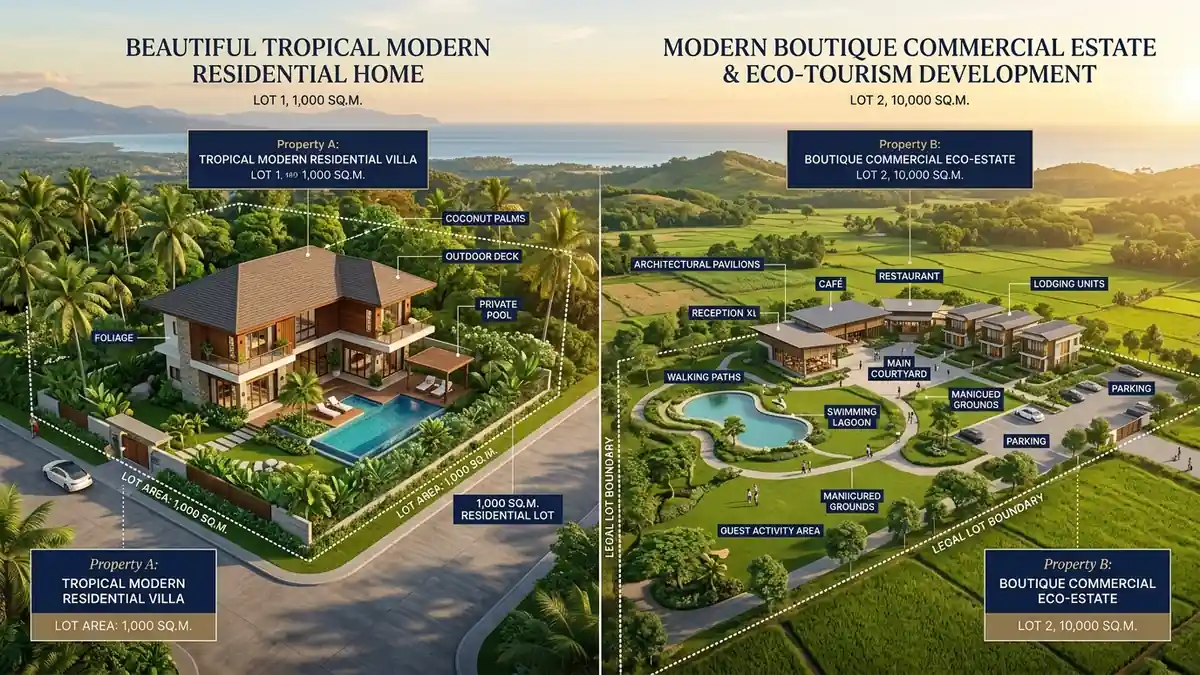
Batas Pambansa Blg. 185 and Republic Act No. 8179 serve distinct statutory purposes. BP 185 is governed by Article XII, Section 8 of the Constitution for personal dwelling, while RA 8179 is an economic investment incentive enacted under the Foreign Investments Act. Consequently, a former Filipino citizen may acquire a residential lot of up to 1,000 square meters in an urban area (or 1 hectare in a rural area) under BP 185, and separately acquire up to 5,000 square meters of urban land (or 3 hectares of rural land) under RA 8179 for an active commercial business enterprise.
However, the buyer must maintain separate documentation dockets for each transaction. The Registry of Deeds will require a distinct Sworn Statement for the residential purchase affirming compliance with BP 185, and an independent Sworn Statement and business plan for the commercial acquisition affirming compliance with RA 8179.
4. Master Comparison Matrix: BP 185 vs RA 8179 vs RA 9225 Dual Citizens
To assist former Filipino citizens, family members, and real estate advisors in evaluating their acquisition options, the following comparison matrix outlines property ownership rights, legal ceilings, and documentary requirements across all three relevant categories:
| Legal Parameter | Former Citizen: BP 185 (Residential) | Former Citizen: RA 8179 (Commercial) | Dual Citizen: RA 9225 (Reacquired) |
|---|---|---|---|
| Governing Law | Batas Pambansa Blg. 185 | Republic Act No. 8179 / RA 7042 | Republic Act No. 9225 |
| Urban Area Limit | Maximum 1,000 square meters | Maximum 5,000 square meters | No Limit (Unlimited freehold) |
| Rural Area Limit | Maximum 10,000 sq.m. (1 hectare) | Maximum 30,000 sq.m. (3 hectares) | No Limit (Unlimited freehold) |
| Permitted Use | Strictly personal residential dwelling | Commercial, industrial, tourism, agriculture | Any lawful purpose (residential, commercial, industrial, agricultural) |
| Multiple Lots Allowed? | Maximum 2 lots in different cities/towns up to the aggregate area ceiling | Multiple lots allowed provided the aggregate area does not exceed the ceiling | Unlimited number of parcels across multiple provinces |
| Urban and Rural Mixing? | Strictly prohibited (Must choose either urban or rural) | Must not exceed aggregate economic ceilings | Fully permitted without restriction |
| Spousal Aggregate Cap | Joint total of both former-citizen spouses cannot exceed 1,000 sqm urban / 1 ha rural | Joint total cannot exceed 5,000 sqm urban / 3 ha rural | No spousal area ceiling applies |
| Mandatory Landholding Affidavit | Required (Sworn Statement of Landholding under BP 185) | Required (Sworn Statement of Business Purpose under RA 8179) | Not required (Exempt from landholding affidavits) |
| Registry of Deeds Notation | TCT carries express notation restricting use to BP 185 residential dwelling | TCT carries notation restricting use to RA 8179 commercial activity | Clean, unrestricted TCT with standard Torrens notations |
| Agricultural / Farm Land | Only up to 1 hectare rural, strictly for residential use | Up to 3 hectares rural for agro-business, subject to CARP 5-ha retention limit | Subject only to standard CARP 5-hectare agricultural retention limits |
What Happens to Land You Owned Before Losing Philippine Citizenship?
A critical legal principle that provides immense peace of mind to overseas Filipinos is the rule governing land acquired prior to foreign naturalization. Many Filipinos purchase houses, agricultural lots, or ancestral properties in the Philippines while still holding Philippine passports, and subsequently migrate abroad and acquire foreign citizenship.
Under established Philippine jurisprudence and rulings of the Department of Justice (DOJ Opinion No. 27, Series of 1984), land validly acquired by an individual while they were still a Filipino citizen remains their lawful freehold property after foreign naturalization. The law does not require you to sell, divest, or forfeit real estate that you lawfully acquired when you were a Philippine citizen.
Furthermore, land you already owned as a Filipino citizen does not count against your BP 185 or RA 8179 area ceilings. If you owned a 2,000-square-meter residential lot in Ilocos Sur before naturalizing as a foreign citizen, you remain the 100 percent registered owner of that lot. In addition, you retain the independent right under BP 185 to acquire a new residential parcel of up to 1,000 square meters in an urban area or up to 1 hectare in a rural area. When completing your Sworn Statement of Landholding, you must disclose your pre-naturalization landholdings, noting that they were acquired while still a Philippine citizen.
Condominium Ownership Rights Under Republic Act No. 4726
Former natural-born Filipino citizens should also recognize an important alternative to raw land acquisition: condominium units. Under Republic Act No. 4726 (The Condominium Act of 1966), ownership of a condominium unit is held through shares of stock in a Condominium Corporation that owns the underlying land.
Section 5 of the Condominium Act allows foreign nationals and former Filipino citizens alike to purchase 100 percent freehold ownership of individual condominium units, provided that at least 60 percent of the total units in the condominium project are owned by Filipino citizens. Because a condominium unit represents ownership of airspace and corporate equity rather than direct land title, condominium acquisitions do not count against your BP 185 or RA 8179 land limits. You can own multiple condominium units in Metro Manila or provincial centers, and still purchase your maximum allowable 1,000 square meters of urban land under BP 185.
5. Spousal Rules: Married Former Citizens and Foreign Spouses
Property acquisitions by overseas Filipinos frequently involve complex spousal dynamics. Whether both spouses are former Filipinos, or a former Filipino is married to a purely foreign national, Philippine family and property laws enforce precise titling rules.
Scenario A: Both Spouses are Former Natural-Born Filipino Citizens
When husband and wife are both former natural-born citizens of the Philippines, Section 3 of Batas Pambansa Blg. 185 establishes a strict rule of spousal aggregation:
- Single Combined Ceiling: In the case of married couples where both spouses are former natural-born citizens, one of them may acquire the property, or each of them may acquire separate parcels, provided that the total combined area does not exceed the statutory ceiling of 1,000 square meters for urban land or 10,000 square meters for rural land.
- Anti-Circumvention Rule: A husband cannot acquire 1,000 square meters of urban land in his name while his wife acquires another 1,000 square meters of urban land in her name. The Registry of Deeds treats married former-citizen couples as a single economic unit for the purposes of statutory area limitations. When filing the Sworn Statement of Landholding, each spouse must declare all real property acquired by the other spouse.
- Commercial Acquisitions under RA 8179: The same aggregate cap applies to commercial acquisitions under RA 8179. The total land acquired by both spouses for business purposes cannot exceed 5,000 square meters in urban areas or 3 hectares in rural areas.
Scenario B: One Spouse is a Former Filipino and the Other is a Purely Foreign National
This is the most common scenario encountered among overseas Filipino communities: a former natural-born Filipino citizen (for example, a naturalized US citizen) is married to an American, Canadian, Australian, or European spouse who has never possessed Philippine blood.
Under the landmark Supreme Court ruling in Cheesman v. Intermediate Appellate Court (G.R. No. 74833, January 21, 1991), the constitutional prohibition against foreign land ownership is absolute. A foreign national who has never held Philippine citizenship cannot acquire freehold title to Philippine land, even if the purchase funds were entirely supplied by the foreign spouse.
The operational rules governing this scenario are strict:
- Sole Registered Ownership: The Deed of Absolute Sale and the resulting Transfer Certificate of Title (TCT) must be issued exclusively in the name of the former Filipino citizen spouse. The foreign spouse cannot be listed as a co-owner, joint tenant, or tenant-in-common.
- Descriptive Marital Wording: The title will be inscribed as: “Maria Santos, American citizen, former natural-born Filipino citizen, married to John Smith, American citizen”. The phrase “married to John Smith” is merely descriptive of Maria Santos’s civil status under Philippine conveyancing practice. It does not vest any proprietary or beneficial ownership interest in John Smith.
- Waiver of Spousal Rights: To prevent future title registration objections from the Registry of Deeds, prudent conveyancing practice requires the foreign spouse to execute a notarized (and consularized/apostilled) Affidavit of Acknowledgment and Waiver. In this instrument, the foreign spouse explicitly acknowledges that the land is being acquired solely by the former Filipino spouse pursuant to BP 185, that the foreign spouse acquires no ownership rights over the land, and that all real property rights reside exclusively with the former Filipino spouse.
- Protection Against Recovery Claims: In Frenzel v. Catolico (G.R. No. 98494) and Matthews v. Taylor (G.R. No. 164584), the Supreme Court reiterated that a foreign national who finances the purchase of land registered in the name of a Filipino or former Filipino spouse cannot subsequently claim reimbursement, recover the purchase money, or seek partition in the event of legal separation or divorce. The constitutional ban overrides equity and spousal property regimes.
Inheritance and Succession Rights for Foreign Spouses and Children
What happens if the former Filipino citizen passes away while holding land acquired under BP 185 or RA 8179? How are the surviving foreign spouse and foreign-born children protected?
Recall Article XII, Section 7 of the Constitution: “Save in cases of hereditary succession, no private lands shall be transferred or conveyed except to individuals… qualified to hold lands of the public domain.”
The key phrase is “Save in cases of hereditary succession”. This constitutional exception guarantees that foreign nationals, including a surviving foreign spouse and foreign-born children, may lawfully inherit Philippine private land through intestate succession (legal inheritance under the Civil Code of the Philippines):
- Intestate Succession (Without a Will): If the former Filipino citizen dies without a will, the surviving foreign spouse and legitimate children are designated as compulsory heirs under Articles 887, 996, and 1001 of the Civil Code. Under the constitutional exception, they inherit their lawful hereditary shares in the property, and the Registry of Deeds will issue an updated title reflecting their inherited interests.
- Testamentary Succession (With a Will): If the deceased executes a Last Will and Testament, they may bequeath the land to their compulsory foreign heirs up to the legal legitime mandated by Philippine law. However, they cannot use a will to bequeath land to an unrelated foreign national or exceed statutory legitimes, as that would constitute an evasion of the constitutional prohibition.
- Subsequent Conveyance: Although a foreign spouse or foreign child may hold inherited land, they face a critical constraint when disposing of it: they cannot sell or transfer the land to another foreign national. Any future sale or conveyance must be made to a qualified Filipino citizen, an RA 9225 dual citizen, or another qualified entity.
6. Mandatory Documentary Docket and Registry of Deeds Requirements
Conveyancing under Batas Pambansa Blg. 185 and Republic Act No. 8179 requires a specialized documentary docket. When a deed is presented to the Registry of Deeds, examiners must verify that the buyer is indeed a former natural-born Filipino citizen and that the parcel does not breach statutory area ceilings.
The Complete Documentary Checklist
To successfully register a Transfer Certificate of Title (TCT) under BP 185 or RA 8179, your attorney-in-fact or conveyancing specialist must submit the following mandatory instruments to the Registry of Deeds and the Bureau of Internal Revenue (BIR):
- Deed of Absolute Sale: Public notarial instrument containing the exact statutory recital of the buyer’s status as a former natural-born citizen, foreign passport details, and specific statutory invocation of BP 185 or RA 8179.
- Proof of Natural-Born Philippine Citizenship:
- PSA Authenticated Birth Certificate showing birth in the Philippines to Filipino parents, or
- Expired Philippine Passport issued prior to foreign naturalization, or
- Bureau of Immigration Certificate of Natural-Born Status.
- Proof of Foreign Citizenship:
- Certified True Copy of valid foreign passport (e.g., US, Canadian, Australian passport).
- Certificate of Foreign Naturalization, or oath document establishing the date foreign citizenship was acquired.
- Sworn Statement of Landholding (Affidavit of Landholding): Notarized sworn statement executed by the buyer pursuant to Section 2 of BP 185 or Section 10 of RA 8179.
- Special Power of Attorney (SPA): If the buyer is executing documents from abroad, a formal SPA authorizing a trusted representative in the Philippines, authenticated via the Hague Apostille Convention.
- Zoning Certification: Issued by the Municipal Planning and Development Coordinator (MPDC) certifying whether the land is classified as urban or rural.
- BIR Electronic Certificate Authorizing Registration (eCAR): Official clearance proving that Capital Gains Tax and Documentary Stamp Tax have been fully paid.
- Real Property Tax Clearance: Issued by the Municipal Treasurer certifying that all local amilyar taxes are current.
- Transfer Tax Official Receipt: Issued by the Provincial or City Treasurer proving settlement of the local transfer tax under Section 135 of the Local Government Code.
Anatomy of the Mandatory Sworn Statement of Landholding
The Sworn Statement of Landholding is the cornerstone legal document required by the Land Registration Authority under Section 2 of BP 185. Without this affidavit, the Registry of Deeds will immediately suspend registration. The affidavit must be executed under oath and must contain the following statutory declarations:
Mandatory Statutory Declarations in the BP 185 Affidavit:
- Declaration of Former Natural-Born Status: A statement that the affiant was born a Filipino citizen, specifying the date and place of birth, parents’ names and nationalities at birth, and the foreign country and date of subsequent naturalization.
- Comprehensive Landholding Inventory: A complete, itemized disclosure of all real property previously acquired and currently owned in the Philippines by the affiant and their spouse. For each parcel, the statement must list the TCT number, registered location (Barangay, Municipality, Province), area in square meters, and whether it is urban or rural. If no prior land is owned, an explicit negative declaration must be made.
- Area Ceiling Compliance Affirmation: A formal certification under oath that the parcel being acquired, together with all existing landholdings, does not exceed the statutory ceiling of 1,000 square meters for urban land or 10,000 square meters for rural land.
- Declaration of Intended Use: An express sworn undertaking that the land will be utilized exclusively for the affiant’s residential dwelling and family home pursuant to BP 185.
- Civil Liability and Reversion Clause: An acknowledgment that any material misstatement or false declaration will subject the affiant to criminal prosecution for perjury under Article 183 of the Revised Penal Code, and will render the land subject to reversion proceedings in favor of the Republic of the Philippines.
Remote Notarization and the Hague Apostille Convention
The vast majority of former Filipino citizens reside abroad while negotiating property purchases in the Philippines. Prior to May 14, 2019, any legal document executed overseas had to be physically brought to a Philippine Embassy or Consulate for authentication (the traditional “red ribbon” consularization).
On May 14, 2019, the Philippines formally acceded to the Hague Apostille Convention. This reform dramatically simplifies closing workflows for overseas buyers:
- Local Notary Public Abroad: You can take your Special Power of Attorney and Sworn Statement of Landholding to any local notary public in your home city (e.g., in California, New York, Ontario, Sydney, or London).
- Apostille Certificate: Once notarized, you submit the document to the designated state or national competent authority (such as the Secretary of State in the US, or the Department of Foreign Affairs and Trade in Australia) to receive an official Apostille Certificate.
- Direct Legal Validity: Once apostilled, the document is directly recognized and accepted by the Registry of Deeds, BIR, and Philippine courts without requiring consular authentication at a Philippine Embassy.
- For complete instructions on drafting and apostilling power-of-attorney documents, review our step-by-step guide on Special Power of Attorney for OFW and overseas property transfers.
Securing a Philippine Tax Identification Number (BIR Form 1904)
To transfer real property in the Philippines, both buyer and seller must have active Philippine Tax Identification Numbers (TINs). Foreign passport holders often mistakenly believe they cannot obtain a Philippine TIN without being a resident.
Under BIR Revenue Memorandum Order No. 37-2019, non-resident foreign nationals and former Filipino citizens engaging in one-time real estate transactions are authorized to secure a TIN by filing BIR Form 1904 (Application for Registration for One-Time Taxpayer) with Revenue District Office (RDO) No. 39 or the specific RDO having jurisdiction over the property’s location. The application is supported by a copy of the foreign passport and a notarized/apostilled SPA. Our conveyancing team routinely processes BIR Form 1904 registrations for overseas clients prior to closing.
7. Worked Financial Model: Total Purchase Taxes and Closing Costs in Ilocos Sur
Accurate financial planning is essential when acquiring land in the Philippines. Transaction taxes and administrative fees are governed by the National Internal Revenue Code (NIRC), the Local Government Code of 1991, and the Land Registration Authority graduated fee schedules.
Transaction Scenario: 2,500,000 PHP Titled Residential Lot
To provide a clear, real-world financial picture, let us examine a typical provincial acquisition managed by our firm: a titled residential lot situated in a developing community in Ilocos Sur with an agreed purchase price of 2,500,000 PHP. Assume the parcel measures 600 square meters (well within the 1,000 sqm urban ceiling of BP 185) and has a BIR Zonal Value of 3,500 PHP per square meter (total Zonal Value: 2,100,000 PHP). Because the agreed contract price (2,500,000 PHP) is higher than the zonal valuation (2,100,000 PHP), all national and local taxes are computed against the higher gross selling price of 2,500,000 PHP.
| Expense Category | Statutory Basis / Rate | Mandatory Payer by Law | Computed Amount (PHP) | Customary Market Allocation |
|---|---|---|---|---|
| Capital Gains Tax (CGT) | 6.0% of Gross Selling Price (NIRC Sec. 24D) | Seller | 150,000 PHP | Paid by Seller from sales proceeds |
| Documentary Stamp Tax (DST) | 1.5% of Gross Selling Price (NIRC Sec. 196) | Buyer / Transferee | 37,500 PHP | Paid by Buyer |
| Local Transfer Tax | 0.50% of Selling Price (RA 7160 Sec. 135) | Buyer | 12,500 PHP | Paid by Buyer to Provincial/City Treasurer |
| LRA Registration Fee | LRA Graduated Fee Schedule (Circular 2007-02) | Buyer | 13,420 PHP | Paid by Buyer to Registry of Deeds |
| IT & Computerization Fees | LRA PhilRIS Electronic Processing Fee | Buyer | 980 PHP | Paid by Buyer to Registry of Deeds |
| Legal and Notarial Fees | 1.0% to 1.5% of Contract Price | Shared / Customary | 25,000 PHP | Customarily negotiated between parties |
| Zoning & Assessor Fees | MPDC Zoning & Assessor Inspection | Buyer | 2,500 PHP | Paid by Buyer to Municipal Hall |
| Hague Apostille & Courier | State Apostille Fees & International Courier | Buyer | 10,500 PHP | Incurred abroad by Buyer |
| Total Transaction Closing Costs | Combined National, Local, and Processing | All Parties | 252,400 PHP | Total closing fees for title conveyance |
Net Cash Outlay for the Buyer
In standard Philippine conveyancing practice, unless explicitly negotiated otherwise, the seller is responsible for paying the 6 percent Capital Gains Tax (150,000 PHP). The buyer is responsible for the Documentary Stamp Tax, local transfer tax, Registry of Deeds registration fees, and professional conveyancing representation.
Under this standard allocation, the buyer’s net transaction expenses total:
- Documentary Stamp Tax (1.5%): 37,500 PHP
- Provincial Transfer Tax (0.50%): 12,500 PHP
- LRA Registration and PhilRIS IT Fees: 14,400 PHP
- Notarial, Zoning, and Assessor Clearances: 27,500 PHP
- Apostille and Documentation Authentication: 10,500 PHP
- Total Buyer Closing Costs: 102,400 PHP (Approximately 4.1 percent of the purchase price)
When combined with the base purchase price of 2,500,000 PHP, the buyer requires a total capital outlay of 2,602,400 PHP to acquire the property and hold a newly minted Transfer Certificate of Title registered under their name. For a deeper breakdown of comparative transfer costs across different conveyancing structures, consult our detailed resource on transfer of title costs in the Philippines.
8. Step-by-Step Acquisition and Conveyancing Protocol
Executing a real estate acquisition in the Philippines from overseas requires an orderly, systematic operational pipeline. Over decades of provincial land conveyancing, LandMaster Realty has refined this 5-stage protocol to protect overseas buyers against fraud, legal defects, and administrative delays.
Phase 1: Due Diligence and Title Verification
Before transferring any earnest money or signing a binding agreement, you must conduct exhaustive forensic due diligence on the property:
- LRA Certified True Copy: Obtain an original, newly issued Certified True Copy (CTC) of the Transfer Certificate of Title directly from the Registry of Deeds through the LRA PhilRIS system. Never rely on photocopies provided by the seller or unregistered agents.
- Memorandum of Encumbrances Audit: Examine the back of the title for annotations, such as adverse claims, lis pendens (pending litigation), mortgage liens, tax liens, or Section 4 Rule 74 two-year inheritance liabilities. Learn how to decipher these critical annotations in our practical guide on how to read a title memorandum of encumbrances.
- Assessor Verification: Cross-check the title against the official Tax Declaration at the Municipal Assessor’s Office to verify that the assessed boundaries, property classification, and lot numbers match the Torrens title perfectly. Understand the vital differences between local tax declarations and Torrens titles in our guide on tax declaration vs land title in the Philippines.
- Zoning Verification (MPDC): Secure an official Zoning Certification from the Municipal Planning and Development Office to confirm whether the parcel is designated as urban or rural.
- On-Site Boundary Relocation Survey: Engage a licensed Geodetic Engineer to conduct a boundary relocation survey. The engineer will locate the concrete boundary monuments (mojons) and verify that the physical boundaries match the technical description on the title, ensuring zero road encroachments or neighbor boundary disputes. Review our practitioner manual on property boundary surveys and mojon relocation in the Philippines.
Phase 2: Remote Consular Execution of Apostilled Instruments
Once due diligence confirms that the title is clean and the seller holds undisputed legal authority to convey, the overseas buyer prepares the mandatory execution instruments:
- Drafting the Special Power of Attorney (SPA): The SPA must specifically name your appointed attorney-in-fact in the Philippines and enumerate express powers under Articles 1874 and 1878 of the Civil Code, including the power to negotiate, sign deeds of sale, pay taxes, and accept title on your behalf.
- Drafting the BP 185 Sworn Statement of Landholding: Your legal advisor prepares the affidavit incorporating the full landholding disclosure, former natural-born status, and intended residential use.
- Notarization and Apostille Abroad: The buyer executes the SPA and Sworn Statement before a local notary public in their home country, and secures the official Apostille Certificate from the state or national authority. The original documents are then dispatched to the Philippines via secure international courier.
Phase 3: Deed of Absolute Sale Execution and Tax Clearances
Upon receipt of the apostilled instruments in the Philippines, the conveyancing specialist proceeds with contract execution:
- Deed Drafting: The Deed of Absolute Sale is drafted, incorporating the exact descriptive recital of the buyer as a former natural-born citizen under BP 185, together with passport identification and the seller’s spousal consent. Ensure your contract complies with all statutory requirements outlined in our guide on deed of absolute sale requirements in the Philippines.
- Notarization in the Philippines: The seller and the buyer’s attorney-in-fact sign the Deed before a duly commissioned Philippine Notary Public, who records the transaction in their Notarial Register.
- Local Clearances: Secure the Real Property Tax Clearance and Tax Declaration from the Municipal Assessor and Treasurer.
Phase 4: BIR ONETT eCAR Issuance
Tax compliance is the most heavily scrutinized stage of Philippine conveyancing. Under Section 58 of the National Internal Revenue Code, the Registry of Deeds cannot register a deed without a validated Electronic Certificate Authorizing Registration (eCAR) issued by the Bureau of Internal Revenue:
- Filing Tax Returns: Within 30 days of notarization, file BIR Form 1706 (Capital Gains Tax Return) and pay the 6 percent CGT. Within 5 days following the month of notarization, file BIR Form 2000-OT and pay the 1.5 percent Documentary Stamp Tax.
- Submitting the ONETT Docket: Submit the complete dossier to the BIR Revenue District Office (RDO), including the notarized Deed, apostilled SPA, apostilled Sworn Statement of Landholding, Certified True Copies of the Title and Tax Declaration, and official tax payment receipts.
- eCAR Issuance: Once the BIR ONETT team verifies tax settlement and document authenticity, the Revenue District Officer issues the official eCAR with a unique barcode and verification credentials.
Phase 5: Registry of Deeds Registration and Assessor Transfer
With the BIR eCAR secured, the final conveyancing phase transfers legal ownership:
- Settling Local Transfer Tax: Pay the 0.50 percent local transfer tax to the Provincial or City Treasurer, who issues the official Transfer Tax Receipt and stamps the deed.
- Submission to Registry of Deeds: Submit the entire docket (Deed, eCAR, Tax Clearance, Transfer Tax Receipt, Owner’s Duplicate Title, apostilled SPA, and apostilled Sworn Statement of Landholding) to the Registry of Deeds.
- Title Cancellation and Issuance: The Registry of Deeds cancels the seller’s old title and issues a brand-new Transfer Certificate of Title (TCT) in the name of the buyer, inscribed with the mandatory notation citing Batas Pambansa Blg. 185.
- Municipal Assessor Transfer: The new TCT is brought to the Municipal Assessor’s Office. The Assessor cancels the seller’s old Tax Declaration and issues a new Tax Declaration under the buyer’s name, finalizing complete ownership transfer across all levels of Philippine government. Master this final step in our guide on how to transfer a tax declaration at the assessor office.
9. Common Pitfalls and Legal Traps for Former Filipino Land Buyers
Purchasing land in the Philippines while residing overseas presents distinct legal risks. Awareness of the most frequent traps enables former Filipino citizens to protect their investments and avoid catastrophic disputes.
Pitfall 1: Exceeding Statutory Ceilings Across Multiple Municipalities
Some overseas buyers mistakenly believe that buying parcels in separate provinces shields them from statutory limits. For instance, a buyer might acquire 800 square meters in Ilocos Sur, and later purchase another 600 square meters in Batangas, believing the two local registries will never communicate.
Today, the Land Registration Authority operates through PhilRIS, a centralized national database connecting registries nationwide. When you file a Sworn Statement of Landholding claiming you own only 800 square meters, when in truth your national holdings total 1,400 square meters, you commit the crime of perjury under Article 183 of the Revised Penal Code. Furthermore, the excess acquisition is legally void, exposing the title to immediate cancellation and government reversion proceedings. Always monitor your cumulative nationwide holdings to ensure they remain within the 1,000 sqm urban or 10,000 sqm rural ceiling.
Pitfall 2: Buying Untitled Agricultural Land Under Tax Declarations Only
One of the most dangerous traps in provincial real estate is purchasing “rights” to untitled land backed only by a local Tax Declaration. Unscrupulous sellers frequently target overseas Filipinos with enticingly large rural properties (e.g., 2 hectares of farmland for a fraction of titled market prices), promising that securing a title is a simple administrative formality.
In the Philippines, a Tax Declaration is strictly an instrument of taxation; it is not conclusive proof of ownership. Untitled land may be subject to overlapping ancestral domain claims under the National Commission on Indigenous Peoples (NCIP), agrarian reform coverage under the Department of Agrarian Reform (DAR), or forest land classification under the Department of Environment and Natural Resources (DENR). Furthermore, Batas Pambansa Blg. 185 applies to the transfer of private lands. If land is untitled public land, a former citizen cannot acquire it through administrative patent applications (such as Free Patents under RA 10023). Always insist on buying only registered Torrens titled land (Original Certificate of Title or Transfer Certificate of Title). Review our critical analysis on common land buying scams in the Philippines and fraud prevention.
Pitfall 3: Using Filipino Nominees to Circumvent Limits (The Anti-Dummy Law)
When former Filipino citizens or their foreign spouses wish to acquire land that exceeds the BP 185 or RA 8179 ceilings, some turn to dangerous arrangements: putting the title under the name of a local relative, friend, or domestic partner, backed by a private “secret” contract, deed of trust, or pre-signed blank deed of sale.
This practice is illegal under Commonwealth Act No. 108, commonly known as the Anti-Dummy Law. Under Section 2-A of the Anti-Dummy Law, any person who permits their name to be used to circumvent constitutional or statutory limitations on land ownership faces criminal imprisonment of up to 15 years, along with forfeiture of the real estate to the State. Furthermore, Philippine courts consistently refuse to enforce private contracts designed to bypass constitutional land rules. If the relative refuses to return the property or passes away, their legal heirs will inherit the titled land, leaving the overseas buyer with zero legal recourse.
Pitfall 4: Landlocked Parcels Without Registered Road Right of Way
In provincial communities across Northern Luzon, attractive residential and agricultural parcels are frequently subdivided from larger ancestral tracts without establishing a legally registered right of way. Buyers often assume that an existing dirt path or verbal permission from a neighboring relative guarantees permanent vehicular access.
Under Articles 649 to 657 of the Civil Code of the Philippines, an easement of right of way cannot be established by mere verbal agreement or prescription (length of time). If the neighboring landowner sells their front parcel, the new owner has the legal right to fence off the access path, leaving your interior property landlocked and unusable. Before closing any land acquisition, our team verifies that an express Road Right of Way Easement is legally annotated on the title of the servient estate at the Registry of Deeds. For complete legal guidance, consult our practitioner treatise on road right-of-way laws and easements in the Philippines.
10. Frequently Asked Questions About Former Filipino Land Ownership
1. Can I buy land in the Philippines if I am now a citizen of the United States, Canada, or Australia?
Yes, provided you are a natural-born citizen of the Philippines who lost Philippine citizenship upon naturalization. Under Batas Pambansa Blg. 185, you can purchase up to 1,000 square meters of urban land or 1 hectare (10,000 square meters) of rural land for residential use. Under Republic Act No. 8179, you can purchase up to 5,000 square meters of urban land or 3 hectares of rural land for commercial, business, or investment use. If you wish to purchase unlimited land without area ceilings, you may first reacquire Philippine citizenship under Republic Act No. 9225.
2. How does the Registry of Deeds determine whether land is classified as urban or rural?
The determination is not based on casual observation or whether a municipality is located in Metro Manila or the provinces. Under Section 2(b) of BP 185 and DHSUD guidelines, land classification is established by the local government’s Comprehensive Land Use Plan (CLUP) and Zoning Ordinance. A parcel is urban if it is located within a city center, municipal poblacion, residential subdivision, or designated commercial zone. Rural land consists of agrarian, open countryside, or unzoned tracts outside urban centers. An official Zoning Certification from the Municipal Planning and Development Office serves as the definitive legal proof required by the Registry of Deeds.
3. Can my non-Filipino foreign spouse be listed as a co-owner on the land title?
No. Under Article XII, Section 7 of the 1987 Constitution and established Supreme Court jurisprudence (Cheesman v. Intermediate Appellate Court), foreign nationals who have never held Philippine citizenship cannot hold freehold title to private land. The title and Deed of Absolute Sale must be registered solely in the name of the former Filipino citizen spouse. The foreign spouse may be mentioned only descriptively (e.g., “Maria Santos, American citizen, former natural-born Filipino, married to John Smith, American citizen”) to indicate marital status, which confers zero ownership interest on the foreign spouse.
4. What happens if I inherited land in the Philippines after becoming a foreign citizen?
Under Article XII, Section 7 of the Constitution, foreign citizens can lawfully inherit Philippine land through hereditary succession (intestate inheritance under the Civil Code). Land acquired through hereditary succession does not count against your BP 185 residential limit (1,000 sqm urban / 1 ha rural) or your RA 8179 commercial limit. You remain the full lawful owner of the inherited property, and still retain your separate statutory right to purchase additional land up to the legal ceilings.
5. Do I need to be physically present in the Philippines to buy land and complete the title transfer?
No. You can complete the entire transaction remotely from your country of residence by appointing a trusted attorney-in-fact in the Philippines. You execute a Special Power of Attorney (SPA) and the mandatory Sworn Statement of Landholding, sign them before a local notary public in your home country, and obtain an official Apostille Certificate under the Hague Apostille Convention. Once apostilled and couriered to the Philippines, your attorney-in-fact can execute the Deed of Absolute Sale, pay BIR taxes, and register the title on your behalf.
6. Is it better to buy land under BP 185 or reacquire dual citizenship under RA 9225 first?
If you plan to purchase a single residential lot under 1,000 square meters in an urban area or under 1 hectare in a rural area, buying under BP 185 is straightforward and does not require reacquiring Philippine citizenship. However, if you plan to acquire multiple large parcels, buy commercial and agricultural properties simultaneously, or eliminate all statutory area caps and landholding disclosure affidavits, taking the formal Oath of Allegiance under Republic Act No. 9225 to become a dual citizen is the superior long-term legal strategy.
11. Professional Land Sourcing and Title Due Diligence in Northern Luzon
Acquiring real estate in the Philippines as a former citizen is a momentous milestone, whether you are building your retirement home, establishing a family ancestral retreat, or investing in the vibrant provincial economy of Northern Luzon. However, protecting your hard-earned capital demands uncompromising legal precision, verified Torrens title due diligence, and meticulous compliance with Philippine conveyancing laws.
At LandMaster Realty, we specialize in guiding overseas Filipinos, former citizens, and dual citizens through seamless, secure property acquisitions across Ilocos Sur, Metro Vigan, and surrounding regions. Our comprehensive advisory services include:
- Complete Title Due Diligence: Independent Registry of Deeds PhilRIS verification, chain of title tracing, and encumbrance audits.
- Zoning and Land Classification Audits: Direct coordination with Municipal Planning and Development Offices to confirm BP 185 and RA 8179 eligibility.
- Boundary and Cadastral Surveys: Geodetic boundary relocation surveys to ensure accurate monumentation and eliminate neighbor encroachment risks.
- Remote Closing Coordination: Drafting tailored Hague Apostille instruments, consularized SPAs, and compliant Sworn Statements of Landholding.
- Full BIR ONETT and Assessor Conveyancing: End-to-end processing of Capital Gains Tax, Documentary Stamp Tax, eCAR issuance, Registry of Deeds registration, and municipal Tax Declaration transfer.
Secure Your Philippine Land Acquisition with Professional Guidance
Do not leave your overseas property acquisition to chance. Contact our licensed real estate and title conveyance practitioners today for a confidential consultation on your land acquisition plans in Northern Luzon.