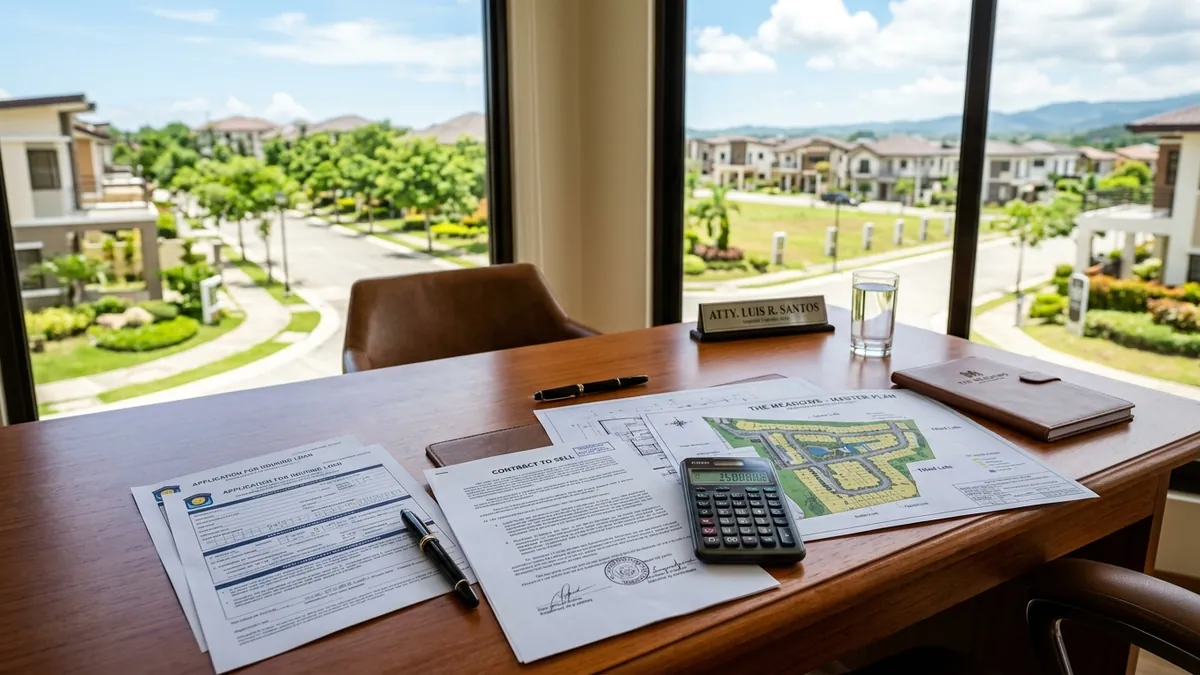
Acquiring agricultural land in the Philippines is fundamentally different from purchasing a residential subdivision lot or a commercial building. When you buy farmland, rice fields, orchards, or rural acreage, the transaction is strictly regulated by the Comprehensive Agrarian Reform Program under Republic Act Number 6657, as amended by Republic Act Number 9700. If you purchase agricultural land without complying with agrarian reform laws, your deed of sale can be declared null and void, the Registry of Deeds will refuse to register the transfer, and the property could even face compulsory acquisition or forfeiture.
Every year, buyers enter into contracts to purchase provincial farmland with the intention of building a country home, developing a commercial farm resort, or holding the acreage as an investment. Months later, they find themselves trapped: the Municipal Agrarian Reform Officer denies their clearance because the buyer already owns more than five hectares of agricultural land, an unrecognized tenant farmer asserts a legal right of redemption over the soil, or the local zoning reclassification they relied upon turns out to be completely invalid without a formal conversion order from the Department of Agrarian Reform.
In this guide, I examine the statutory rules governing agricultural land acquisitions in the Philippines from the perspective of a licensed real estate broker and appraiser. We will break down the mandatory five-hectare landholding ceiling, the step-by-step Department of Agrarian Reform clearance process, the critical legal distinction between local government reclassification and formal agrarian conversion, the statutory rights of agricultural tenants under Republic Act Number 3844, and the red flags surrounding Emancipation Patents and Certificates of Land Ownership Award.
Professional Real Estate Disclaimer: I am a Licensed Real Estate Broker and Licensed Real Estate Appraiser practicing in Ilocos Sur and Northern Luzon. This guide provides professional due diligence principles, regulatory insights, and practical procedural roadmaps based on Philippine property laws and administrative issuances. It does not constitute formal legal counsel. Agrarian reform matters involve complex administrative jurisdictions. If you are navigating disputed tenancy claims, contested retention limits, or cancellation proceedings before the Department of Agrarian Reform Adjudication Board, consult an agrarian law practitioner or your local Provincial Agrarian Reform Office.
Quick Answer: Can You Buy Agricultural Land in the Philippines?
Yes, qualified Philippine citizens and corporations with at least sixty percent Filipino ownership can legally buy private agricultural land in the Philippines. However, agricultural conveyances are subject to four strict statutory restrictions that do not apply to urban real estate:
- The 5-Hectare Landholding Ceiling: Under Section 6 of Republic Act Number 6657, no private individual may own or hold, directly or indirectly, more than five (5) hectares of agricultural land anywhere in the Philippines. Spouses governed by absolute community or conjugal partnership share a combined total limit of five hectares.
- Mandatory DAR Clearance: Under Department of Agrarian Reform Administrative Order Number 1, Series of 1989 and Administrative Order Number 4, Series of 2021, the Registry of Deeds cannot register any deed of sale, transfer, or conveyance involving agricultural land without an official DAR Clearance issued by the Provincial Agrarian Reform Office.
- Tenancy Protection: Under Republic Act Number 3844, agricultural leasehold tenancy attaches to the land. Selling the land does not terminate the leasehold. Agricultural tenants hold statutory rights of pre-emption to match purchase offers, rights of redemption if sold without written notice, and rights to statutory disturbance compensation.
- Conversion vs. Reclassification: A municipal or city zoning ordinance that reclassifies agricultural land into residential or commercial use does not legally convert the land. Physical development or subdivision without an official DAR Conversion Order under Section 65 of Republic Act Number 6657 is illegal and subject to criminal penalties.
Before disbursing purchase funds or executing a Deed of Absolute Sale for agricultural property, conduct comprehensive due diligence through our specialized land acquisition and property due diligence services to ensure the parcel is legally transferable and clear of agrarian liens.

The 5-Hectare Landholding Limit: RA 6657 Retention Rules Explained
The centerpiece of the Comprehensive Agrarian Reform Law (Republic Act Number 6657) is the democratization of agricultural land ownership. To prevent the re-concentration of large private estates, Section 6 of the law sets a strict maximum ceiling on private agricultural landholdings.
How the 5-Hectare Ceiling Applies to Individuals and Married Couples
Under Section 6 of Republic Act Number 6657, no individual may own or hold agricultural land in excess of five (5) hectares. This limit applies on an aggregate, nationwide basis. If you own two hectares of agricultural land in Pangasinan and one hectare in Isabela, the maximum additional agricultural land you can legally acquire in Ilocos Sur is two hectares. Any transaction that causes your nationwide aggregate agricultural holdings to exceed five hectares is null, void, and of no legal effect regarding the excess area.
A frequent blind spot for buyers involves marital property relations under the Family Code of the Philippines (Executive Order Number 209). For marriages solemnized after August 3, 1988, the default property regime is the Absolute Community of Property, unless the spouses executed a valid prenuptial agreement establishing a complete separation of property. Under agrarian reform rules, the agricultural landholdings of husband and wife are combined:
- Absolute Community or Conjugal Partnership: The couple shares a single aggregate ceiling of five (5) hectares combined. A husband cannot own five hectares while his wife owns another five hectares. Their collective nationwide total cannot exceed five hectares.
- Complete Separation of Property: If the spouses executed a notarized and registered marriage settlement establishing complete separation of assets prior to marriage, each spouse may legally hold up to five hectares independently, provided funds and titles remain strictly segregated.
- Corporate Ownership: Domestic corporations may own private agricultural land, but only if at least sixty percent of the capital stock is owned by Filipino citizens, subject to strict constitutional ceilings and agrarian reform compliance. Furthermore, agrarian reform authorities scrutinize corporate shareholdings to prevent individuals from using corporate vehicles to circumvent the personal five-hectare ceiling.
Retention Rights of Agricultural Landowners and Their Children
Section 6 of Republic Act Number 6657 also establishes the retention rights of original agricultural landowners whose properties were subject to agrarian reform acquisition. An original landowner is permitted to retain up to five hectares of their agricultural land.
In addition, an original landowner may be granted an award of three (3) hectares for each qualified child, subject to the following strict statutory criteria:
- The child must be at least fifteen (15) years old at the time of the land acquisition; and
- The child must be actually tilling the land or directly managing the farm enterprise.
When purchasing agricultural land from an original landowner, you must verify whether the property being sold forms part of the owner’s approved retention area. If the landowner has not formally applied for retention, or if the retention application was denied or remains contested before the Department of Agrarian Reform, purchasing that land carries severe risks of compulsory government acquisition.
The Affidavit of Aggregate Landholding: Why False Filings Are Criminal
To enforce the five-hectare limit, the Department of Agrarian Reform requires both the buyer and the seller to execute separate, notarized Affidavits of Aggregate Landholding as an indispensable condition for issuing a DAR Clearance. In this sworn instrument, the buyer must declare under oath all agricultural land parcels owned throughout the entire Republic of the Philippines, complete with title numbers, tax declaration numbers, municipal locations, and precise land areas in square meters or hectares.
Submitting a false Affidavit of Aggregate Landholding is not merely an administrative irregularity. Under Section 73 of Republic Act Number 6657, knowingly submitting false declarations or acquiring agricultural land in excess of the statutory ceiling constitutes a criminal offense punishable by imprisonment of up to three years, a fine, or both. Furthermore, the Registry of Deeds and the Land Registration Authority will cancel any title issued on the basis of a fraudulent landholding declaration.
LGU Reclassification vs. DAR Conversion: The Costly Trap Most Buyers Fall Into
Among the most common and expensive errors made by provincial land buyers is confusing local government zoning reclassification with formal agrarian land use conversion. Many buyers purchase an agricultural property because a local real estate seller or agent assures them that the municipal government has already reclassified the area as residential. Relying on that assurance without obtaining a formal conversion order from the Department of Agrarian Reform often leads to administrative disaster.
What Municipal Reclassification Under RA 7160 Actually Means
Under Section 20 of the Local Government Code of 1991 (Republic Act Number 7160), a city or municipality, through an ordinance enacted by the Sangguniang Bayan or Sangguniang Panlungsod after public hearings, has the authority to reclassify agricultural lands into residential, commercial, or industrial uses. However, this authority is strictly bounded:
- Reclassification merely changes the zoning allocation of the land within the Comprehensive Land Use Plan of the local government unit.
- It establishes that the municipality recognizes the land as eligible for non-agricultural development.
- Crucial Legal Principle: Local reclassification does not alter the agricultural classification of the land under national agrarian reform law. It does not exempt the land from the coverage of Republic Act Number 6657, nor does it give the landowner legal permission to physically bulldoze topsoil, lay concrete foundations, or subdivide the lot into residential blocks.
What DAR Conversion Under RA 6657 Section 65 Requires
Land use conversion is governed exclusively by national agrarian reform legislation, specifically Section 65 of Republic Act Number 6657 and Department of Agrarian Reform Administrative Order Number 1, Series of 2002. Conversion is the formal administrative and legal process of changing the actual physical use of agricultural land into residential, commercial, industrial, or institutional purposes.
The authority to approve or disapprove the conversion of agricultural land rests exclusively with the Secretary of the Department of Agrarian Reform or designated regional directors. A municipal zoning ordinance is merely one of more than a dozen documentary prerequisites submitted in support of an application for a DAR Conversion Order. Until the Department of Agrarian Reform issues an official, signed Conversion Order, the property remains legally agricultural. Physical development without this order constitutes illegal or premature conversion, which carries severe administrative fines and criminal liability under Republic Act Number 9700.
Comparison Table: LGU Reclassification vs. DAR Conversion
To help property buyers, developers, and investors avoid costly missteps, the following comparison table contrasts the legal and operational differences between local reclassification and agrarian conversion:
| Feature | LGU Land Reclassification | DAR Land Use Conversion |
|---|---|---|
| Governing Statute | Republic Act Number 7160 (Local Government Code), Section 20 | Republic Act Number 6657 (CARL), Section 65; RA 9700; DAR AO 1-2002 |
| Approving Authority | City or Municipal Council (Sangguniang Bayan or Panlungsod) through an enacted zoning ordinance | Secretary of the Department of Agrarian Reform or authorized Regional Director |
| Legal Effect | Alters local municipal zoning allocation; declares the parcel eligible for non-agricultural use | Lifts agrarian reform coverage; grants legal authority to alter physical soil use and construct non-farm improvements |
| Right to Build or Subdivide | No. Constructing buildings or subdividing based solely on reclassification constitutes illegal conversion | Yes. Upon release of the DAR Conversion Order, payment of conversion fees, and posting of the development bond |
| Tenant Protection Status | Does not extinguish agricultural tenancy; leasehold contracts remain active and enforceable | Requires full payment of statutory disturbance compensation to tenants prior to order release |
| Processing Timeline | Typically 3 to 6 months depending on municipal legislative calendars and committee reviews | Typically 12 to 24 months involving multiple departmental clearances (DA, DENR, NIA, LGU, DAR) |
| Consequence of Non-Compliance | Zoning violations under local building code regulations | Cease and desist orders, administrative fines, reversion to CARP coverage, and criminal prosecution under RA 9700 |
The Irrigated Land Prohibition: Why NIA Coverage Blocks Conversion Permanently
One of the most absolute rules in Philippine agricultural land regulation is the statutory ban on converting irrigated agricultural land. Under Section 65 of Republic Act Number 6657, as amended by Republic Act Number 9700, and Administrative Order Number 1, Series of 2002, agricultural lands that are irrigated or irrigable as certified by the National Irrigation Administration are strictly non-negotiable for conversion.
If a parcel receives irrigation water from a government irrigation canal, communal irrigation project, or shallow tubewell system funded by the National Irrigation Administration, the Department of Agrarian Reform will summarily reject any application for land use conversion, regardless of whether the municipality has reclassified the land as residential. When evaluating rural land for purchase with an eye toward future residential or commercial development, always obtain a formal certification from the National Irrigation Administration before committing funds.
For buyers managing complex titling and registry procedures across provincial offices, explore our dedicated title transfer and conveyancing services to ensure every statutory prerequisite is satisfied before deed execution.
The Mandatory DAR Clearance Process: Step-by-Step Sequence
A standard land sale in the Philippines requires payment of Capital Gains Tax and Documentary Stamp Tax to the Bureau of Internal Revenue, obtaining a barcoded electronic Certificate Authorizing Registration (eCAR), and presenting the documents to the Registry of Deeds. However, for agricultural land, there is a mandatory procedural gatekeeper: the Department of Agrarian Reform Clearance.
When Is a DAR Clearance Required Before Title Transfer?
Under Department of Agrarian Reform Administrative Order Number 1, Series of 1989, and reiterated in Joint DAR-LRA Memorandum Circulars, the Register of Deeds is legally prohibited from registering any voluntary deed of conveyance, sale, partition, or donation involving private agricultural land without an approved DAR Clearance.
Even if you hold a valid, notarized Deed of Absolute Sale, full tax clearance from the Municipal Treasurer, and an official BIR eCAR, the land title examiner at the Registry of Deeds will immediately issue a notice of pending registration or outright denial if your submission lacks the DAR Clearance. Attempting to bypass this requirement by misrepresenting the land as residential when the title or tax declaration reflects an agricultural classification constitutes registrable fraud.
Master Checklist of Required Documents for DAR Clearance
Under DAR Administrative Order Number 4, Series of 2021 (which streamlined earlier clearance rules), obtaining an agricultural DAR Clearance requires gathering documents from both the seller and the buyer. Assemble the following master portfolio:
Required Documents for DAR Clearance Application
- Notarized Application for DAR Clearance: Executed by the buyer or authorized representative under a registered Special Power of Attorney.
- Certified True Copy of the Title: Issued by the Registry of Deeds within ninety (90) days of filing (Original Certificate of Title or Transfer Certificate of Title).
- Certified True Copy of Tax Declaration: Issued by the City or Municipal Assessor showing current market value and agricultural classification.
- Notarized Deed of Absolute Sale or Conveyance Instrument: Signed by all parties with complete marital consent disclosures.
- Buyer Sworn Affidavit of Aggregate Landholding: Declaring that the buyer’s total nationwide agricultural landholdings, inclusive of the land being purchased, do not exceed five (5) hectares.
- Seller Sworn Affidavit of Aggregate Landholding: Declaring that the land being sold is part of the seller’s retained area or does not breach retention limits.
- Certifications of Aggregate Landholding from Assessors: Official certifications from the Municipal Assessor and Provincial Assessor where the land is located, confirming the registered landholdings of both buyer and seller.
- Municipal Agrarian Reform Officer (MARO) Certification: Official certification confirming:
- Whether the property is covered by or exempt from CARP acquisition.
- Whether there are agricultural leasehold tenants, farmworkers, or occupants residing on or cultivating the land.
- Whether the landowner has exercised retention rights over the parcel.
- National Irrigation Administration (NIA) Certification: Certifying whether the parcel is covered by existing or programmed irrigation infrastructure.
- Barangay Agrarian Reform Committee (BARC) Attestation: Barangay-level attestation regarding agricultural cultivation and tenancy status.
- Proof of Notice of Posting: Evidence that notices of the proposed conveyance were posted in the municipal and barangay halls for the statutory period.
The 5-Stage Clearance Workflow: From MARO Ocular to PARO Approval
Securing an agricultural clearance requires moving sequentially through local, municipal, and provincial agrarian offices. Based on our provincial transaction experience in Northern Luzon, expect the following sequential progression:
- Stage 1: Filing with the MARO Office: The applicant submits the complete application portfolio to the Municipal Agrarian Reform Office having territorial jurisdiction over the property. The MARO reviews documents for completeness and issues an official order of payment for filing fees.
- Stage 2: MARO Field Investigation and Ocular Inspection: The MARO or designated Agrarian Reform Program Technologist visits the actual farm parcel. The officer inspects physical land use, interviews neighboring farmers and barangay officials, confirms whether boundary stakes or concrete mojons are intact, and determines whether unrecorded tenants or sharecroppers cultivate the soil.
- Stage 3: Public Notice Posting: Notices of the proposed land transfer are posted on the bulletin boards of the Municipal Hall and Barangay Hall for a mandatory period (typically fifteen days) to give potential adverse claimants, co-owners, or agrarian beneficiaries an opportunity to submit formal opposition.
- Stage 4: MARO Transmittal to PARO: If no tenant disputes arise and all documentary requirements are verified, the MARO prepares a formal Investigation Report and transmits the complete docket with recommendations to the Provincial Agrarian Reform Office.
- Stage 5: Legal Review and PARO Clearance Issuance: The legal division of the Provincial Agrarian Reform Office reviews the docket for statutory compliance under Republic Act Number 6657 and Administrative Order Number 4, Series of 2021. Upon approval, the Provincial Agrarian Reform Officer (PARO) signs the formal Certificate of DAR Clearance. This certificate is then ready for presentation to the Registry of Deeds.
What Happens if You Register Without DAR Clearance?
In rare historical instances, deeds of sale for agricultural land were erroneously registered by local registries without requiring a DAR clearance, often due to an outdated tax declaration misstating the zoning or a clerical oversight. If you discover that your agricultural property title was transferred without an underlying DAR clearance, the transaction is vulnerable to legal challenge.
The Department of Agrarian Reform holds the statutory authority to initiate cancellation proceedings before the Department of Agrarian Reform Adjudication Board. Any affected tenant, disqualified buyer, or agrarian reform beneficiary can petition to declare the transfer null and void ab initio. When reviewing rural properties, cross-reference our foundational guide on how to verify a land title in the Philippines to identify potential agrarian defects before entering into contracts.

Tenant Rights and Agricultural Leases: RA 3844 Protections
In Philippine agricultural land transactions, physical occupancy and soil cultivation carry immense legal weight. Unlike urban residential tenants who can be evicted upon lease expiration under standard civil law, agricultural tenants enjoy constitutional and statutory protections that permanently bind the land.
Tenancy Attaches to the Land, Not the Owner
The foundational principle of Philippine agricultural tenancy law is codified in Section 10 of Republic Act Number 3844 (the Agricultural Land Reform Code):
“The agricultural leasehold relation under this Code shall not be extinguished by mere expiration of the term or period in a leasehold contract nor by the sale, alienation or transfer of the legal possession of the landholding. In case the agricultural lessor sells, alienates or transfers the legal possession of the landholding, the purchaser or transferee thereof shall be subrogated to the rights and substituted to the obligations of the agricultural lessor.”
This means that if you buy a farm parcel that has an existing agricultural tenant, you do not acquire the right to evict that tenant, demand higher lease shares, or take over direct physical cultivation. You simply become the new agricultural lessor. The tenant retains the legal right to remain on the land, cultivate the soil, and pay the statutory agricultural leasehold rental determined under agrarian rules. Purchasing agricultural land with an undisclosed tenant is one of the quickest ways to lose physical control over a newly acquired property.
Right of Pre-emption and Right of Redemption Explained
Agricultural tenants hold powerful statutory rights when an agricultural landholder decides to sell the landholding:
- Right of Pre-emption (Section 11, RA 3844): If the landowner decides to sell the agricultural landholding, the agricultural tenant has the preferential right to purchase the land under reasonable terms and conditions. The seller must provide written notice of the proposed sale, price, and terms to all registered tenants and to the Department of Agrarian Reform. The tenant has a statutory period of one hundred eighty (180) days from notice to exercise this pre-emptive purchase option.
- Right of Redemption (Section 12, RA 3844): If the landowner sells the agricultural land to a third-party buyer without providing prior written notice to the agricultural tenant, the sale is legally vulnerable. The tenant has the right to redeem the land from the buyer at a reasonable price and consideration within one hundred eighty (180) days from the date the tenant learns of the sale or registration.
If you purchase farmland where an agricultural tenant was active and the seller failed to serve formal written pre-emption notice, the tenant can file a petition for redemption before the Department of Agrarian Reform Adjudication Board, legally forcing you to surrender the property in exchange for the purchase price declared in the deed.
Calculating Statutory Disturbance Compensation
If an agricultural parcel is legally converted to non-agricultural use under a valid DAR Conversion Order, or if an agricultural tenancy relationship is terminated by mutual amicable agreement, the tenant cannot simply be told to leave. The tenant is entitled by law to statutory disturbance compensation.
Under Section 36 of Republic Act Number 3844, as amended, disturbance compensation is generally equivalent to at least five (5) times the average gross harvest on the landholding during the last five preceding calendar years. In practice, where high-yielding rice or commercial cash crops are cultivated, disturbance compensation can amount to hundreds of thousands of pesos per hectare. Negotiating and paying disturbance compensation is a formal process that requires execution of signed agreements witnessed and approved by the Municipal Agrarian Reform Officer.
The MARO Certification of Non-Tenancy: The Essential Document
To protect yourself against future redemption lawsuits and unrecorded leasehold claims, never rely on a seller verbal claim that “there are no tenants on this farm.” In provincial real estate transactions, relatives or neighboring farmers frequently cultivate fields under informal share arrangements that qualify as agricultural tenancy under agrarian law.
Insist that the seller secure an official MARO Certification of Non-Tenancy. This document is issued only after the Municipal Agrarian Reform Officer conducts an on-site field investigation, interviews adjoining property owners, and verifies local agrarian records. If an individual is physically cultivating the soil, resolve tenancy rights, obtain formal waivers, or conclude disturbance compensation settlements before paying purchase balances.
Buying EP and CLOA Titled Land: Legal Prohibitions and Exceptions
As you review rural land listings across the Philippines, you will regularly encounter properties titled under an Emancipation Patent (EP) or a Certificate of Land Ownership Award (CLOA). These titles represent land distributed to agrarian reform beneficiaries under Presidential Decree Number 27 or Republic Act Number 6657. Buying EP and CLOA properties requires extreme caution, as they carry statutory encumbrances that differ fundamentally from standard Torrens Transfer Certificates of Title.
Understanding Emancipation Patents and CLOA Grants
To understand the restrictions governing these titles, examine their legal origins:
- Emancipation Patent (EP): Issued under Presidential Decree Number 27 (the Tenant Emancipation Decree of 1972) to tenant farmers on private agricultural lands devoted to rice and corn.
- Certificate of Land Ownership Award (CLOA): Issued under Republic Act Number 6657 (CARP) to qualified agrarian reform beneficiaries across all types of agricultural lands.
Both EP and CLOA titles are registered with the Registry of Deeds and bear serial certificate numbers. However, their Memorandums of Encumbrances carry explicit statutory restrictions prohibiting voluntary conveyances.
The 10-Year Statutory Prohibitory Period
Under Section 27 of Republic Act Number 6657, lands acquired by agrarian reform beneficiaries may not be sold, transferred, or conveyed for a period of ten (10) years from the date of the award, except:
- Through hereditary succession upon the death of the beneficiary;
- To the government or the Land Bank of the Philippines; or
- To other qualified agrarian reform beneficiaries through formal DAR coordination.
Any sale, mortgage, or transfer executed within this ten-year prohibitory window is void ab initio. The buyer acquires zero legal ownership, the land is forfeited, and the original beneficiary faces disqualification from agrarian reform programs.
LandBank Full Payment Clearance and the New Agrarian Emancipation Act
Even after the ten-year statutory prohibitory period has elapsed, an EP or CLOA title cannot be freely sold like ordinary real estate. Prior to transfer, the beneficiary must demonstrate that the land amortization has been fully paid to the Land Bank of the Philippines.
On July 7, 2023, President Ferdinand R. Marcos Jr. signed into law Republic Act Number 11953, known as the New Agrarian Emancipation Act. This historic legislation condoned all unpaid principal amortizations, interests, and penalties on agricultural lands awarded to agrarian reform beneficiaries under PD 27, RA 6657, and related programs. While this law relieves farmers of debt, buyers must note critical nuances:
- The condonation under RA 11953 requires the issuance of an official Certificate of Condonation and Release of Mortgage from the Department of Agrarian Reform and the Land Bank of the Philippines.
- The statutory ten-year prohibitory transfer restriction remains in full force. The ten-year clock starts from the date of the original award registration, not from the date of debt condonation.
- Conveyances following the ten-year window still require a formal DAR Transfer Clearance confirming that the buyer is a qualified individual whose nationwide agricultural holdings will not exceed five hectares.
Why Buying via Informal “Waiver of Rights” Is Legally Void
In many rural communities, buyers attempt to circumvent agrarian reform restrictions by purchasing EP or CLOA lands through informal legal instruments: “Waiver of Rights,” “Deed of Relinquishment,” “Kasunduan ng Pagtalikod sa Karapatan,” or open deeds with post-dated execution dates. Buyers hand over cash, take physical possession of the farm, and assume they can “fix the title” later.
Under Section 73 of Republic Act Number 6657, any sale, transfer, or conveyance of awarded agrarian lands in violation of the law is null and void from the beginning. Courts and agrarian adjudicators will not protect the buyer. If the beneficiary or their legal heirs decide to reclaim the property years later, the buyer cannot enforce the waiver, cannot demand title issuance, and may not even recover the purchase money paid. Never purchase agricultural land covered by an EP or CLOA title without prior formal written clearance from the Department of Agrarian Reform.
Provincial Realities: Agricultural Due Diligence in Ilocos Sur
Agricultural land practices in provincial Northern Luzon, particularly in Ilocos Sur, reflect deep generational traditions that require tailored investigation. In municipalities such as Vigan, Bantay, Narvacan, Santa Maria, Candon, and Magsingal (see our localized market analysis on buying land in Magsingal, Ilocos Sur), transactions frequently involve ancestral farmlands that have remained in family lineages for decades.
Ancestral Farmland and Undivided Mother Titles
Much of the agricultural acreage in provincial Ilocos Sur is held under large mother titles registered in the names of deceased grandparents or great-grandparents. A single heir might offer to sell you “their share” consisting of one hectare of rice land located at a specific corner of the family farm.
Under Philippine co-ownership law (Civil Code Article 493), a co-owner owns only an ideal, abstract fractional interest in the entire property. An heir cannot sell a specific physical corner of an undivided agricultural parcel without a notarized extrajudicial settlement and formal geodetic subdivision plan approved by the Department of Environment and Natural Resources and the Department of Agrarian Reform. If you pay an heir for a specific corner without these formalities, other co-heirs can legally challenge your boundaries or demand partition. Always review our comprehensive guide to real estate due diligence in the Philippines before entering into provincial land contracts.
Agricultural Access and Right-of-Way Across Rice Paddies
Interior farm parcels in provincial areas often lack direct frontage along national or barangay roads. Farmers traditionally access their fields by walking along earthen dikes or paths (known locally in Ilocos as tal-o or pilapil). While neighbors tolerate pedestrian foot traffic for agricultural work, this informal tolerance vanishes the moment a new buyer purchases the land with plans to bring in construction vehicles, drill water wells, or build structures.
Under Civil Code Articles 649 to 657, an easement of right of way over agricultural land is not automatic; it requires compliance with statutory criteria, negotiation, and payment of proper indemnity. If you purchase an interior agricultural lot without a legally annotated road right of way on adjacent titles, your access can be blocked overnight. Review the legal mechanics in our detailed guide on road right of way laws and easements in the Philippines.
Groundwater, NIA Irrigation Systems, and Topography Checks
Before closing on any agricultural purchase in Ilocos Sur, conduct thorough physical due diligence on water access and topography:
- Irrigation Infrastructure: Check whether the land falls within a National Irrigation Administration service area. While irrigation ensures productive farming, it permanently bars non-agricultural conversion.
- Groundwater Availability: If the land relies on rain or shallow tube wells, verify seasonal water table depths during the dry summer months (March to May). In elevated coastal or rolling terrain, drilling deep agricultural wells can be costly.
- Soil and Drainage: Low-lying rice paddies in river basin areas (such as along the Abra River or coastal plains) face regular seasonal inundation during monsoon rains. Factor drainage engineering and fill costs into your acquisition budget.
Agricultural Property Due Diligence Checklist for Buyers
Before releasing earnest money, signing a contract to sell, or executing a Deed of Absolute Sale for agricultural land in the Philippines, verify every item on this practical practitioner checklist:
Agricultural Land Due Diligence Checklist
1. Title and Registry Verification
- Obtain a fresh Certified True Copy of the title from the Registry of Deeds (issued within 30 days).
- Check the title classification: confirm whether it is an OCT, TCT, EP, or CLOA title.
- Inspect the Memorandum of Encumbrances for CARP annotations, Land Bank mortgage liens, adverse claims, or Section 4 Rule 74 two-year settlement liens.
- Verify whether the title is clean or bears an “RT” or “RC” prefix indicating an administrative reconstitution under Republic Act Number 26 or 6732.
2. Tax and Municipal Assessment Records
- Obtain a certified copy of the latest Tax Declaration of Real Property from the Municipal Assessor.
- Confirm that the land classification, area, and boundaries on the tax declaration match the title certificate exactly.
- Secure a Real Property Tax Clearance from the Municipal Treasurer confirming all taxes are paid through the current year.
- Obtain a Certificate of Aggregate Landholding from the Municipal and Provincial Assessors for both buyer and seller.
3. Agrarian Reform and Tenancy Inquiries
- Visit the Municipal Agrarian Reform Office (MARO) having jurisdiction over the property.
- Request an official MARO Certification of Non-Tenancy and CARP Exemption or Retention Status.
- Verify that the seller has not previously exhausted their statutory retention limit.
- Calculate your own aggregate agricultural landholdings (combined with your spouse) to ensure this acquisition will not exceed five (5) hectares nationwide.
4. Physical and Geodetic Inspection
- Hire an independent licensed geodetic engineer to conduct a boundary relocation survey.
- Locate all concrete boundary markers (mojons) on site and compare coordinates against the approved technical description.
- Conduct an on-site interview with adjoining farmers and the Barangay Captain to identify unrecorded tenancy claims or boundary disputes.
- Verify legal right-of-way access to an established public road.
- Check with the National Irrigation Administration regarding irrigation coverage.
Frequently Asked Questions About Buying Philippine Agricultural Land
Can a foreigner buy agricultural land in the Philippines?
No. Under Article XII, Section 7 of the 1987 Philippine Constitution, foreign nationals are strictly prohibited from owning private agricultural, residential, or commercial land in the Philippines. Foreigners may only acquire land through hereditary succession (intestate inheritance where the foreigner is a compulsory legal heir under Philippine law). Alternatively, foreign investors may lease agricultural land for up to fifty (50) years, renewable for an additional twenty-five (25) years, under the Investors’ Lease Act (Republic Act Number 7652). Former natural-born Filipino citizens who lost their citizenship may purchase up to three (3) hectares of rural agricultural land for business or agricultural purposes under Batas Pambansa Blg. 185 and Republic Act Number 8179.
Can I build a residential house on titled agricultural land?
Under agrarian reform regulations, building an ordinary residential dwelling on agricultural land without obtaining a DAR Conversion Order is technically considered premature or illegal land conversion. However, landowners are generally permitted to construct a modest farm dwelling or farmhouse that is strictly incidental and necessary to agricultural cultivation (such as a residence for the farm caretaker or farmer). If you intend to subdivide the land, develop a residential compound, or construct commercial structures, you must first apply for and receive an approved DAR Land Use Conversion Order under Section 65 of Republic Act Number 6657.
What is the maximum size of agricultural land an individual can purchase?
Under Section 6 of Republic Act Number 6657, the maximum aggregate agricultural landholding for an individual is five (5) hectares nationwide. If you currently own two hectares of agricultural land anywhere in the country, the maximum additional agricultural land you can purchase is three hectares. For married couples under absolute community of property or conjugal partnership, the five-hectare limit applies to the couple collectively, meaning both spouses together cannot exceed five hectares. Any deed of conveyance exceeding this ceiling is null and void regarding the excess area.
How long does it take to obtain a DAR Clearance?
Under the citizen charter guidelines of the Department of Agrarian Reform, processing a DAR Clearance typically takes between thirty (30) to sixty (60) working days, provided all documentary requirements are complete and no adverse claims are filed. However, provincial timelines can extend to three to four months if field ocular inspections are delayed by seasonal harvests, if public notice postings require extended periods, or if the municipal assessor requires additional time to issue aggregate landholding certifications across municipal jurisdictions.
What happens if a tenant farmer refuses to vacate after I purchase the farmland?
Under Section 10 of Republic Act Number 3844, an agricultural tenant cannot be evicted simply because the land was sold to a new owner. The buyer automatically becomes the new agricultural lessor and assumes all existing leasehold obligations. If you attempt to forcibly eject the tenant, bulldoze their crops, or lock them out of the fields, you can face criminal charges for agrarian harassment before the Department of Agrarian Reform Adjudication Board. To terminate an agricultural tenancy legally, you must either negotiate an amicable settlement involving the payment of statutory disturbance compensation witnessed and approved by the MARO, or demonstrate valid statutory grounds for termination (such as voluntary surrender or failure to cultivate) through formal agrarian adjudication proceedings.
Is a Tax Declaration alone sufficient to purchase agricultural land?
No. A Tax Declaration of Real Property is an administrative record used for local real property taxation; it is not conclusive proof of Torrens title ownership under Presidential Decree Number 1529. Purchasing untitled agricultural land based solely on a tax declaration exposes you to significant risks, including boundary overlaps, competing tax declarations, unrecorded claims by heirs, and public forest reserve classifications. If you consider purchasing untitled agricultural land, ensure the property has been officially certified by the Department of Environment and Natural Resources as Alienable and Disposable (A&D) land, and plan for formal land titling proceedings.
What I Would Check Next
When clients bring agricultural properties to our office for due diligence review, I always execute the verification sequence in this specific order:
- Examine the Original Certificate or Transfer Certificate of Title: Request a fresh Certified True Copy directly from the Registry of Deeds to inspect the exact wording of all annotations, restrictions, and classification entries.
- Cross-Check with the Municipal Assessor: Confirm that the tax declaration is current, that real property taxes are paid in full, and that the assessed classification matches the title description.
- Conduct an On-Site Ocular Inspection: Walk the perimeter with a licensed geodetic engineer. Verify physical crop cultivation, check for concrete mojons, inspect irrigation canals, and interview neighboring farmers regarding who physically tills the soil.
- Consult the Local MARO Office: Verify whether the property is subject to retention proceedings, pending agrarian petitions, or active leasehold tenancy contracts.
Skipping any single step in this sequence significantly increases the risk of acquiring land with encumbrances that can tie up your capital for years.
Professional Agricultural Land Due Diligence and Title Verification Services
Purchasing agricultural land represents a major financial commitment. In provincial areas like Ilocos Sur, avoiding agrarian legal pitfalls requires on-the-ground experience, intimate knowledge of local registries and agrarian reform offices, and disciplined technical verification.
At LandMaster Realty, we provide comprehensive real estate services to protect buyers, sellers, and heirs throughout Northern Luzon:
- Land Acquisition and Due Diligence: Complete title forensics, registry verification, assessor audits, MARO tenancy inquiries, and on-site boundary relocation surveys.
- Transfer of Land Title: End-to-end management of BIR eCAR processing, local transfer tax payments, DAR Clearance procurement, and Registry of Deeds registration.
- Partition and Consolidation of Property: Assisting families and co-owners with the extrajudicial settlement and geodetic subdivision of ancestral agricultural land.
If you are planning to purchase agricultural property in Ilocos Sur or require professional guidance regarding agrarian reform compliance, contact LandMaster Realty today. Our team will review your documentation, identify regulatory requirements, and guide your transaction to a secure, lawful completion.