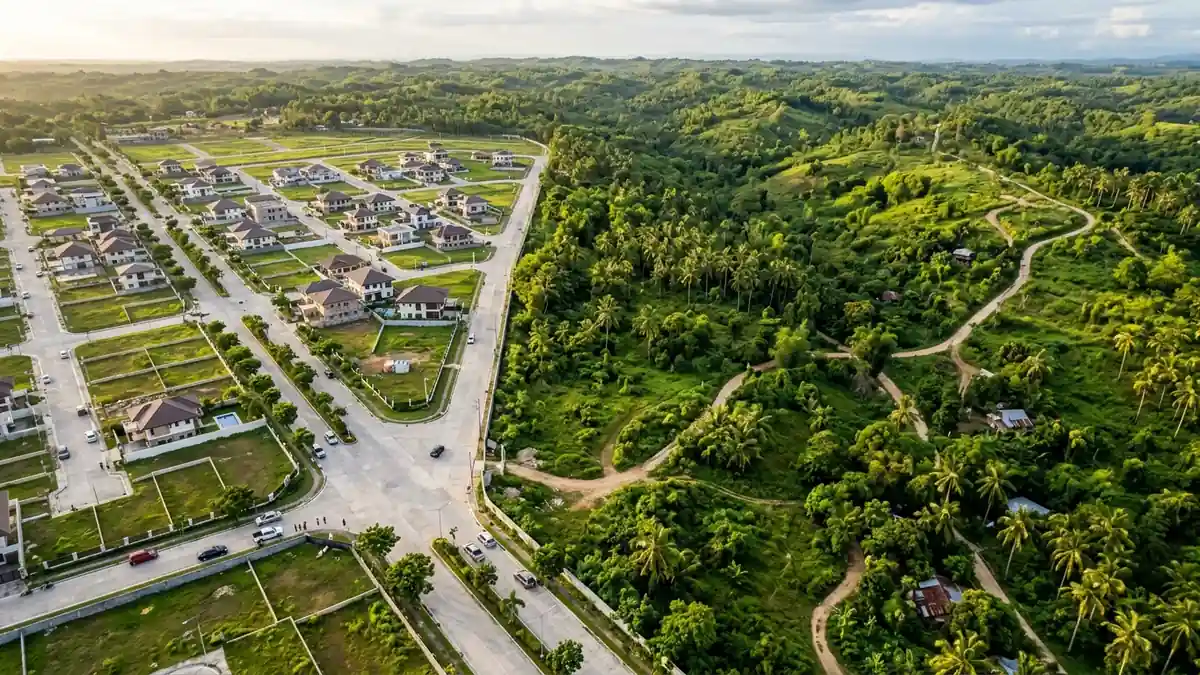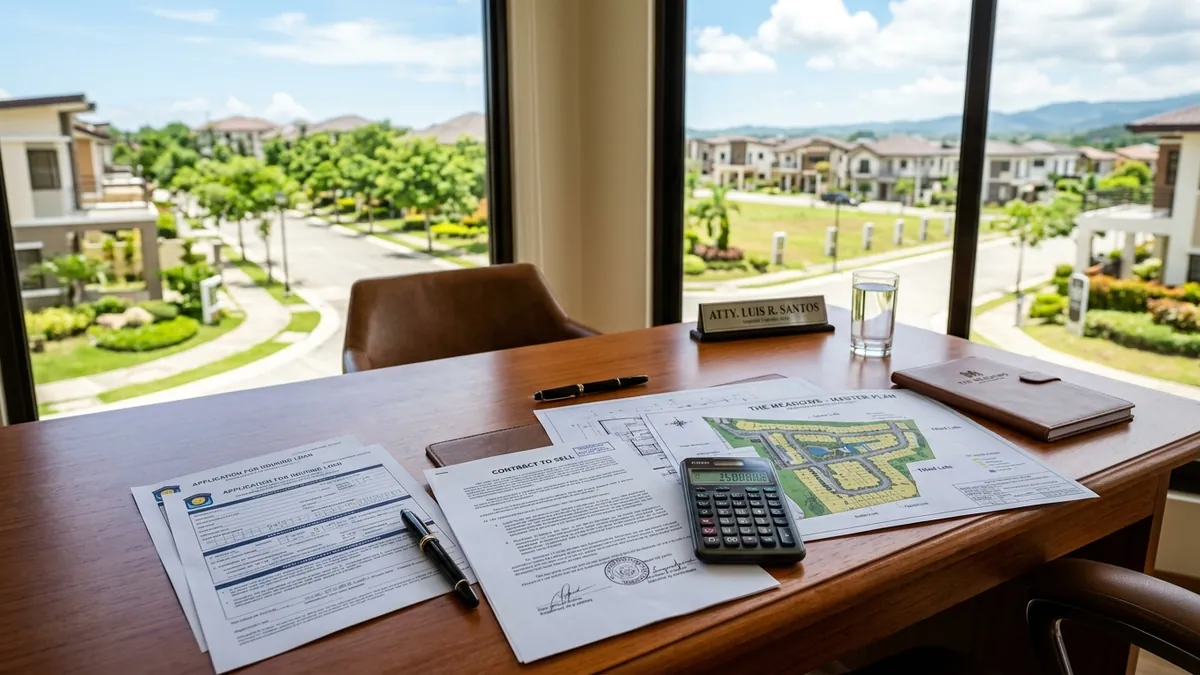
Few real estate problems in the Philippines ignite as much anger, neighborly animosity, and frozen capital as a landlocked parcel of land. A property owner purchases a scenic residential lot in an interior subdivision, inherits fertile agricultural farmland in a rural municipality, or attempts to construct a commercial warehouse, only to discover that they have no direct road connection to a public highway. When adjacent neighbors erect concrete perimeter walls, dig irrigation ditches, or padlock iron gates across traditional access paths, the interior owner is suddenly trapped without vehicular access.
Under Philippine property law, you cannot simply force your way across a neighbor land, nor can an uncooperative neighbor permanently trap your property in isolation. The Civil Code of the Philippines establishes a balanced, comprehensive legal framework governing the statutory Easement of Right of Way. This legal doctrine balances two fundamental property rights: the right of a landlocked owner to connect to the outside world, and the right of an adjoining owner to protect their private property from unreasonable intrusion, disruption, and financial loss.
This comprehensive practitioner guide covers the legal and technical realities of road right of way in the Philippines. We examine the statutory criteria under Civil Code Articles 649 to 657, explain how to calculate legal compensation (indemnity) for the affected neighbor, compare voluntary easement agreements against judicial court petitions, review mandatory Barangay conciliation under the Katarungang Pambarangay rules, and outline common provincial real estate scenarios across Ilocos Sur and Northern Luzon.
Regulatory and Legal Notice
This article provides practical, practitioner-level information regarding Philippine easement laws, land titles, geodetic surveying, and right of way negotiation procedures. It does not constitute formal legal counsel. Property boundaries, physical topography, zoning rules, and municipal registry practices vary significantly across jurisdictions. Before executing legal easement deeds, paying compensation, or filing court complaints, consult a licensed real estate broker, a licensed geodetic engineer, or a Philippine property attorney.
Quick Summary: How Does Road Right of Way Work in the Philippines?
Under Philippine law, an owner of an immovable property surrounded by other estates without adequate access to a public highway has the statutory right to demand an easement of right of way across neighboring land. This right is governed primarily by Articles 649 through 657 of the Civil Code of the Philippines.
However, securing a road right of way is not automatic, nor is it free. To lawfully establish a compulsory easement, the landlocked owner (the dominant estate) must prove four mandatory legal conditions in court if an amicable agreement cannot be reached: genuine isolation with no adequate outlet to a public highway, payment of proper indemnity (financial compensation) to the affected neighbor (the servient estate), proof that the isolation was not caused by the dominant owner own actions, and selection of an access path at the point least prejudicial to the servient owner and, insofar as consistent with that rule, where the distance to the public highway is shortest.
The preferred and most cost-effective path is a voluntary Deed of Grant of Easement of Right of Way executed between neighbors, surveyed by a licensed geodetic engineer, and officially annotated on the Torrens titles at the Registry of Deeds. If a neighbor unreasonably refuses access or demands extortionate compensation, the landlocked owner must first undergo mandatory mediation before the Barangay Lupon Tagapamayapa before filing a formal civil complaint for Judicial Easement of Right of Way in the Regional Trial Court.
Key Legal Definitions: Dominant vs. Servient Estate
To understand right of way rules, property owners must master the core terminology established by the Civil Code under Book II, Title VII (Easements or Servitudes):
- Easement (or Servitude): An encumbrance imposed upon an immovable property for the benefit of another immovable belonging to a different owner (Civil Code Article 613). An easement is an incorporeal right: it grants a right of use over another person property, but it does not transfer ownership of the underlying land.
- Dominant Estate: The immovable property or landlocked lot in whose favor the easement is established. The dominant owner is the party who requires and enjoys the access route.
- Servient Estate: The property that suffers or yields the easement. The servient owner remains the absolute titled owner of the ground, but their land is burdened by the road access corridor.
- Legal (Compulsory) Easement: An easement created by operation of law for public utility or private necessity, such as a court-mandated right of way for an isolated lot under Article 649.
- Voluntary Easement: An easement created by the mutual consent and contract of the adjoining property owners under Article 688, tailored to their agreed commercial terms, width, and compensation.

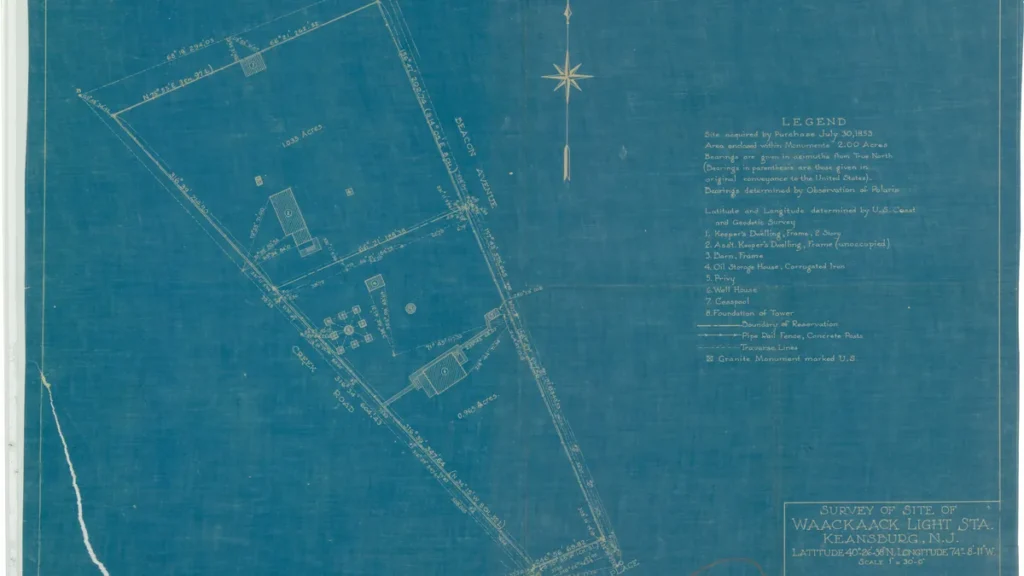
An official geodetic survey plan delineating the statutory easement of right of way, technical bearings, and access road connection to the public highway.
The 4 Mandatory Legal Requisites for a Compulsory Easement
When an adjoining landowner refuses to allow an access road, the isolated owner cannot simply bulldoze an opening or claim that neighborhood convenience justifies trespassing. Philippine courts strictly enforce four cumulative legal requirements established by Civil Code Articles 649 and 650, reinforced across decades of Supreme Court jurisprudence (including landmark decisions such as Costabella Corporation v. Court of Appeals and Reyes v. Spouses Ramos).
If any single one of these four requisites is missing, a petition for compulsory right of way will be dismissed by the court:
1. Genuine Isolation with No Adequate Outlet
The dominant estate must be surrounded by other properties without any adequate access to a public highway. The keyword here is adequate. Mere inconvenience, extra travel distance, rough terrain, or the need to grade a rocky slope on one own land does not constitute legal isolation.
If the owner already has an existing outlet to a municipal road, even if that road is narrow, unpaved, or circuitous, they cannot legally compel a neighbor to provide a more convenient, shorter, or flatter route simply to save travel time or boost property value. The Supreme Court has repeatedly held that convenience of the dominant estate is not the basis for granting a compulsory easement: genuine physical or legal necessity is required.
2. Payment of Proper Statutory Indemnity
A compulsory easement is not a confiscation of private land. The dominant owner must pay full and fair legal compensation (indemnity) to the servient owner before opening or using the road corridor. If the indemnity is not paid or consigned in court, the servient owner is fully within their legal rights to prevent entry. The exact mathematical computation for this indemnity is dictated by Article 649, which we detail in the worked arithmetic section below.
3. Isolation Not Caused by the Dominant Owner Own Acts
The isolation must not be the result of deliberate or negligent actions taken by the owner of the dominant estate. If an owner previously possessed a direct driveway to the provincial road but voluntarily sold their highway frontage to a third party without reserving an easement, they cannot subsequently turn around and demand a compulsory right of way across an innocent adjoining neighbor. Similarly, if an owner erects a commercial building, warehouse, or swimming pool that obstructs their own pre-existing driveway, the resulting isolation is self-inflicted and will not support a court petition against neighbors.
4. Established at the Point Least Prejudicial to the Servient Estate
Under Article 650 of the Civil Code, the easement must be established at the point least prejudicial to the servient estate, and insofar as consistent with this rule, where the distance from the dominant estate to a public highway is the shortest. Philippine law explicitly places least prejudice above shortest distance.
For example, if the straightest line from an interior parcel to the highway cuts directly through a neighbor active mango orchard, living room, or primary residential courtyard, that shortest path causes massive prejudice. If an alternate path exists along the outer boundary perimeter or irrigation canal that requires 40 additional meters of length but avoids destroying structures or trees, the law mandates selecting the outer boundary path. Shortest distance only governs when two competing routes cause equal prejudice.
Statutory Indemnity Computation: How Much Must You Pay?
One of the most contentious aspects of right of way negotiations in the Philippines is pricing. Servient owners frequently assume they can charge arbitrary commercial prices, while dominant owners often believe they should pay nothing because access is a basic human right. The Civil Code provides clear, formulaic guidance under Article 649.
Permanent Easement vs. Temporary Easement
Article 649 establishes two distinct financial rules depending on the permanence of the required access:
- Permanent Easement: If the right of way is permanent and established for the continuous, ongoing needs of the dominant estate (such as a residential home, agricultural farm, subdivision, or business enterprise), the indemnity consists of the full market value of the land occupied by the road, PLUS the amount of any damages caused to the remaining servient estate.
- Temporary Easement: If the easement is established only for temporary or seasonal needs (such as passing through during the harvest of seasonal crops or hauling construction materials to build a house under Article 656), the indemnity consists solely of the rental value and actual damages inflicted on the servient estate during the period of use. The dominant owner does not pay the capital value of the land.
The Statutory Valuation Formula
For a permanent right of way, the total legal compensation formula is structured as follows:
Total Statutory Indemnity = (Area of Road Corridor in Square Meters x Fair Market Value per Square Meter) + Consequential Damages to Remaining Land
Where Consequential Damages include severed improvements, destroyed crops or fruit-bearing trees, relocation of fences, diminished utility of the severed servient property, and real estate taxes during occupancy.
Crucially, paying the market value of the occupied strip does not transfer ownership of the land to the dominant owner. Under Civil Code Article 655, title to the land remains with the servient owner. If the easement is later extinguished because a new public road opens up, the servient owner reclaims the unencumbered physical land and must return the land-value indemnity received, without interest, less the rental value of the period used.
Worked Arithmetic Example: Real-World Provincial Calculation
Consider a practical scenario in a provincial municipality in Ilocos Sur. An interior residential parcel requires a vehicular right of way across a neighbor agricultural parcel to reach the barangay road. A licensed geodetic engineer surveys the least prejudicial path along the western boundary line:
- Corridor Dimensions: Width of 3.5 meters by a length of 40.0 meters.
- Total Strip Area: 140 square meters (3.5m x 40.0m).
- Prevailing Fair Market Value: 1,500 Philippine Pesos per square meter (based on local licensed appraisal and current municipal assessor schedules).
- Base Land Value: 140 sqm x 1,500 PHP = 210,000 PHP.
- Direct Property Damages: Removal of 15 meters of existing concrete hollow block wall and clearing of 4 fruit-bearing mahogany and kalamansi trees valued at 35,000 PHP.
- Consequential Severance Damages: The road isolates a narrow 30-square-meter corner of the servient parcel, reducing its agricultural utility, assessed at 25,000 PHP.
- Total Legal Indemnity Due: 210,000 PHP (land value) + 35,000 PHP (improvements) + 25,000 PHP (severance) = 270,000 Philippine Pesos.
Summary of Statutory Indemnity Computation under Civil Code Article 649
| Cost Element | Legal Basis (Civil Code) | Description and Application | Sample Calculation (140 sqm) |
|---|---|---|---|
| Base Land Value | Article 649, Paragraph 2 | Fair market value of the ground physically occupied by the road corridor. | 140 sqm @ 1,500 PHP/sqm = 210,000 PHP |
| Physical Improvements | Article 649, Paragraph 2 | Compensation for destroyed walls, irrigation canals, crops, or felled trees. | Fences, masonry, and tree value = 35,000 PHP |
| Consequential Damages | Article 649, Paragraph 2 | Loss of utility, severance of remaining land, or disruption to irrigation flow. | Severance impact assessment = 25,000 PHP |
| Maintenance & Real Property Tax | Article 654 | Dominant owner must maintain road and reimburse servient owner for local real property taxes on the corridor. | Ongoing annual obligation paid by dominant owner |
| Total Initial Compensation | Statutory Settlement | Full one-time statutory cash compensation required before road construction begins. | 270,000 Philippine Pesos |
Minimum Width Standards under Philippine Law
A frequent point of friction is how wide the right of way should be. Dominant owners want the widest possible avenue, while servient owners want to concede as few inches as possible.
Under Article 651 of the Civil Code, the width of the easement is not fixed at an arbitrary statutory number. Instead, the law states that the width of the easement shall be that which is sufficient for the needs of the dominant estate, and may be modified from time to time as those needs change.
In modern practice and Philippine jurisprudence, courts and regulatory agencies evaluate width based on specific use cases:
- Pedestrian Footpath (Traditional Agricultural Footway): Historical footpaths through rice paddies or foot trails typically measure 1.0 to 1.5 meters wide. While sufficient for foot traffic, motorcycles, and hand carts, this is insufficient for modern residential or commercial living.
- Single-Lane Vehicular Access (Standard Residential): For a private residential home, the Supreme Court has affirmed that modern living requires vehicular access for cars, delivery vans, and emergency vehicles. The practical minimum width for single-lane passage is 2.5 to 3.5 meters.
- Subdivision and Commercial Access (Batas Pambansa 220 & Presidential Decree 957): If an interior parcel is being developed into a residential subdivision, commercial complex, or multi-family project, government housing rules prescribe minimum right of way widths ranging from 6.5 meters to 10.0 meters, complete with provisions for drainage gutters, pedestrian sidewalks, and utility poles.
- Agricultural Equipment Access: For commercial farms or mechanised agricultural operations, the width must accommodate combine harvesters, tractors, and multi-wheel hauling trucks, generally requiring at least 4.0 to 5.0 meters of cleared roadway.
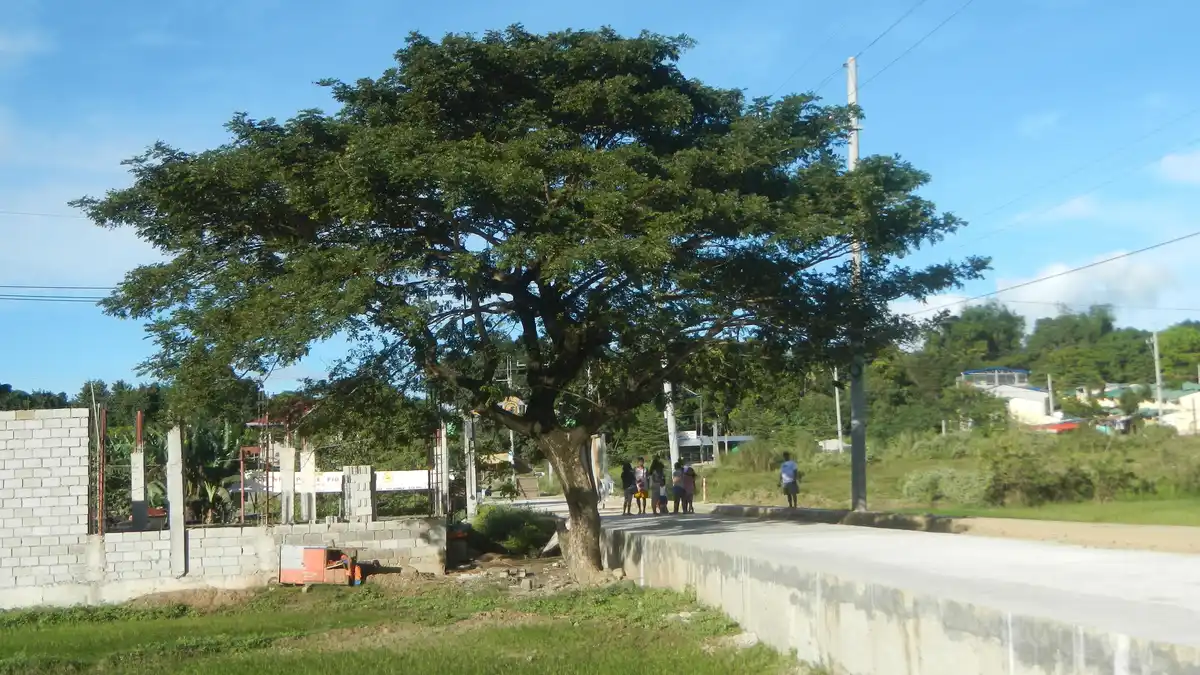
A designated concrete right of way access path in a rural municipality, providing vehicular access to interior landlocked parcels while respecting adjoining servient estates.
Voluntary Agreement vs. Court Petition: Two Distinct Legal Routes
When an interior owner needs access, there are two legal mechanisms available: negotiating an amicable voluntary easement or filing a civil lawsuit for a compulsory judicial easement.
Procedural Comparison: Voluntary Easement Deed vs. Judicial Easement Petition
| Procedural Factor | Voluntary Easement (Amicable Deed) | Judicial Easement (RTC Lawsuit) |
|---|---|---|
| Legal Framework | Civil Code Article 688 (Freedom of Contract) | Civil Code Articles 649 to 650 & Rules of Court |
| Neighbor Cooperation | 100% voluntary consent of servient owner | Contested; granted by judge over neighbor objection |
| Prerequisite Procedure | Direct private negotiation and joint survey | Mandatory Barangay Conciliation (Katarungang Pambarangay) |
| Timeline to Completion | 1 to 3 months (survey, deed drafting, title annotation) | 2 to 5+ years in Regional Trial Court and appeals |
| Cost Profile | Moderate: geodetic survey, agreed indemnity, notary, RD fees | Substantial: litigation attorneys, court filing fees, court commissioners |
| Enforceability & Title Registration | Registered with Registry of Deeds; annotated on both TCTs | Court decision and writ of execution annotated on TCTs |
Step-by-Step Procedure for a Voluntary Deed of Grant of Easement
An amicable agreement is always superior to litigation. It preserves peaceful relations with neighbors, saves hundreds of thousands of pesos in litigation fees, and produces a permanent, registrable legal title annotation within weeks. The proper execution steps are:
- Commission a Geodetic Right of Way Survey: Engage a licensed Geodetic Engineer to conduct an ocular boundary survey. The engineer drafts a formal Right of Way Plan detailing the exact technical bearings, coordinates, width, and square meter area of the road corridor. Concrete monuments (mojons) should be marked along the corridor boundary.
- Negotiate Fair Indemnity and Maintenance Terms: Agree on the one-time land compensation, repair of any fences, drainage rights, and ongoing maintenance responsibilities (such as gravel grading, concreting, and gate security).
- Draft the Deed of Grant of Easement of Right of Way: Have a qualified property lawyer or notary public draft the formal deed. The document must describe both properties by TCT number, incorporate the geodetic survey plan as an integral annex, specify whether the grant is perpetual or temporary, and confirm receipt of full statutory indemnity.
- Notarization and Tax Verification: Both property owners (and their spouses, if the properties are conjugal) sign the deed before a notary public. Secure any documentary stamp tax receipts if applicable under BIR rules.
- Registration with the Registry of Deeds: Submit the notarized deed, survey plan, and owner duplicate title certificates to the Registry of Deeds having jurisdiction. Under Section 51 of Presidential Decree No. 1529 (the Property Registration Decree), the Registrar of Deeds annotates the easement as an encumbrance on the Memorandum of Encumbrances of the Servient Title (TCT), and notes the benefit on the Dominant Title.
Why Title Annotation Under PD 1529 Is Critical
A handshake agreement or a simple handwritten note signed between original neighbors is legally vulnerable. Under the Torrens title system in the Philippines, an unregistered easement binds only the specific parties who signed it.
If the servient owner sells their property to an innocent third-party buyer, or if the servient owner passes away and their children inherit the land, the new owner is legally entitled to rely solely on what is printed on the face of the Transfer Certificate of Title. If the easement is not annotated on the title, the new buyer can legally treat the access road as a private trespass and enclose it. Formal registration under Section 51 of PD 1529 makes the easement an encumbrance that runs with the land, permanently binding all future heirs, buyers, and mortgagees.
Resolving Right of Way Disputes: The Katarungang Pambarangay Process
When negotiations fail and a neighbor padlocks a gate, piles gravel to block passage, or demands millions of pesos for a three-meter strip, the landlocked owner must resist the temptation to take the law into their own hands. Destroying a neighbor gate or trespassing by force exposes you to criminal charges for malicious mischief, coercion, or trespass to dwelling.
Mandatory Barangay Mediation (Local Government Code RA 7160)
Under Republic Act No. 7160 (the Local Government Code of 1991), right of way disputes between individuals residing in the same municipality or city are subject to mandatory pre-litigation mediation before the Lupon Tagapamayapa of the barangay where the real estate is located.
The mediation process follows a structured sequence:
- Filing of the Barangay Complaint: The landlocked owner files a written complaint with the Punong Barangay (Barangay Captain) detailing the isolation of the lot, past access history, and the obstruction caused by the respondent.
- Barangay Captain Mediation: The Barangay Captain summons both parties for a face-to-face mediation hearing within 15 days. The Punong Barangay often conducts an ocular inspection of the road to propose practical compromises.
- Pangkat Conciliation: If the Barangay Captain cannot forge an agreement, the dispute is referred to a three-person conciliation panel (the Pangkat Tagapagkasundo) chosen by the parties, which holds further conciliation sessions over a 15-day period.
- Amicable Settlement or Certificate to File Action: If the parties reach a compromise, they sign an Amicable Settlement, which has the force and effect of a final court judgment after 10 days. If conciliation fails completely, the Lupon Secretary and Punong Barangay issue an official Certificate to File Action.
Filing a right of way lawsuit in the Regional Trial Court without this Certificate to File Action (when both parties reside in the same municipality) will result in the immediate dismissal of the complaint upon motion by the defendant on grounds of failure to comply with a condition precedent.
Provincial Realities: Right of Way in Ilocos Sur and Rural Communities
While urban right of way disputes often center on narrow residential alleys and commercial parking driveways, provincial real estate across Ilocos Sur, La Union, Pangasinan, and Northern Luzon presents unique cultural and physical realities.
Agricultural Access Roads and Rice Paddies (Tal-o Footpaths)
In rural farming communities, access to interior agricultural parcels has traditionally operated on informal family understanding. Farmers pass through narrow earthen embankments between rice paddies (known locally as tal-o or pilapil). While a tal-o suffices for an individual walking with a carabao or backpack sprayer, modern agricultural operations require access for 4-wheel tractors, combine harvesters, and hauling trucks during harvest season.
Under Civil Code Article 651, an interior agricultural owner can demand that an easement be widened to accommodate mechanised farm equipment, provided they pay the proper statutory indemnity for the additional agricultural land converted from production.
Interior Parcels Created by Inherited Land Partitions
The single most common generator of landlocked properties in the provinces is the informal partition of ancestral land among siblings. When parents pass away, children frequently divide an ancestral farm among themselves by drawing arbitrary lines on paper, giving the eldest child the road frontage and relegating younger siblings to interior landlocked parcels without surveying a dedicated access alley (when negotiations break down because one sibling uncooperatively withholds consent, see our practical legal guide on what steps to take when an heir refuses to sign an extrajudicial settlement).
Under Article 652 of the Civil Code, there is a special, protective rule for this exact scenario: Whenever a piece of land acquired by sale, exchange, or partition is surrounded by other estates of the vendor, exchanger, or co-owner, the latter shall be obliged to grant a right of way without indemnity. This means that if you inherit an interior parcel created by the division of a mother title among co-heirs, the sibling who received the highway frontage is legally obligated to provide you with a road right of way without requiring you to pay any land indemnity.
To avoid family conflict and future legal disputes, families partitioning property should always consult our comprehensive guide on How to Partition Inherited Land in the Philippines and coordinate with our licensed land surveyors through LandMaster Property Partition Services to ensure a dedicated subdivision road lot (alley) is officially integrated into the approved subdivision plan.
Informal Footpaths and Long-Term Use (The 30-Year Prescription Myth)
A widespread provincial misconception is the belief that if a family has walked across a neighbor land for 10, 20, or 30 years, they have acquired permanent ownership of the road through acquisitive prescription. This is completely false under Philippine law.
Under Article 622 of the Civil Code, discontinuous easements (which include easements of right of way, because their exercise requires the positive act of man) can never be acquired by prescription, no matter how many decades they have been used. A neighbor who has generously allowed you to walk across their yard for 40 years has merely granted a permissive tolerance. They can legally withdraw that permission at any time, and you cannot claim ownership of the road by prescription. To secure permanent rights, you must formalize the easement through a registered deed or obtain a court order under Article 649.
Extinguishment: When Does an Easement of Right of Way End?
An easement of right of way is not necessarily perpetual. Philippine law recognizes that circumstances change. Under Civil Code Article 655, an easement of right of way can be legally extinguished under two specific conditions:
- Opening of a New Public Road: When the national government, provincial government, or local municipality constructs a new public road, highway, or barangay street that directly joins the boundary of the dominant estate, providing it with adequate access.
- Consolidation with an Adjacent Accessible Property: When the owner of the dominant estate acquires an adjoining parcel of land that already has direct frontage on a public highway, thereby eliminating the isolation.
When either condition occurs, the servient owner has the absolute legal right to demand the extinguishment of the easement and reclaim full, unencumbered possession of the road corridor. However, the law maintains equity: the servient owner must return the statutory indemnity they originally received for the value of the land, although they are not required to pay interest, and any compensation paid for temporary damages or severed improvements is not refunded.
Buyer Due Diligence: How to Check for Right of Way Before Buying Land
Discovering that a property is landlocked after paying millions of pesos to a seller is a nightmare scenario that traps buyers in years of litigation, and is frequently exploited by unscrupulous developers (see our guide on common land buying scams in the Philippines and prevention). Every property buyer must conduct rigorous due diligence before executing a Deed of Absolute Sale:
- Examine the Transfer Certificate of Title (TCT): Read the front and back of the certified true copy of the title issued by the Registry of Deeds. Look at the Memorandum of Encumbrances for registered easements of right of way, road widening reservations, or restrictive covenants. For a complete verification checklist, read our guide on How to Verify Land Titles in the Philippines.
- Inspect the Approved Cadastral Survey Plan: Review the technical survey plan prepared by a licensed geodetic engineer. Verify whether the lot has direct frontage on a dedicated public road or road lot (R.O.W.). Beware of lots marked as interior parcels whose only access is an informal line across adjacent private lots (to locate physical concrete markers on the ground and verify access lines, commission a professional boundary check under our property boundary survey and relocation mojon guide).
- Conduct an On-Site Physical Inspection: Never buy real estate based on blueprints alone. Walk the property physically. Drive your vehicle from the main highway all the way to the property gate. Are you driving on a publicly maintained municipal road, a private subdivision road, or a neighbor private driveway? Are there gates, fences, or signs warning against trespassing?
- Check Municipal Assessor Tax Maps: Visit the Municipal Assessor Office to examine the municipal tax map. The tax map shows the layout of adjoining parcels, road networks, and public rights of way recognized by the local government unit.
For high-value land acquisitions, our team at LandMaster Realty conducts comprehensive technical and legal due diligence, verifying boundaries, road access legality, and title encumbrances. Learn more on our Real Estate Due Diligence Guide or explore our full suite of professional services through our LandMaster Land Acquisition Services.
Frequently Asked Questions Regarding Philippine Right of Way Laws
1. Can a neighbor legally block an existing right of way in the Philippines?
If the right of way is formally registered and annotated on the title certificate under PD 1529, or if it was established by final court judgment, the neighbor cannot lawfully block it. Blocking a registered easement constitutes an illegal act, and the dominant owner can secure an immediate court injunction and claim damages. However, if the access was merely based on verbal permission or informal tolerance, the neighbor can revoke that permission, forcing the landlocked owner to formally demand an easement under Civil Code Article 649.
2. Can I acquire a right of way by prescription if I have used it for more than 30 years?
No. Under Article 622 of the Civil Code of the Philippines, discontinuous easements, including easements of right of way, can never be acquired by prescription, regardless of whether the use has continued for 10, 30, or 50 years. Continued use without a formal deed or court grant is considered mere tolerance by the property owner, which never ripens into an enforceable legal title.
3. What is the minimum legal width for a road right of way?
The Civil Code does not mandate a fixed single width. Under Article 651, the width must be sufficient for the reasonable necessity of the dominant estate. In modern Philippine practice, courts recognize 2.5 to 3.5 meters as the practical minimum for single-lane passenger and emergency vehicular access, while commercial subdivisions and housing developments regulated by BP 220 and PD 957 require minimum road widths of 6.5 to 10.0 meters.
4. Does paying the statutory indemnity make me the owner of the road land?
No. Paying the statutory indemnity under Article 649 compensates the servient owner for the loss of use and damages, but ownership of the physical land remains with the servient estate. The dominant owner acquires only an encumbrance (the right to pass). If the easement is later extinguished under Article 655 because a public road opens, the servient owner reclaims full unencumbered possession and returns the land-value indemnity.
5. What should I do if my neighbor demands an exorbitant price for access?
If a neighbor demands an unreasonable commercial price far above fair market value, do not pay. File a complaint before the Barangay Lupon Tagapamayapa for conciliation. If mediation fails, obtain a Certificate to File Action and file a civil petition for Judicial Easement of Right of Way in the Regional Trial Court. The court will appoint disinterested commissioners to determine the fair market value and damages under Article 649, setting an objective, court-mandated indemnity price.
6. If an ancestral property is divided, does the front lot owner have to give free access to interior lots?
Yes. Under Article 652 of the Civil Code, when an estate is partitioned, sold, or exchanged among co-owners and an interior parcel is left isolated, the co-owner of the enclosed parcel has the legal right to demand a right of way across the front parcels without paying any land indemnity. The co-heirs who divided the property are legally obligated to provide access free of charge.
Professional Property Solutions: Navigating Right of Way with LandMaster Realty
Resolving a road right of way problem requires a delicate balance of legal acumen, accurate geodetic engineering, and local provincial diplomacy. A poorly drafted easement contract, an unregistered agreement, or an inaccurate boundary survey can lead to costly court disputes, hostile neighborhood relations, and unmarketable land titles.
At LandMaster Realty, our licensed team assists property owners, real estate buyers, and families throughout Ilocos Sur and Northern Luzon with end-to-end access solutions. We coordinate licensed geodetic right of way surveys, facilitate professional appraisals to compute fair statutory indemnity, mediate amicable neighbor agreements, prepare registrable easement deeds, and oversee title registration with the Registry of Deeds.
If you are planning to purchase an interior property or need to secure permanent legal access for an existing parcel, explore our expert services on LandMaster Land Acquisition Services, discover our complete title conveyancing solutions at LandMaster Title Transfer Services, or contact our licensed real estate team today for an in-depth document and boundary assessment.