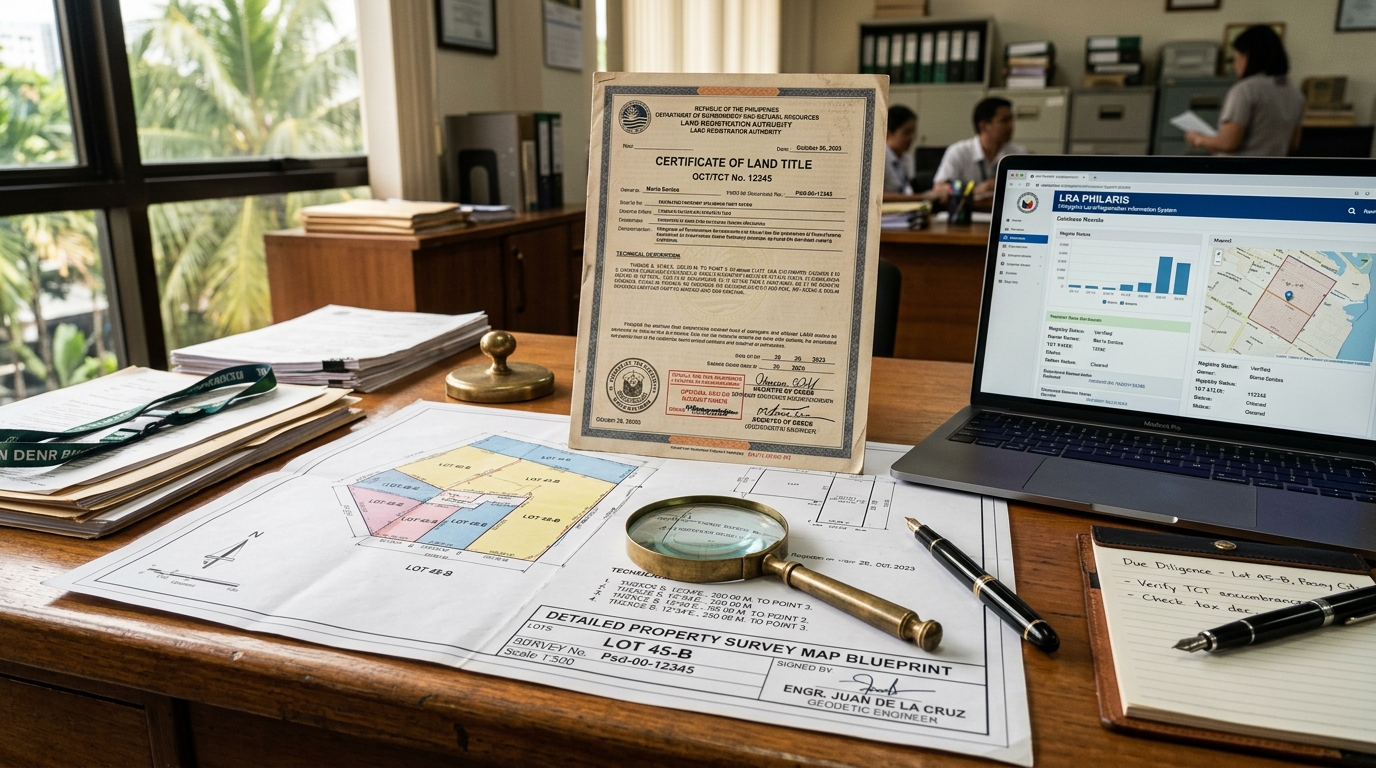
Request a mortgage-readiness checklist based on the documents you already have.
What Mortgage Assistance Covers
Mortgage assistance in the Philippines is not just about filling out a loan form. It is the practical work required to move a land-backed or property-backed loan application from initial inquiry to lender review with fewer delays. LandMaster Realty helps homeowners, buyers, and authorized representatives prepare a cleaner file by reviewing ownership records, tax papers, borrower documents, and the lender-facing checklist before a bank or financing institution asks for revisions.
For many clients, the biggest risk is not the loan product itself. The bigger issue is that the title, tax declaration, or borrower file is incomplete, inconsistent, or not yet aligned with the transaction. Our mortgage assistance work focuses on document readiness, lender coordination, and realistic next steps so the application can move with less friction.
Who Needs Mortgage Assistance
This service is useful for homeowners who want to borrow against a residential or commercial property, land buyers who need guidance on home loan requirements before they commit to a purchase, and families managing a land mortgage process after inheritance, title correction, or delayed tax updates. It is also useful when the borrower is overseas and a local representative needs a clear document plan.
- Borrowers applying for a bank loan secured by land, a house and lot, or another real property asset.
- Owners who need help checking whether title and tax records are lender-ready.
- Buyers who want a mortgage document checklist before they pay reservation fees or sign loan papers.
- Families resolving ownership gaps that could affect approval, annotation, or release.
Eligibility Before You Submit to a Lender
Every bank has its own credit policy, but most lenders review the same core issues first: the borrower must be legally identified, the collateral must be verifiable, and the documents must support the intended loan structure. A borrower is more likely to be eligible when the title is readable and consistent, real property taxes are updated, the owner can show authority to mortgage the asset, and the income file is complete enough for an initial credit review.
- Clear owner identity and matching names across IDs, tax records, and title documents.
- Current tax declaration and payment records for the property.
- Readable title copy with no unresolved transfer issue that can block annotation.
- Income, business, or employment records that support repayment capacity.
- Authority documents when a spouse, co-owner, or attorney-in-fact is part of the transaction.
Title-Related Risks That Delay Approval
Even a strong borrower can lose time when the property file is weak. In practice, lenders slow down or reject applications when ownership history is unclear, taxes are not updated, or there is a gap between the intended borrower and the actual registered owner. This is why we treat title review as part of mortgage assistance instead of as a separate afterthought.
- Untransferred ownership after sale, donation, inheritance, or partition.
- Mismatch between title details and the latest tax declaration.
- Missing real property tax receipts or unresolved delinquency questions.
- Encumbrances, annotations, or pending disputes that affect lender confidence.
- Boundary, technical description, or lot-identification issues that require follow-up before a loan can move.
If the property record is not yet ready, clients often need parallel support from our Transfer of Title or Land Acquisition team before the lender review reaches a stable stage.
Timeline and Fee Disclaimer
Mortgage timelines depend on document completeness, property condition, lender policy, and whether the file needs title or tax cleanup first. A straightforward case can move faster, while a file with missing records, old tax issues, or ownership gaps will take longer. Our listed starting fee covers the initial mortgage assistance scope only. Appraisal costs, annotation expenses, government fees, bank charges, and third-party documentary expenses vary by lender and transaction profile.
We explain the likely sequence early so clients know what LandMaster handles directly, what the bank controls, and which outside fees may still apply. That transparency matters for both homeowners and investors who want to budget their next step correctly.
What Banks Usually Request
Most lenders ask for a practical mix of borrower and collateral records. The exact list changes by institution, but the usual file includes borrower IDs, proof of income, title copy, tax declaration, tax receipts, and any supporting authority documents. If the property is part of a larger transaction, the lender may also ask for deeds, contracts to sell, or valuation-related records. This is where a clear mortgage document checklist prevents repeat trips, missing pages, and avoidable payment delays.
Related Services and Next Steps
Mortgage assistance works best when the property file is already grounded in due diligence and clean ownership records. If your loan depends on a recent purchase, inheritance, or transfer, review these related services first:
- Land Acquisition for due diligence, seller-document review, and pre-purchase risk checks.
- Transfer of Title when the property still needs ownership updates before mortgage annotation.
- Meet Algero Favis to understand the local transaction guidance behind LandMaster’s service process.
- Contact LandMaster Realty to request a working checklist for your specific loan scenario.
Official Reference Links
We recommend checking official public resources when you need a second reference point for valuation, tax context, or borrower education. These sources do not replace lender-specific instructions, but they help borrowers verify background details before they commit to the next payment or filing step.
- Bureau of Internal Revenue zonal values for valuation context that may affect pricing, tax discussions, and document review.
Mortgage Readiness Image References