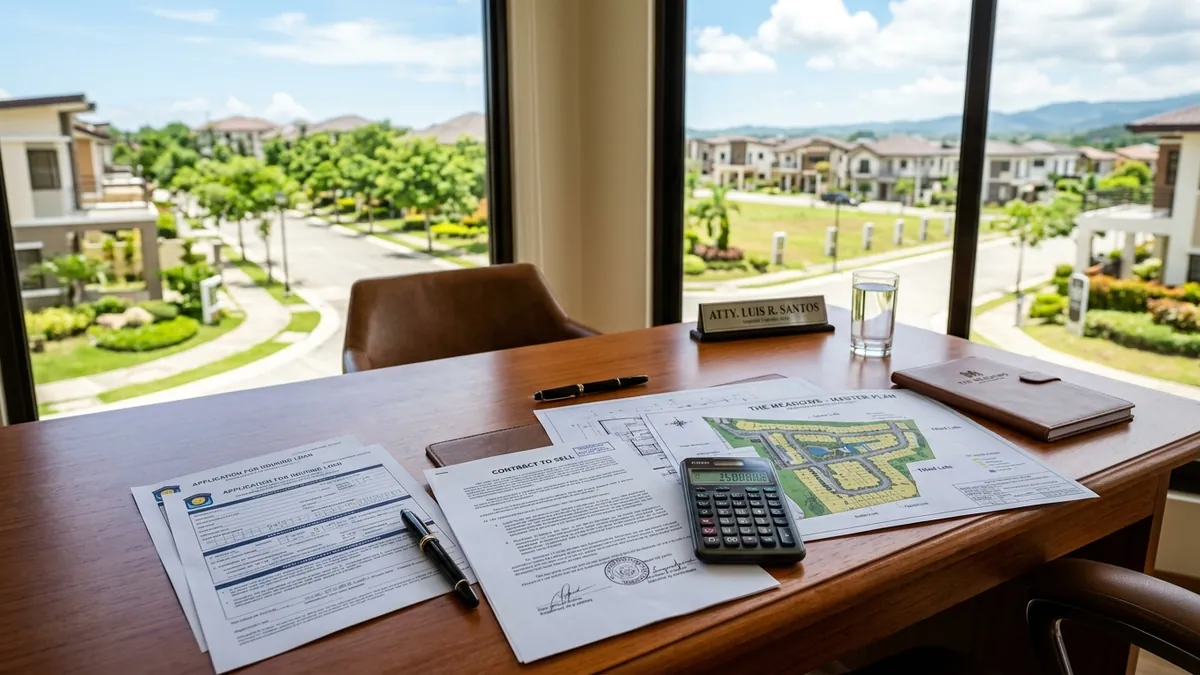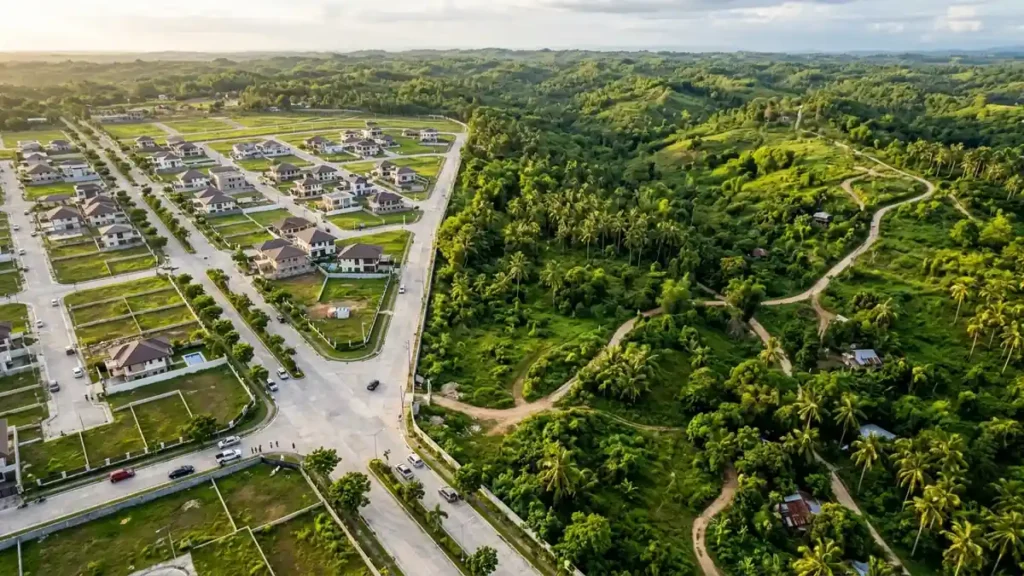
For Filipino property buyers, Overseas Filipino Workers (OFWs), and provincial real estate investors, few decisions carry greater long-term financial consequences than choosing between purchasing an individual titled lot inside a master-planned residential subdivision and acquiring unserviced raw land or agricultural acreage. On paper, raw provincial land frequently appears to be an extraordinary bargain. In provinces like Ilocos Sur, unserviced acreage can often be acquired for 600 PHP to 1,200 PHP per square meter, whereas developed residential subdivision lots in Metro Vigan, Bantay, or San Juan command between 4,000 PHP and 8,500 PHP per square meter. However, looking strictly at the headline purchase price creates an expensive illusion. A subdivision lot is not merely a piece of dirt; it is a fully serviced, legally segregated, and infrastructure-integrated civil engineering unit. Conversely, raw land is an unfinished canvas where the buyer inherits the total legal, physical, and financial burden of constructing access roads, installing storm drainage, extending electric utility poles, securing potable water, navigating Department of Agrarian Reform (DAR) land use conversion, and establishing court-sanctioned right-of-way easements.
As a Licensed Real Estate Broker and Licensed Real Estate Appraiser practicing in Northern Luzon, I routinely assist clients who purchased rural acreage with dreams of building a private family compound, only to discover that bringing three-phase electricity, concrete road access, and potable water to the property cost more than the original purchase price of the land itself. Conversely, buyers who purchase subdivision lots without auditing developer compliance under Presidential Decree No. 957 can find themselves trapped in stalled projects with unpaved roads and missing individual titles. This practitioner guide provides an exhaustive engineering, legal, and financial deconstruction comparing subdivision lots versus raw land in the Philippines. We examine statutory protections under Presidential Decree No. 957 and Batas Pambansa Blg. 220, civil infrastructure development costs, right-of-way easement laws under the Civil Code of the Philippines (Articles 649 to 657), DAR CARP agricultural land conversion protocols (DAR Administrative Order No. 1, Series of 2019), Land Registration Authority (LRA) title segregation pipelines, Homeowners Association (HOA) covenants under Republic Act No. 9904, and worked financial development models in Ilocos Sur.
Executive Summary: Subdivision Lot vs Raw Land at a Glance
The choice between a subdivision lot and raw land is fundamentally a trade-off between turnkey infrastructure security and spatial autonomy. In an approved residential subdivision, the developer has already absorbed the regulatory approvals, civil engineering capital expenditures, and statutory land dedication requirements mandated by Philippine national housing laws. When you receive your Transfer Certificate of Title (TCT), you own a demarcated parcel with direct legal access to an interconnected concrete road network, engineered drainage systems, and established electrical and water utility connection points. In exchange for this convenience, you pay a substantial developer retail margin, accept Homeowners Association (HOA) architectural restrictions, and operate within standardized lot boundaries ranging from 120 to 350 square meters.
Raw land, by contrast, offers expansive physical space, unrestricted architectural freedom, agricultural utility, and zero ongoing monthly HOA dues. It allows buyers to establish multi-generational homesteads, boutique eco-farms, or large residential compounds with expansive setbacks and private landscaping. However, raw land carries immense regulatory and engineering friction. The property is frequently classified as agricultural under municipal Comprehensive Land Use Plans (CLUP), requiring formal DAR land use conversion clearance before residential construction can legally proceed. Furthermore, raw land parcels often lack dedicated road frontage, exposing the buyer to complex easement negotiations or civil court litigation under Civil Code Article 649. The following master summary contrasts the two asset classes across fundamental purchase parameters:
| Evaluation Dimension | Master-Planned Subdivision Lot | Standalone Raw Land or Rural Acreage |
|---|---|---|
| Governing Statutes | Presidential Decree No. 957 (PD 957), Batas Pambansa Blg. 220 (BP 220), Republic Act No. 9904 (Magna Carta for Homeowners). | Civil Code of the Philippines (RA 386), Republic Act No. 6657 (CARP Law), Local Government Code of 1991 (RA 7160). |
| Regulatory Oversight | Department of Human Settlements and Urban Development (DHSUD, formerly HLURB) and Local Government Unit (LGU). | Department of Agrarian Reform (DAR), Department of Environment and Natural Resources (DENR), and LGU Assessor/Zoning. |
| Titling Structure | Individual Transfer Certificate of Title (TCT) segregated from mother title, complete with approved subdivision technical descriptions. | Often held under mother titles (pro-indiviso co-ownership), unsegregated agrarian titles, or rural tax declarations requiring judicial confirmation. |
| Road Access and Rights-of-Way | Guaranteed legal and physical access via dedicated concrete subdivision roads built to statutory width standards (10m to 15m). | Variable; frequently landlocked or accessed via informal dirt trails, requiring formal right-of-way easement acquisition (Civil Code Art. 649). |
| Utility Availability | Direct connection points at lot frontage for electric power, municipal water supply, street lighting, and storm drainage culverts. | Off-grid or unserviced; buyer must personally finance utility pole extensions, step-down transformers, deep-well drilling, and septic outfalls. |
| Zoning and Land Classification | Pre-approved residential or commercial classification under municipal zoning ordinances and approved development permits. | Frequently classified as agricultural or protected timberland; requires formal LGU reclassification and DAR Land Use Conversion (LUC). |
| Bank and Pag-IBIG Financing | High financing eligibility; major commercial banks and Pag-IBIG Fund readily accept accredited subdivision lots as loan collateral. | Extremely restricted financing; banks and Pag-IBIG generally reject raw agricultural land or require strict residential titling and paved road access. |
| Community Governance and Covenants | Regulated by Homeowners Association (HOA) deed of restrictions, mandatory monthly dues, architectural guidelines, and building setbacks. | Zero HOA oversight, zero monthly dues, complete architectural autonomy, but vulnerable to unregulated neighboring land uses. |
| Construction Readiness | Immediate; building permits can be filed as soon as the title is transferred and architectural plans comply with subdivision setbacks. | Delayed by 12 to 24 months due to boundary relocation surveys, DAR conversion clearance, site grading, and road construction. |
| Capital Expenditure Profile | High upfront acquisition price per square meter, but near-zero post-purchase civil infrastructure development costs. | Low initial acquisition price per square meter, but massive post-purchase infrastructure development and professional licensing expenditures. |
Statutory Foundations: PD 957 and BP 220 vs Unregulated Raw Land
To evaluate land acquisitions accurately in the Philippines, an investor must understand the legal framework that separates developed residential subdivisions from unserviced raw acreage. In the Philippine legal system, land development is strictly regulated to prevent fraudulent property sales and ensure public safety, civil sanitation, and structural integrity. When a developer subdivides a tract of land into residential lots for public sale, the project enters a comprehensive statutory compliance pipeline governed primarily by Presidential Decree No. 957 and Batas Pambansa Blg. 220.
Presidential Decree No. 957: The Gold Standard for Open-Market Subdivisions
Promulgated on July 12, 1976, Presidential Decree No. 957, known as The Subdivision and Condominium Buyers’ Protective Decree, was enacted to protect real estate buyers against fraudulent developers, deceptive marketing practices, and substandard construction. PD 957 applies to open-market and medium-cost residential subdivisions throughout the Philippines. Under PD 957, a developer cannot simply draw lot boundary lines on a cadastral map and commence sales. The developer is legally bound by stringent engineering and planning standards enforced by the Department of Human Settlements and Urban Development (DHSUD):
- Mandatory Open Space Reservation (Section 31): Under PD 957 as amended by Presidential Decree No. 1216, developers must allocate thirty percent (30%) of the total gross subdivision area for roads, alleys, sidewalks, parks, playgrounds, and community facilities. This open space is non-alienable, reserved strictly for public use, and cannot be converted into saleable residential inventory.
- Standardized Road Hierarchy: PD 957 mandates specific minimum widths for interior roads. Major arterial subdivision roads must measure at least 10.0 to 12.0 meters wide, minor collection roads at least 8.0 to 10.0 meters, and dead-end cul-de-sacs at least 6.0 meters, complete with concrete curbs, gutters, and paved pedestrian sidewalks.
- Storm Drainage and Sanitation Infrastructure: The developer must construct an integrated, closed underground drainage network using reinforced concrete culvert pipes (RCP) engineered to channel surface storm runoff into municipal outfalls or natural waterways without causing flooding on individual residential parcels.
- Potable Water and Electrical Networks: Developers are legally required to install an operational water distribution system connected to the local water district or an approved deep-well storage facility, alongside an overhead electrical distribution grid compliant with the local electric cooperative (such as the Ilocos Sur Electric Cooperative, or ISECO).
- Segregated Title Delivery (Section 25): PD 957 mandates that upon full payment of the purchase price, the developer must deliver the individual Transfer Certificate of Title (TCT) clean and free from all liens and encumbrances. Developers are prohibited from mortgaging subdivided lots without prior written clearance from the DHSUD.
Batas Pambansa Blg. 220: Economic and Socialized Housing Standards
While PD 957 governs medium-cost and open-market subdivisions, Batas Pambansa Blg. 220 (BP 220) was enacted in 1982 to establish modified, cost-effective design standards for socialized and economic housing projects. BP 220 allows smaller minimum lot sizes (such as 64 square meters for single-detached economic housing, or 72 square meters for socialized row houses) and permits slightly narrower road rights-of-way (such as 8.0-meter major roads and 6.5-meter minor roads). However, BP 220 retains mandatory infrastructure requirements, including paved road surfacing (macadam or concrete), interconnected drainage channels, electrical supply connections, and central water supply taps. Whether a project falls under PD 957 or BP 220, the buyer acquires a legally recognized, infrastructure-serviced residential unit protected by national housing standards.
The DHSUD Certificate of Registration (CR) and License to Sell (LS) Mandate
The single most critical consumer safeguard in Philippine subdivision development is the dual requirement of a Certificate of Registration (CR) and a License to Sell (LS) issued by the DHSUD pursuant to Sections 4 and 5 of PD 957. A developer who has secured municipal development permits and zoning clearances is still legally prohibited from selling, advertising, or accepting reservation deposits for subdivision lots until the DHSUD issues the formal License to Sell.
To secure a License to Sell, the developer must post a substantial performance bond guaranteeing that all road networks, drainage lines, water facilities, and electrical grids will be fully completed within a specified statutory timeframe (typically one year from license issuance, extendable upon DHSUD evaluation). If a developer fails to complete the promised infrastructure, buyers are protected by Section 23 of PD 957. Under Section 23, if the developer fails to develop the project according to approved plans, the buyer may choose to suspend installment payments without penalty after giving due notice to the developer, or demand a full refund of all payments made, including statutory amortization interest.
When you buy standalone raw land, by contrast, zero performance bonds exist. No government agency compels the seller to pave the dirt road leading to your parcel, install electric poles, or prevent surface flooding from adjacent farmland. You are purchasing the property strictly under the doctrine of caveat emptor (buyer beware), absorbing all physical and regulatory defects into your personal investment capital.
What Constitutes Raw Land Under Philippine Real Estate Law?
In Philippine real estate practice, “raw land” refers to unimproved, unserviced acreage that has not undergone formal master-planned subdivision development. Under the Public Land Act (Commonwealth Act No. 141) and the 1987 Philippine Constitution (Article XII, Section 3), all public domain lands are classified into agricultural, forest or timber, national parks, and mineral lands. Only agricultural lands of the public domain are alienable and disposable (A&D) for private ownership.
Private raw land parcels in provincial areas are overwhelmingly titled or declared as agricultural or rural residential. These properties are characterized by the complete absence of civil infrastructure: they feature no concrete access roads, no engineered drainage culverts, no connection points to municipal water districts, and no immediate electrical utility poles. Furthermore, raw land parcels are frequently irregular in shape, their physical boundaries marked only by concrete monuments (mojones), natural creeks, or tree lines, rather than engineered subdivision curb cuts. When buying raw land, your purchase contract covers strictly the raw soil; the infrastructure to make that soil habitable must be conceived, permitted, funded, and built by you.
Master Comparison Matrix: Subdivision Lot vs Raw Land
To visualize the operational and financial divergences between an approved subdivision lot and standalone rural raw land, the following comprehensive decision matrix benchmarks both property types across ten critical operational criteria:
| Operational Parameter | Subdivision Lot (PD 957 / BP 220) | Standalone Raw Land / Rural Acreage | Strategic Practitioner Analysis |
|---|---|---|---|
| 1. Acquisition Cost per Square Meter | Moderate to High (4,000 PHP to 12,000+ PHP / sqm in provincial growth centers). | Low to Moderate (500 PHP to 2,000 PHP / sqm for rural acreage). | Subdivision price incorporates developer infrastructure capital expenditures, licensing overhead, and profit margins. Raw land appears cheaper but excludes essential civil works. |
| 2. Title Cleanliness & Boundaries | Individual TCT issued with approved survey plan (LRC/LRA Psd series) and exact boundary bearings. | Frequently unsegregated mother titles (pro-indiviso co-ownership), old cadastral lots, or tax declarations. | Subdivision titles offer immediate conveyance clarity. Raw land requires comprehensive title tracing, boundary relocation surveys, and often judicial or extrajudicial partition. |
| 3. Road Access Legality | Legally guaranteed under PD 957 Section 31; dedicated subdivision road lots owned by developer or LGU. | Variable; high risk of being landlocked; access often relies on informal right-of-way across neighboring land. | Lack of legal road access is the number one cause of land litigation in the Philippines. Establishing a compulsory easement under Civil Code Article 649 requires proof of isolation and court-approved indemnity. |
| 4. Road Infrastructure Quality | Engineered reinforced concrete pavement (150mm to 200mm thick) with concrete curbs, gutters, and sidewalks. | Unpaved dirt trails, gravel cart paths, or agricultural dikes impassable during the rainy typhoon season. | Building private concrete access road costs approximately 8,000 PHP to 15,000 PHP per linear meter, rapidly eroding initial purchase savings on raw land. |
| 5. Electric Utility Integration | Primary power lines and distribution poles pre-installed along street frontages; standard service drop connection. | Off-grid or located hundreds of meters from the nearest utility backbone (ISECO / Meralco poles). | Extending primary distribution lines, erecting private concrete poles, and installing step-down transformers can cost 250,000 PHP to 600,000+ PHP for remote raw parcels. |
| 6. Drainage and Flood Control | Integrated underground reinforced concrete culvert pipes (RCP) and storm catch basins connected to public outfalls. | Natural surface runoff; prone to seasonal waterlogging or flooding from adjacent elevated agricultural fields. | Raw land buyers must personally construct retaining walls, drainage ditches, and culvert pipes, requiring formal drainage easements across downstream private properties. |
| 7. Potable Water Access | Central water reticulation system connected to local water district or pressurized subdivision deep-well tanks. | Requires drilling a private deep well, testing for chemical/biological potable purity, or installing booster pumps. | Private deep-well drilling, casing, submersible pump installation, and water filtration systems cost between 80,000 PHP and 250,000 PHP depending on aquifer depth. |
| 8. Zoning and DAR Clearance | Pre-approved residential zoning; fully cleared from agrarian reform coverage under DAR AO 1 (Series of 2019). | Subject to Comprehensive Agrarian Reform Program (CARP); requires formal DAR Land Use Conversion (LUC). | Converting agricultural raw land to residential classification takes 12 to 24 months, requires extensive inter-agency clearances, and incurs substantial professional fees. |
| 9. Architectural Restrictions & Covenants | Strict HOA Deed of Restrictions governing minimum building costs, setbacks, exterior aesthetics, and commercial activity. | Complete architectural freedom; no minimum building value, no commercial restrictions, full homestead autonomy. | Subdivision restrictions preserve neighborhood property values and prevent nuisance uses. Raw land allows complete creative freedom but leaves you vulnerable to nearby pig farms or industrial yards. |
| 10. Collateral and Resale Liquidity | High liquidity; standard appraisal values; highly acceptable collateral for bank mortgages and Pag-IBIG loans. | Low liquidity; lengthy buyer due diligence period; commercial banks generally reject rural raw land as loan collateral. | OFWs relying on mortgage financing or seeking future asset liquidity should overwhelmingly prioritize titled subdivision lots over unserviced raw acreage. |
The Hidden Site Infrastructure Reality and Development Costs
When inexperienced buyers compare real estate listings, they frequently commit the classic category error of treating raw land acreage and subdivision lots as equivalent property assets. To understand why a 250-square-meter subdivision lot in Bantay or Vigan City commands 5,000 PHP per square meter while a 1,500-square-meter parcel in a neighboring rural barangay sells for 900 PHP per square meter, one must break down the civil engineering infrastructure that bridges the gap between raw agricultural acreage and a functional residential home site.
Building a home on unserviced raw land requires constructing private civil engineering works that are ordinarily built by municipal public works authorities or corporate subdivision developers. Below is an itemized analysis of the five primary infrastructure systems that every raw land developer must personally finance and construct:
1. Road Network Construction: Concrete Pavement, Curbs, and Gutters
Accessing a residential property requires an all-weather road capable of supporting construction logistics (concrete transit mixers, dump trucks loaded with base coarse aggregate, and steel delivery trucks) as well as daily vehicular traffic. In the Philippines, unpaved rural roads and dirt access ways rapidly deteriorate into impassable mud tracks during the Southwest Monsoon (Habagat) and typhoon season (June to November).
Constructing a durable, standard two-lane residential access road (5.0 to 6.0 meters wide) compliant with Department of Public Works and Highways (DPWH) and LGU engineering specifications involves four structural phases:
- Subgrade Preparation and Clearing: Stripping organic topsoil, clearing vegetation, excavating to design subgrade elevation, and rolling compaction using an 8-ton vibratory road roller. (Cost: approximately 150 PHP to 250 PHP per square meter of roadbed).
- Sub-Base and Base Course Placement: Spreading, grading, and compacting a 150mm to 200mm layer of crushed gravel aggregate base course (DPWH Item 200/201) to achieve optimum moisture content and standard density. (Cost: approximately 350 PHP to 550 PHP per square meter).
- Portland Cement Concrete Pavement (PCCP): Pouring a 150mm to 200mm (6 to 8-inch) thick reinforced concrete slab using 3,000 PSI compressive strength concrete, complete with temperature steel rebar reinforcement, dowel bars at expansion joints, and surface brooming for tire traction. (Cost: approximately 1,200 PHP to 1,800 PHP per square meter of pavement).
- Curbs and Gutters: Casting concrete curb-and-gutter barriers along both flanks to control storm runoff and prevent edge unraveling. (Cost: approximately 600 PHP to 900 PHP per linear meter).
When consolidated, constructing a private 6-meter-wide concrete access road costs between 9,000 PHP and 14,000 PHP per linear meter. If your raw land parcel is situated just 50 meters back from the main provincial highway, building an adequate concrete access road will cost between 450,000 PHP and 700,000 PHP before you pour a single foundation footing for your home.
2. Storm Drainage and Flood Mitigation: Culverts, Catch Basins, and Outfalls
Provincial raw land in the Philippines is frequently situated within natural floodplains, agricultural rice terraces, or low-lying agricultural basins designed specifically to hold irrigation water. Constructing a residential dwelling on such terrain disrupts natural drainage patterns and exposes the property to catastrophic inundation unless a closed storm drainage network is installed.
A functional residential drainage system requires installing Reinforced Concrete Pipes (RCP) with minimum internal diameters of 450mm to 600mm (18 to 24 inches), interconnected with masonry catch basins every 15 to 20 meters, and leading to a legally established natural waterway or municipal roadside drainage outfall. Sourcing, trenching, laying, and backfilling 600mm RCP culverts costs approximately 2,500 PHP to 4,200 PHP per linear meter. Furthermore, under Article 637 of the Civil Code of the Philippines, lower estates are obliged to receive waters that naturally descend from higher estates, but the owner cannot create an artificial drainage outfall that floods adjacent private properties without securing formal drainage easements and paying statutory damages.
3. Electric Utility Integration: Transformer Tap-Ins and Distribution Poles
In approved subdivisions, the developer coordinates directly with the local electric distribution utility (such as ISECO in Ilocos Sur) to erect high-voltage distribution poles, mount distribution transformers, string three-phase secondary lines, and install street lighting along every lot frontage. A lot buyer simply files a standard residential connection application, presents an electrical permit and Certificate of Final Electrical Inspection (CFEI) from the municipal building official, and pays a standard meter deposit (typically 3,500 PHP to 6,000 PHP).
On raw land, the nearest electrical service backbone may terminate 150 to 500 meters away along the public barangay road. Electric cooperatives will not extend distribution infrastructure into private rural acreage at their own expense for a single residential dwelling. The property owner must finance a private line extension under the utility’s engineering supervision:
- Concrete Utility Poles: Furnishing, transporting, and erecting 30-foot to 35-foot spun concrete distribution poles (DPWH/NEA standard) costs between 25,000 PHP and 40,000 PHP per pole, spaced at maximum 40-meter intervals. A 200-meter line extension requires 5 poles, costing 125,000 PHP to 200,000 PHP.
- Primary and Secondary Wiring: Sourcing and stringing ACSR (Aluminum Conductor Steel Reinforced) and insulated secondary overhead wires costs 120 PHP to 220 PHP per linear meter per run.
- Pole-Mounted Distribution Transformer: If the secondary voltage drop over the extended distance exceeds utility limits (typically 3% to 5%), you must purchase and mount a dedicated single-phase step-down transformer (typically 15 kVA to 25 kVA) complete with lightning arresters and fuse cutouts, costing between 120,000 PHP and 220,000 PHP.
Consequently, bringing stable 220V electricity to a raw land parcel set back 200 meters from the highway easily consumes 300,000 PHP to 550,000 PHP in dedicated electrical infrastructure.
4. Potable Water Supply: Deep Wells, Water Districts, and Pumping Systems
Subdivision developments provide pressurized water mains installed along road frontages connected to the local water district (such as the Metro Vigan Water District) or a centralized subdivision deep-well pumping station with chlorination and elevated storage tanks. Tapping into this system costs between 5,000 PHP and 15,000 PHP for standard meter connection fees.
Raw rural acreage is rarely served by municipal water district pipelines. Raw land buyers must secure their own water supply through exploratory deep-well drilling. In provincial areas, shallow hand-pumped wells (less than 30 feet deep) are almost universally contaminated by agricultural pesticide runoff, chemical fertilizers, and biological coliform bacteria from nearby livestock pens. A residential deep well must penetrate 80 to 200 feet into the water table to reach sanitary confined aquifers:
- Rotary Drilling and Well Casing: Drilling through hard clay, limestone, or volcanic strata and installing 4-inch to 6-inch heavy-duty PVC or steel casing pipes costs approximately 1,200 PHP to 2,500 PHP per foot of depth. An 80-foot deep well costs 96,000 PHP to 200,000 PHP.
- Submersible Pumping Hardware: Sourcing and installing a 1.0 to 2.0 horsepower multi-stage stainless steel submersible pump, control box, pressure tank, and digital automatic pressure switch costs 45,000 PHP to 75,000 PHP.
- Water Filtration and Testing: Laboratory bacteriological and chemical potability testing (PNSDW standards) plus multi-stage sediment filtration and ultraviolet (UV) sterilization systems cost an additional 25,000 PHP to 50,000 PHP.
5. Site Grading, Earthworks, and Retaining Walls
Subdivision lots are delivered graded and engineered to ensure natural gravity drainage toward street storm culverts. Raw agricultural acreage, by contrast, is often carved into terraced rice paddies (payaw) designed intentionally to retain standing water, or rolling hillside terrain with steep slope gradients. Converting agricultural acreage into a stable, dry residential building pad requires extensive earthmoving operations:
- Clearing, Grubbing, and Topsoil Stripping: Removing dense vegetation, tree stumps, and organic clay loam. (Cost: 50,000 PHP to 120,000 PHP per half-hectare).
- Engineered Embankment Fill: Sourcing, transporting, dumping, and compacting selected borrow fill material (mountain mix or base coarse aggregate). Raising a 1,000-square-meter parcel by just 0.6 meters (2 feet) requires 600 cubic meters of compacted fill. At 650 PHP to 900 PHP per delivered cubic meter, imported soil fill costs 390,000 PHP to 540,000 PHP.
- Reinforced Concrete Perimeter Retaining Walls: To prevent soil erosion and retain imported fill along property boundaries, you must construct structural concrete hollow block (CHB) retaining walls reinforced with steel rebar footings. Constructing a 1.8-meter-high perimeter wall costs approximately 2,800 PHP to 4,500 PHP per linear meter. Enclosing a 1,500-square-meter parcel (perimeter of approximately 160 meters) costs 448,000 PHP to 720,000 PHP.

Road Right-of-Way and Easement Laws (Civil Code Articles 649 to 657)
Of all legal hazards associated with purchasing raw land in the Philippines, none produces more contentious litigation or leaves more property owners financially stranded than the lack of a legally secure road right-of-way (RROW). In master-planned subdivisions, road lots are permanently dedicated to public use under Section 31 of PD 957; the developer cannot legally obstruct or extinguish your access. When purchasing rural raw land, however, your parcel may be separated from the nearest public highway by tracts of privately owned farmland, ancestral estates, or commercial holdings.
The Four Mandatory Legal Requisites for an Easement of Right-of-Way
Many naive buyers purchase landlocked rural parcels believing that Philippine law guarantees an automatic, free right to pass across neighboring land to reach the highway. This is a dangerous legal misconception. While the Civil Code of the Philippines recognizes the right of a landlocked property owner to demand a compulsory easement, that right is strictly conditional. Under Article 649 and Article 650 of the Civil Code, as consistently affirmed by the Supreme Court of the Philippines (e.g., in Costabella Corporation v. Court of Appeals, G.R. No. 80514), an owner claiming a compulsory easement of right-of-way must prove the concurrence of four mandatory legal requisites:
- Genuine Isolation Without Adequate Outlet: The dominant estate (your property) must be genuinely surrounded by other immovables belonging to different owners, with no adequate, convenient, or safe outlet to a public highway. If an existing public access path exists, even if it is longer, steeper, or more inconvenient than passing through your neighbor’s property, the courts will not grant a compulsory easement across private land.
- Payment of Proper Statutory Indemnity: Under Civil Code Article 649, a compulsory easement is never free. If the easement is established for permanent vehicular access (as is required for residential dwellings), the dominant owner must pay the servient owner the full appraised market value of the land occupied by the roadway, plus compensation for any damages caused to the servient estate. If the easement is temporary or strictly pedestrian, indemnity covers the value of the damage caused.
- Isolation Must Not Be Caused by the Owner’s Own Acts: The isolation of the property must not be the result of the buyer’s or previous owner’s deliberate decisions. For example, if a landowner previously owned a large parcel touching the highway, subdivided that parcel, and sold off the highway frontage while retaining the rear parcel without reserving a right-of-way, the courts will hold that the owner created their own isolation and will reject a compulsory easement demand against innocent third-party neighbors.
- Establishment at the Point of Least Prejudice: Under Article 650, the easement of right-of-way must be established at the point least prejudicial to the servient estate. Insofar as consistent with this rule, the distance from the dominant estate to a public highway must be the shortest. If the shortest path runs straight through your neighbor’s residential living area or active commercial building, the law dictates that the easement must follow a longer, less intrusive route along property boundaries, even if constructing the road costs you significantly more.
Calculating Statutory Indemnity for the Servient Estate
Buyers who assume that legal right-of-way disputes are settled with a token handshake are shocked when they calculate the statutory indemnity required under Civil Code Article 649. To construct a functional residential driveway that accommodates delivery trucks, emergency ambulances, and private automobiles, you require an easement width of at least 4.0 to 5.0 meters.
Consider a scenario where your raw parcel is separated from the public highway by a neighbor’s commercial or residential frontage across a distance of 60 meters. To construct a 5-meter-wide road right-of-way, you must occupy 300 square meters of your neighbor’s private property (60 meters length x 5 meters width). If that roadside highway frontage carries a fair market value of 3,500 PHP per square meter, the statutory indemnity payable to your neighbor under Article 649 amounts to 1,050,000 PHP (300 sqm x 3,500 PHP), payable upfront in cash before you are legally permitted to grade the road, plus additional compensation for damaged crops, demolished walls, or severed irrigation lines.
Why Voluntary Easements Fail and How Landlocked Raw Land Leads to Litigation
In provincial real estate transactions, raw land sellers frequently promise buyers an informal right-of-way based on verbal permission from a relative or neighbor: “Agtugaw kayo laeng, kabsat ko ti akin-kua iti kalsada” (Don’t worry, my brother owns the access road). Relying on an unannotated, verbal right-of-way is catastrophic. Under Article 1403 of the Civil Code, agreements creating real rights over immovable property are unenforceable under the Statute of Frauds unless evidenced by a written instrument.
Even a written Deed of Grant of Right-of-Way executed on private bond paper is vulnerable. If the neighboring landowner dies, the heirs may refuse to honor the agreement. If the neighboring land is sold to a third party who purchases the property in good faith without the easement being registered and annotated on the Memorandum of Encumbrances of the neighbor’s Transfer Certificate of Title (pursuant to Section 54 of Presidential Decree No. 1529), the new owner has the absolute legal right to erect a concrete fence across your access way and block your passage.
Securing a court-sanctioned compulsory easement through litigation before the Regional Trial Court (RTC) typically requires three to six years of contentious legal proceedings, tens of thousands of pesos in attorney acceptance and appearance fees, court filing fees, and professional surveyor judicial testimony. During those years, your raw land remains completely inaccessible for residential construction. In an approved subdivision, this legal risk is zero; the road networks are dedicated, segregated, and guaranteed in perpetuity.
Agricultural Land Conversion: DAR AO 1 (Series of 2019) and LGU Reclassification
A prevalent trap for provincial property buyers in the Philippines is purchasing raw agricultural land with the intention of immediately constructing a residential home. Many buyers assume that as long as they hold a Transfer Certificate of Title or an updated Tax Declaration classified as “residential,” they can pull a building permit and begin construction. In reality, the legal conversion of agricultural land in the Philippines is governed by strict agrarian reform laws that override municipal tax classifications.
The Difference Between LGU Zoning Reclassification and DAR Conversion
Philippine jurisprudence and administrative law draw a sharp legal distinction between land reclassification and land conversion. Confusing these two distinct legal processes is a primary cause of halted construction projects and criminal investigations:
- LGU Reclassification (RA 7160 Section 20): Under Section 20 of Republic Act No. 7160 (The Local Government Code of 1991), a city or municipality, through an ordinance enacted by the Sangguniang Panlungsod or Sangguniang Bayan after conducting public hearings, may reclassify agricultural lands to non-agricultural uses where the land has ceased to be economically feasible for agricultural purposes, or where the land has greater economic value for residential, commercial, or industrial purposes. Reclassification simply modifies the zoning designation on the municipal Comprehensive Land Use Plan (CLUP); it does not authorize the owner to build a house on agricultural soil.
- DAR Land Use Conversion (RA 6657 and DAR AO 1, S. 2019): Under Republic Act No. 6657 (The Comprehensive Agrarian Reform Law of 1988), as amended by Republic Act No. 9700, the Department of Agrarian Reform (DAR) exercises exclusive and primary jurisdiction over the conversion of agricultural lands to non-agricultural uses. Even if your municipality passes an ordinance zoning your area as residential, you cannot legally disturb the agricultural soil, grade the earth, or pour concrete foundations until the DAR Secretary or Regional Director issues a formal Order of Conversion.
Republic Act No. 6657 (CARP) 5-Hectare Landholding and Retention Limits
Under Section 6 of RA 6657, no private individual in the Philippines may own or hold, directly or indirectly, more than five (5) hectares of agricultural land. When purchasing raw agricultural acreage, the buyer must execute a notarized Affidavit of Aggregate Agricultural Landholding affirming that their total agricultural holdings across the entire Philippine territory (including the newly purchased parcel) do not exceed five hectares. Sponsoring purchases above this limit is void under agrarian reform law and exposes the excess land to compulsory CARP acquisition and redistribution to agrarian reform beneficiaries (ARBs).
Furthermore, under DAR rules, lands awarded to agrarian reform beneficiaries under Certificates of Land Ownership Award (CLOA) or Emancipation Patents (EP) cannot be sold, transferred, or conveyed for a mandatory statutory holding period of ten (10) years from award registration. Purchasing raw agricultural land held under an uncancelled CLOA or EP without DAR clearance is an illegal transaction that results in the complete forfeiture of your purchase capital.
The 5-Stage DAR Land Use Conversion Clearance Procedure
Converting a private agricultural parcel into residential status under DAR Administrative Order No. 1, Series of 2019 (the Comprehensive Rules on Land Use Conversion) is one of the most bureaucratic and time-consuming administrative proceedings in the Philippine regulatory landscape. The conversion pipeline encompasses five sequential stages:
- Pre-Filing Document Compilation and LGU Clearance: The applicant must secure a certified true copy of the municipal zoning ordinance and an official Certification from the Municipal Planning and Development Coordinator (MPDC) confirming that the parcel is situated within an area reclassified for residential use under the approved CLUP.
- Department of Agriculture (DA) Land Suitability Inspection: The applicant must file for an on-site field inspection by the Department of Agriculture (Regional Field Office). The DA must certify that the land is not prime agricultural land, is not covered by active irrigation systems managed by the National Irrigation Administration (NIA), and is not classified as Strategic Agricultural and Fisheries Development Zones (SAFDZ) under Republic Act No. 8435 (AFMA).
- DENR-EMB Environmental Clearance: The applicant must submit a Project Description and secure an Environmental Compliance Certificate (ECC) or Certificate of Non-Coverage (CNC) from the Environmental Management Bureau (EMB) of the Department of Environment and Natural Resources (DENR), verifying that development will not trigger severe soil erosion, watershed degradation, or ecological hazards.
- DAR Regional Center for Land Use Policy, Planning and Implementation (RCLUPPI) Review: The formal application is submitted to the DAR Provincial Agrarian Reform Office (PARO) and elevated to RCLUPPI. A joint technical team conducts an exhaustive on-site investigation, posts billboard notices on the property for thirty (30) days to allow for public protests, and verifies that no agricultural tenants, farmworkers, or agrarian beneficiaries are being displaced without statutory disturbance compensation.
- Issuance of the Order of Conversion: Upon fulfilling all documentary, environmental, and indemnity conditions, and posting a performance bond (cash or surety) guaranteeing that residential development will commence within one year and be completed within five years, the DAR Regional Director issues the formal Order of Conversion. Only then can the owner apply for a municipal building permit.
Completing this administrative gauntlet requires between 12 and 24 months, alongside professional surveyor, environmental planner, and legal retainer fees ranging from 150,000 PHP to 350,000 PHP. In an approved residential subdivision, the developer has already completed this entire conversion process years prior to marketing the lots.
The Illegal Conversion Criminal Liability Trap (DAR AO 1, S. 2019)
Many provincial land buyers choose to ignore DAR conversion rules, believing that municipal building inspectors will look the other way. This is an immense legal hazard. Under Section 73-A of RA 6657 as amended by RA 9700, the conversion of agricultural land to non-agricultural uses without prior approval from the DAR is a criminal offense punishable by imprisonment of two (2) to six (6) years, or a fine ranging from 100,000 PHP to 1,000,000 PHP, or both, at the discretion of the court.
Under DAR AO 1 (Series of 2019), DAR provincial task forces actively inspect rural parcels where earthmoving or construction activity is underway. If construction is detected on unconverted agricultural land, DAR issues a mandatory Cease and Desist Order (CDO), confiscates heavy equipment, and forwards the docket to the Department of Justice (DOJ) for criminal prosecution against both the landowner and the building contractor. For OFWs living abroad, dealing with a criminal illegal conversion indictment while attempting to supervise home construction remotely is an absolute nightmare.
Titling Pipeline and Due Diligence: Segregated TCTs vs Mother Titles
The titling mechanisms that govern subdivision lots versus raw land represent entirely distinct legal paradigms under Presidential Decree No. 1529 (The Property Registration Decree). When acquiring real property in the Philippines, title security is the bedrock of capital preservation.
Subdivision Lots: Individual Segregated TCTs and Deed of Restrictions
When you purchase a lot in an approved, completed residential subdivision, the conveyancing pipeline is clean, standardized, and highly predictable:
- Individual Segregated Titles: The property is registered under an individual Transfer Certificate of Title (TCT) issued by the Registry of Deeds. The TCT describes a specific, numbered lot inside a registered block (e.g., “Lot 12, Block 4, Psd-01-012345”). The technical description defines precise bearings, angles, and distances anchored to Bureau of Lands concrete monuments (BLLM).
- Zero Co-Ownership Friction: You are the sole registered owner (or conjugal co-owners with your spouse). There are no third-party co-heirs, absent relatives, or fractional shareholders who must sign the Deed of Absolute Sale.
- Standardized Conveyancing Pipeline: The transaction follows the standard five-stage conveyancing pipeline: drafting the Deed of Absolute Sale, paying Capital Gains Tax (6%) and Documentary Stamp Tax (1.5%) to the Bureau of Internal Revenue (BIR) to secure the electronic Certificate Authorizing Registration (eCAR), paying the Local Transfer Tax (0.5% to 0.75%) to the Municipal Treasurer, and submitting the docket to the Registry of Deeds for cancellation of the seller’s title and issuance of your new TCT.
Raw Land: Undivided Pro-Indiviso Shares and Boundary Uncertainties
Raw provincial land transactions are fraught with structural titling defects. In rural provinces across Northern Luzon, raw land parcels are frequently held under old “mother titles” that have remained undivided across two or three generations of descendants:
- The Co-Ownership (Pro-Indiviso) Trap: A seller may offer you a “1,000-square-meter portion” of a 10,000-square-meter mother parcel. Under Article 493 of the Civil Code of the Philippines, each co-owner has the full ownership of his part and of the fruits and benefits pertaining thereto, and he may alienate, assign or mortgage it; but the effect of the alienation is limited to the portion which may be allotted to him in the division upon the termination of the co-ownership. You cannot legally purchase a specific, demarcated physical corner of a mother title unless every single registered co-heir executes a formal Extrajudicial Settlement with Partition and signs an approved subdivision survey plan.
- The Cadastral Survey Overlap Risk: Old agricultural mother titles dating back to American-era Cadastral Acts or early Commonwealth free patents were surveyed using primitive transit-and-chain equipment. When a licensed geodetic engineer conducts a modern GNSS/GPS boundary relocation survey, substantial boundary overlaps, area discrepancies, and encroaching public right-of-way reservations frequently emerge.
- The Tax Declaration Trap: Many rural raw land offerings are not covered by Torrens titles at all, but rather by municipal Tax Declarations. As repeatedly ruled by the Philippine Supreme Court (e.g., in Cequeña v. Bolante, G.R. No. 137944), a Tax Declaration is merely evidence of an informal claim of possession and payment of real property taxes; it is not conclusive proof of real estate ownership. Purchasing raw land under a Tax Declaration requires filing a judicial petition for original registration under Presidential Decree No. 1529 as amended by Republic Act No. 11573, a court proceeding requiring 3 to 7 years of evidentiary litigation.
Verification of Approved Subdivision Plans (DENR-LMS and LRA)
Before purchasing raw land that a private seller claims is “ready to be subdivided,” the buyer must conduct rigorous due diligence through the Department of Environment and Natural Resources – Land Management Services (DENR-LMS) and the Land Registration Authority (LRA). A private survey plan sketched by a freelance surveyor carries zero legal validity until it receives formal administrative approval:
- Subdivision Survey Approval: For titled land, a subdivision survey plan (Psd series) must be prepared by a licensed geodetic engineer and submitted to the LRA or DENR-LMS for technical verification and approval. The survey must ensure that open space reservations, boundary closures, and tie-point bearings match the original master title records.
- LRA Title Segregation Pipeline: Once the subdivision plan and technical descriptions are officially approved, they are filed with the Registry of Deeds alongside the owner’s duplicate title. The Registry of Deeds cancels the mother title and issues individual derivative TCTs for each newly created lot. This segregation pipeline takes 6 to 12 months to complete. Purchasing raw land before this process is finalized leaves your money tied up in administrative limbo.
HOA Governance and Deed Restrictions (Republic Act No. 9904)
One of the most consequential everyday differences between living on a subdivision lot and living on standalone raw land lies in community governance and property use restrictions. In a subdivision, your property rights are subject to communal covenants; on raw land, you enjoy near-absolute spatial freedom.
Powers of the Homeowners Association Under the Magna Carta
In master-planned residential subdivisions, community administration is governed by Republic Act No. 9904, known as the Magna Carta for Homeowners and Homeowners’ Associations. When you purchase a subdivision lot, you automatically become subject to the jurisdiction and bylaws of the duly registered Homeowners Association (HOA):
- Statutory Authority: Under RA 9904, the HOA is vested with broad legal authority to manage community affairs, maintain common open spaces, contract security services, enforce neighborhood cleanliness, and regulate entry into the subdivision through private guard gates.
- Rule Enforcement and Fines: HOAs are empowered to enact neighborhood house rules governing street parking, trash disposal, pet control, commercial vehicle deliveries, and curfew hours. Violating these rules can result in administrative fines, suspension of association privileges, or legal action.
Mandatory Dues, Assessments, and Common Area Maintenance
Living in a serviced subdivision requires ongoing financial contributions to maintain the shared infrastructure:
- Monthly Association Dues: Subdivision lot owners are legally obligated to pay monthly HOA dues, typically ranging from 500 PHP to 3,500 PHP per month (or 10 PHP to 35 PHP per square meter) depending on amenities (swimming pools, clubhouses, basketball courts, and 24/7 security guard forces).
- Special Capital Assessments: When major subdivision infrastructure requires replacement (such as repaving main access roads, replacing perimeter drainage pumps, or drilling a replacement community deep well), the HOA general assembly may vote special capital assessments that all registered lot owners must settle.
- Unpaid Dues Liens: Under RA 9904, delinquent HOA dues can be annotated as a legal encumbrance against your Transfer Certificate of Title, preventing you from selling or mortgaging your property until all arrears and penalties are settled. On raw land, your ongoing carrying costs consist strictly of municipal Real Property Tax (RPT), with zero monthly HOA assessments.
Architectural Controls, Setback Mandates, and Commercial Prohibitions
Subdivision developers and HOAs protect community aesthetics and property values by enforcing a legally binding Deed of Restrictions annotated on the back of every individual TCT:
- Building Setbacks: Most subdivisions impose building setbacks that exceed National Building Code (PD 1096) minimums. For example, a subdivision restriction may mandate a 4.0-meter front setback, 2.0-meter side setbacks, and a 3.0-meter rear setback, restricting your home’s ground-floor footprint.
- Architectural Review and Approvals: Before you can submit blueprints to the municipal building official, your architectural plans must be formally reviewed and approved by the subdivision’s Architectural Review Committee (ARC). The ARC enforces maximum building heights (typically 2 to 3 stories), roof pitches, exterior paint colors, and perimeter wall heights.
- Commercial Prohibitions: Residential subdivision deeds of restriction universally prohibit commercial operations, industrial storage, auto repair shops, commercial livestock raising, and high-traffic retail activities. On raw provincial land, by contrast, you can establish an auto workshop, raise chickens or hogs, construct warehouse sheds, or run an agricultural processing facility without needing permission from a neighborhood association committee, subject only to municipal zoning ordinances.
Worked Financial Comparative Model: Subdivision Lot vs Raw Land in Ilocos Sur
To definitively expose the true cost of ownership between these two property types, we present an exhaustive, practitioner-grounded financial comparative model. Many property buyers calculate land value solely on the purchase price per square meter, concluding that a raw rural parcel is five times cheaper than an approved subdivision lot. In this worked case study based on actual 2026 contractor rates, engineering quotes, and statutory fees in Ilocos Sur, we compare two realistic acquisition choices:
- Option A (Master-Planned Subdivision Lot): Acquiring a prime 250-square-meter residential lot inside an approved, fully serviced master-planned subdivision in the Metro Vigan / Bantay corridor at 5,000 PHP per square meter (Base land price: 1,250,000 PHP).
- Option B (Standalone Rural Raw Land): Acquiring a 1,500-square-meter raw agricultural acreage parcel situated in Sto. Domingo / Magsingal, located 60 meters back from the public barangay road, at 900 PHP per square meter (Base land price: 1,350,000 PHP).
The following detailed multi-column budget contrasts the true total capital outlay required to bring both properties to a point where residential house construction can legally and physically commence:
| Expense Category and Specific Scope | Option A: 250 sqm Subdivision Lot | Option B: 1,500 sqm Raw Acreage | Financial & Operational Explanatory Notes |
|---|---|---|---|
| 1. Base Land Acquisition Price | 1,250,000 PHP (250 sqm @ 5,000/sqm) | 1,350,000 PHP (1,500 sqm @ 900/sqm) | Option B delivers 6 times more raw land area for approximately the same initial purchase capital. |
| 2. Boundary Survey & Monument Verification | 8,000 PHP | 35,000 PHP | Option A requires simple 4-corner relocation survey. Option B requires 1,500 sqm boundary survey, topographic mapping, and geodetic plan. |
| 3. Title Due Diligence, LRA & Registry of Deeds | 12,000 PHP | 45,000 PHP | Option A has clean segregated TCT. Option B requires mother title tracing, cadastral verification, and LRA certified records retrieval. |
| 4. Conveyancing Taxes (CGT, DST, Transfer, Registration) | 118,750 PHP | 128,250 PHP | Covers 6% CGT, 1.5% DST, 0.75% Local Transfer Tax, and LRA registration fees based on purchase price/zonal value. |
| 5. DAR Land Use Conversion & LGU Reclassification | 0 PHP (Pre-approved) | 220,000 PHP | Option A is already zoned residential. Option B requires DA inspection, EMB ECC, DAR AO 1 filing, and professional planner retainers. |
| 6. Right-of-Way Acquisition (Civil Code Art. 649) | 0 PHP (Dedicated roads included) | 420,000 PHP | Option B requires acquiring 60m x 4m (240 sqm) permanent vehicular RROW across neighbor’s land at 1,750 PHP/sqm statutory indemnity. |
| 7. Concrete Access Road Construction | 0 PHP (Paved roads completed) | 540,000 PHP | Option B requires grading, base coarse, and pouring 60m of 4m-wide, 150mm-thick concrete access road @ 9,000 PHP/linear meter. |
| 8. Storm Drainage & Culvert Outfall | 0 PHP (Underground RCP installed) | 180,000 PHP | Option B requires 60m of 450mm reinforced concrete culvert pipes, masonry catch basins, and outfall connection @ 3,000 PHP/m. |
| 9. Electrical Utility Extension (ISECO) | 6,000 PHP (Meter deposit) | 240,000 PHP | Option A connects to existing street poles. Option B requires erecting 2 private concrete poles, wiring, and private step-down transformer. |
| 10. Potable Water Supply Integration | 8,500 PHP (Water district tap) | 145,000 PHP | Option A connects to municipal water main. Option B requires drilling 100ft deep well, casing, submersible pump, and pressure tank. |
| 11. Site Grading, Embankment Fill & Retaining Walls | 0 PHP (Graded building pad ready) | 480,000 PHP | Option B requires clearing 1,500 sqm, importing 400 cu.m. of compacted fill, and building structural perimeter retaining walls. |
| TOTAL CAPITAL OUTLAY TO CONSTRUCTION READINESS | 1,403,250 PHP | 3,783,250 PHP | Option B requires an additional 2,380,000 PHP in civil infrastructure and regulatory capital! |
| Total Usable Residential Area Delivered | 250 sqm | 1,260 sqm (Net of 240 sqm road dedication) | Raw land delivers a larger footprint, but at massive total capital expenditure. |
| True Capital Outlay per Usable Square Meter | 5,613 PHP / sqm | 3,003 PHP / sqm | Analysis: The headline 900 PHP/sqm price exploded by 234% to 3,003 PHP/sqm once serviced! |
Net Usable Land Arithmetic and True Cost per Square Meter Analysis
The financial arithmetic revealed in this comparative model delivers profound strategic insights for property investors:
- The Capital Multiplier on Raw Land: In Option B, the raw land purchase price of 1,350,000 PHP represented only 35.7% of the total capital required to bring the site to residential readiness. The remaining 64.3% (2,433,250 PHP) was consumed entirely by regulatory clearances (DAR conversion), legal right-of-way acquisition, road paving, electric pole extensions, deep-well drilling, drainage installation, and site earthworks. A buyer who budgeted only 1.5 million PHP would find themselves completely stalled halfway through the project, owning a landlocked, unserviced agricultural field they cannot build on.
- The True Cost per Square Meter Convergence: While raw land ultimately delivered a lower cost per usable square meter (3,003 PHP vs 5,613 PHP), achieving that economy of scale required committing 3.78 million PHP in total cash liquidity, compared to just 1.40 million PHP for the subdivision lot. For an Overseas Filipino Worker with finite savings, buying a subdivision lot provides absolute financial predictability with zero hidden infrastructure risk.
- Time Value of Money and Opportunity Cost: The subdivision lot in Option A is 100% construction-ready on Day 1 following title conveyance. Option B requires 12 to 24 months of bureaucratic DAR hearings, geodetic surveys, easement negotiations, and contractor management. For an OFW living abroad, managing multi-million-peso civil engineering projects across multiple time zones introduces immense project execution risk.
Strategic Decision Framework & Checklist for OFWs and Balikbayans
Navigating the choice between a subdivision lot and raw land requires aligning your property acquisition strategy with your lifestyle goals, capital liquidity, construction timeline, and risk tolerance. As a licensed broker assisting clients across Northern Luzon and overseas Filipinos worldwide, I advise buyers to apply the following decision framework:
When You Should Buy a Subdivision Lot
- You Are an OFW or Remote Investor: If you reside abroad in North America, Europe, the Middle East, or Asia, you cannot personally supervise road contractors, deep-well drillers, and geodetic engineers. A subdivision lot eliminates project management friction.
- You Plan to Build Within 1 to 3 Years: If your goal is to construct a family home or retirement villa on a firm timeline, a subdivision lot allows immediate building permit filing as soon as your title is registered.
- You Require Mortgage or Pag-IBIG Financing: Major commercial banks and the Pag-IBIG Fund require titled, accessible, residential collateral. Standalone rural raw land is almost universally ineligible for retail mortgage loans.
- You Prioritize Neighborhood Security and Community Amenities: If perimeter walls, 24/7 guarded security gates, paved walking sidewalks, streetlights, and recreational amenities (clubhouse, basketball court) are essential for your family’s safety and peace of mind, an approved subdivision is mandatory.
- You Seek Strong Resale Liquidity: Titled subdivision lots in growing provincial hubs have a deep, active secondary market. Should you need to liquidate your asset, finding a buyer for a standard subdivision lot is far faster than finding a cash buyer willing to acquire rural acreage.
When Raw Land Makes Strategic Financial Sense
- You Seek Multi-Generational Acreage or an Eco-Farm: If your vision encompasses an expansive family estate, private fruit orchard, vegetable farming, poultry, or boutique agri-tourism, subdivision lots cannot accommodate your spatial needs.
- You Demand Absolute Architectural Autonomy: If you wish to build a unique architectural masterpiece, an industrial steel-frame barndominium, or an off-grid solar-powered homestead with zero HOA interference, raw land provides complete freedom.
- You Have Substantial Cash Liquidity: You possess the financial reserves to fund not only the land purchase, but also 2.0 to 4.0 million PHP in site infrastructure development without relying on bank mortgage loans.
- You Have a Trusted Local Project Manager: You have an experienced local licensed real estate broker, civil engineer, or trusted family representative on the ground in the province who can manage contractor procurement, municipal permits, and utility coordination.
- You Are a Long-Term Land Banker (10+ Year Horizon): If you are purchasing raw acreage along planned highway bypass corridors or future infrastructure growth nodes to hold for capital appreciation, raw land delivers unmatched long-term wealth compounding.
Remote Verification Checklist for Overseas Land Buyers
Before transferring any reservation fee or down payment for Philippine land while abroad, execute the following non-negotiable verification checklist:
- For Subdivision Lots: Verify the developer’s DHSUD Certificate of Registration (CR) and License to Sell (LS) number directly through the DHSUD Region 1 office or online portal. Confirm that the specific block and lot number you are reserving is included in the approved license and is not mortgaged to a bank without DHSUD release clearance.
- For Raw Land: Order a certified true copy of the Transfer Certificate of Title (TCT) or Original Certificate of Title (OCT) directly from the Registry of Deeds. Never rely on photocopies provided by the seller. Inspect the Memorandum of Encumbrances on the back for adverse claims, lis pendens, mortgage liens, or CARP annotations.
- Independent Geodetic Boundary Relocation: Hire an independent, licensed geodetic engineer to conduct an on-site boundary relocation survey. Do not accept existing concrete monuments (mojones) at face value; verify that the physical boundaries match the technical descriptions on the title and that no neighbor fences or structures encroach on the parcel.
- Road Access Verification: Confirm that the access road to the raw parcel is a designated public road lot or has a registered, permanent easement of right-of-way annotated on the titles of all intervening estates. Inspect the road width: ensure it measures at least 4.0 to 6.0 meters to accommodate construction trucks.
- Zoning and Comprehensive Land Use Plan (CLUP) Check: Visit the Municipal Planning and Development Office (MPDO) and Municipal Assessor to verify the exact zoning classification. If the land is agricultural, confirm whether the LGU CLUP permits residential reclassification and determine whether DAR conversion is feasible.
- Execute a Specific, Apostilled Special Power of Attorney: If appointing a family member or representative in the Philippines to sign purchase documents on your behalf, execute a specialized Special Power of Attorney (SPA) compliant with Civil Code Article 1878, authenticated via the 1961 Hague Apostille Convention in your host country, explicitly identifying the property by TCT number, lot, block, and surveyed area.
Frequently Asked Questions About Subdivision Lots and Raw Land in the Philippines
1. Can I build a residential house on raw agricultural land without converting it?
Legally, no. Under Republic Act No. 6657 (CARP) and DAR Administrative Order No. 1, Series of 2019, agricultural land must undergo formal Land Use Conversion (LUC) approved by the Department of Agrarian Reform before it can be legally utilized for residential, commercial, or industrial construction. While some provincial owners erect houses using only municipal building permits, doing so violates national agrarian reform law and exposes the property to DAR Cease and Desist Orders, demolition notices, and criminal penalties under Section 73-A of RA 6657.
2. Can a private developer sell subdivision lots before getting a License to Sell?
No. Under Section 5 of Presidential Decree No. 957, no owner or developer can sell, offer for sale, or advertise any subdivision lot without first securing a License to Sell from the Department of Human Settlements and Urban Development (DHSUD). Any sales contract executed without a valid License to Sell is illegal, and buyers have the right to cancel the purchase and demand a full refund of all payments made, plus statutory interest.
3. How much does an easement of right-of-way cost if my raw land is landlocked?
Under Article 649 of the Civil Code of the Philippines, the owner of an isolated dominant estate must pay the servient neighbor the full appraised fair market value of the land occupied by the roadway, plus compensation for any physical damages caused to the servient property. For example, if a 4-meter-wide road right-of-way requires passing over 50 meters of your neighbor’s commercial frontage (200 sqm of occupied land) valued at 3,000 PHP per square meter, the statutory indemnity payable to the neighbor is 600,000 PHP, payable upfront before road construction can begin.
4. Will Philippine banks finance the purchase of raw agricultural land?
Major commercial banks in the Philippines (such as BDO, BPI, Metrobank, and Security Bank) and the Pag-IBIG Fund generally do not finance raw, unserviced agricultural land for retail buyers. Banks require titled residential lots situated inside approved subdivisions or along established municipal roads with immediate utility access. To secure financing on raw land, the property must already be converted to residential classification, segregated with an individual TCT, and accessible via a paved public road.
5. Can I use Pag-IBIG financing to buy a subdivision lot and build a house later?
Yes. Under Pag-IBIG Fund Circular No. 449, eligible members can utilize the Pag-IBIG Housing Loan program for a standalone residential lot purchase (up to 1,000 square meters inside an accredited subdivision or urban residential area), provided the loan does not exceed the member’s borrowing capacity and the property carries an unencumbered Transfer Certificate of Title. You can subsequently apply for a Pag-IBIG house construction loan once you are ready to build.
6. What happens if a subdivision developer fails to complete roads and drainage?
If a developer fails to complete the promised road networks, drainage lines, or utility facilities according to the approved development plans and timeline specified in the DHSUD License to Sell, buyers are protected by Section 23 of PD 957. Under Section 23, the buyer may suspend monthly installment payments without incurring interest or delinquency penalties after giving formal written notice to the developer and the DHSUD, or demand a full refund of all amortizations paid, including statutory legal interest.
7. Can a Homeowners Association (HOA) stop me from operating a business on my subdivision lot?
Yes. If the subdivision’s registered Deed of Restrictions or HOA Bylaws (governed by Republic Act No. 9904) restrict property use strictly to single-family residential dwellings, the HOA board has full legal authority to prohibit commercial retail stores, warehouses, auto repair shops, and high-traffic businesses. The HOA can deny commercial delivery vehicle entry and secure a court injunction to shut down non-compliant commercial operations.
Professional Land Acquisition and Due Diligence Services in Northern Luzon
Whether you choose the turnkey infrastructure security of an approved master-planned residential subdivision or the expansive freedom of raw rural acreage, purchasing land in the Philippines requires rigorous legal, engineering, and valuation due diligence. Making an unverified assumption regarding road right-of-way access, DAR agricultural status, boundary coordinates, or developer licensing can cost you millions of pesos in corrective civil works and protracted court litigation.
At LandMaster Realty, we provide comprehensive, practitioner-led real estate brokerage, property appraisal, and title due diligence services across Vigan City, Bantay, San Juan, Sto. Domingo, Magsingal, and throughout Ilocos Sur and Northern Luzon. Led by Algero Favis, Licensed Real Estate Broker and Licensed Real Estate Appraiser, our team assists domestic buyers, provincial families, and Overseas Filipino Workers with complete peace-of-mind representation:
- Subdivision Compliance & Title Verification: Comprehensive DHSUD License to Sell verification, LRA Registry of Deeds title tracing, and encumbrance audits for residential subdivision lots.
- Raw Land Due Diligence & Feasibility: On-site geodetic boundary relocation surveys, road right-of-way easement legal audits under Civil Code Articles 649 to 657, and municipal CLUP zoning analysis.
- DAR Land Use Conversion Consulting: Professional representation and coordination for Department of Agrarian Reform (DAR) land use conversion clearance dockets under DAR AO 1 (Series of 2019).
- End-to-End Conveyancing & Titling: Complete BIR ONETT tax settlement (eCAR processing), Municipal Assessor updates, and Transfer Certificate of Title issuance.
Secure Your Philippine Land Acquisition with Licensed Experts
Avoid costly infrastructure surprises, landlocked acreage traps, and unverified developer titles. Connect with LandMaster Realty today for professional property due diligence, licensed valuation, and end-to-end acquisition representation in Ilocos Sur.