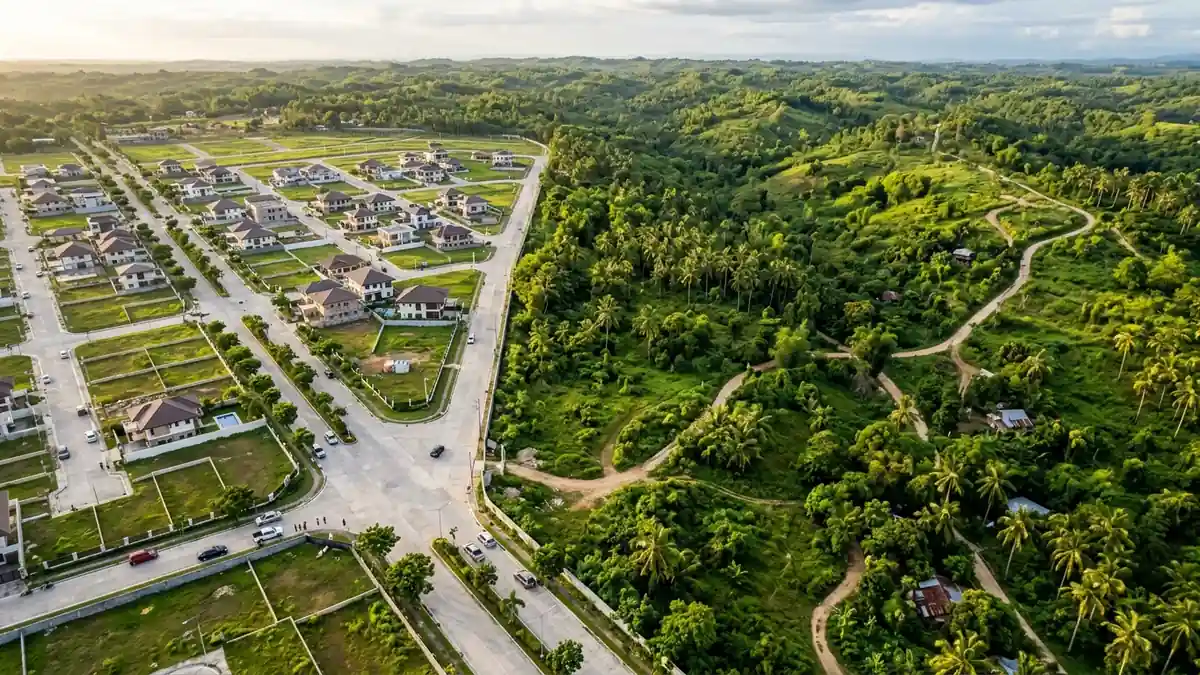
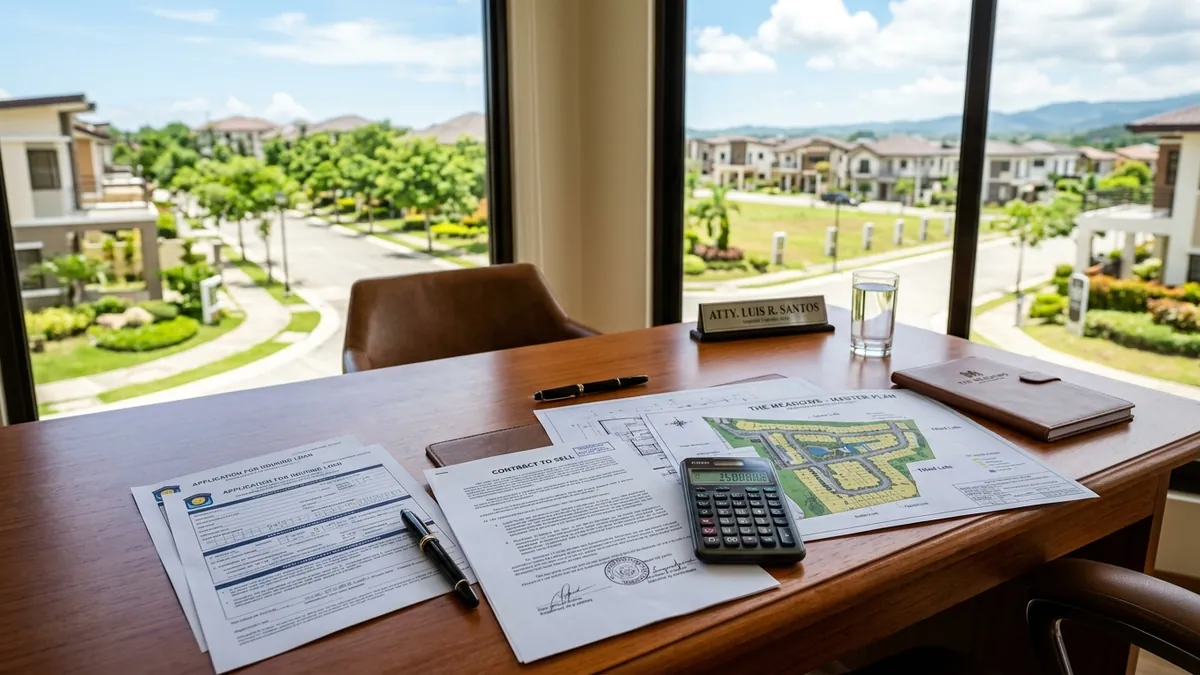
When parents or grandparents pass away leaving real estate in the Philippines, their heirs do not automatically inherit separate, physical parcels of land. Instead, by operation of law under the Civil Code of the Philippines, the surviving heirs become co-owners of an undivided estate. Each heir holds an ideal, fractional share over the entirety of the property, but none owns any specific corner, boundary, or square meter until a formal partition is completed.
For many Filipino families and overseas Filipino workers (OFWs), this state of co-ownership becomes a persistent source of family tension, frozen capital, and bitter property disputes. Siblings may argue over who gets the frontage along the national highway, one heir may build a permanent concrete house on the most valuable corner without consent, or an overseas sibling may discover that local relatives are farming the land without accounting for harvests. In worse scenarios, an heir attempts to sell a specific physical portion to an outside buyer, creating legal conflicts that can tie up land titles for decades.
Partition is the legal and technical process that terminates this co-ownership. It converts an abstract fractional percentage into distinct, surveyed parcels of land, each backed by its own concrete boundary monuments (mojons) and its own individual Transfer Certificate of Title (TCT) issued by the Registry of Deeds. This guide walks you through the entire partition process in the Philippines, covering legal rights under the Civil Code, extrajudicial settlement versus court partition, settling sibling disputes, managing geodetic subdivision surveys, and navigating provincial government offices.
Regulatory and Legal Notice
This article provides general information regarding Philippine property co-ownership, land partition, and surveying procedures. It does not constitute formal legal counsel. Every family estate involves unique factual circumstances, degrees of kinship, and municipal registry practices. Before executing division contracts or initiating court actions, consult a licensed real estate broker, appraiser, geodetic engineer, or Philippine property attorney.
Quick Answer: How Do Heirs Legally Partition Inherited Property?
To legally partition inherited real estate in the Philippines, the heirs must complete two parallel processes: legal partition (terminating co-ownership through a notarized contract or court judgment) and technical physical subdivision (surveying and registering separate lots). If all heirs agree amicably and the deceased left no will and no debts, the heirs execute a Deed of Extrajudicial Settlement of Estate with Partition. Notice of the settlement must be published in a local newspaper once a week for three consecutive weeks pursuant to Rule 74 of the Rules of Court.
Simultaneously, a licensed Geodetic Engineer conducts an on-site subdivision survey, installs concrete boundary monuments (mojons), and prepares a subdivision plan (Psd or Pcs) with technical descriptions for submission to the Department of Environment and Natural Resources (DENR) Land Management Bureau or the Land Registration Authority (LRA). Once estate taxes are settled and a BIR Electronic Certificate Authorizing Registration (eCAR) is issued, the documents are filed with the Registry of Deeds to cancel the ancestral mother title and issue separate, individual Transfer Certificates of Title to each heir.
If the heirs cannot agree on the division, any co-heir has the absolute legal right under Article 494 of the Civil Code to file a complaint for Judicial Partition in the Regional Trial Court under Rule 69 of the Rules of Court.
Understanding Co-Ownership: The Law and the Undivided Ideal Share
The foundation of Philippine inheritance law regarding property is succession. Under Article 777 of the Civil Code, the rights to the succession are transmitted from the moment of the death of the decedent. If there are two or more heirs, a community of property (co-ownership) is automatically created over the estate under Article 1078.
Civil Code Article 494: The Absolute Right to Demand Partition
Many heirs mistakenly believe that if their siblings refuse to cooperate or refuse to sign documents, they are trapped in co-ownership forever. Philippine law takes the exact opposite stance. Article 494 of the Civil Code explicitly states:
“No co-owner shall be obliged to remain in the co-ownership. Each co-owner may demand at any time the partition of the thing owned in common, insofar as his share is concerned.”
Under Philippine jurisprudence, the right to demand partition is imprescriptible, meaning it does not expire through the passage of time. Whether your parents passed away five years ago or fifty years ago, no sibling can legally force you to remain a co-owner against your will, provided no valid 10-year agreement to keep the property undivided exists.
The Common Pitfall: Why You Cannot Sell a Specific Corner Unilaterally
The most common and destructive mistake seen in provincial real estate occurs when an individual heir unilaterally sells or builds on a designated physical portion of an undivided lot. An heir might say: “My parents left three hectares to three children, so I am taking the one hectare along the paved road and selling it to a buyer.”
Under the settled doctrine established by the Supreme Court of the Philippines, an heir does not own any physically identifiable portion of undivided land. What an heir owns is an abstract, proportional share (an undivided ideal share, such as one-third or one-fourth) spreading across every square inch of the property. If an heir signs a deed selling a specific physical portion without the consent of all other co-heirs, the sale does not convey that specific physical ground. It merely transfers the seller undivided ideal share, turning the outside buyer into a co-owner with the remaining siblings.
Until a formal subdivision survey is executed and an approved partition agreement is registered, no heir has an exclusive right to occupy, build on, or convey any specific corner of the ancestral land.
Extrajudicial Partition: The Amicable Settlement Route
When all surviving heirs are in complete agreement regarding who receives which portion of the property, the fastest, most cost-effective path is an Extrajudicial Partition. This administrative procedure allows families to divide the estate privately without setting foot in a courtroom.
Mandatory Prerequisites for Extrajudicial Partition
To execute an Extrajudicial Partition under Rule 74, Section 1 of the Rules of Court, the transaction must strictly satisfy four legal conditions:
- No Will: The deceased left no valid last will and testament. (If a will exists, it must undergo probate in court under Philippine law).
- No Outstanding Debts: The deceased left no unpaid debts, or all estate debts have been paid in full prior to settlement.
- All Heirs of Legal Age or Properly Represented: All surviving heirs must be of legal age, or minors must be represented by judicial or legal guardians.
- Unanimous Agreement: Every single legal heir must participate and sign the partition agreement. If even one heir is omitted or refuses to sign, the extrajudicial partition is legally defective and can be set aside by court action (see our complete legal breakdown on what to do when an heir refuses to sign an extrajudicial settlement).
Drafting the Deed of Extrajudicial Settlement with Partition
The legal instrument used for this process is typically titled “Deed of Extrajudicial Settlement of Estate with Simultaneous Partition” or simply “Deed of Partition.” This document must be prepared by a lawyer or notary public and must contain:
- Full legal identification, marital status, and citizenship of all surviving heirs.
- Declaration of the decedent exact date of death and last known residence.
- Detailed description of the real properties covered, including Transfer Certificate of Title numbers, lot numbers, survey plan numbers, and cadastral locations.
- The exact allocation agreement: which specific segregated lot (matching the Geodetic Engineer survey plan) is assigned to each individual heir.
- Mutual acknowledgments that the partition is fair, voluntary, and terminates the co-ownership.
The 3-Week Newspaper Publication Requirement (Rule 74 Section 1)
Under Rule 74, Section 1 of the Rules of Court, an extrajudicial settlement is not legally complete until notice of its execution has been published in a newspaper of general circulation in the province once a week for three (3) consecutive weeks. The publisher issues an official Affidavit of Publication with newspaper clipping attachments.
This publication is a mandatory document required by the Bureau of Internal Revenue to secure an eCAR and by the Registry of Deeds to register the partition. Furthermore, under Rule 74 Section 4, the title will bear a statutory two-year lien protecting omitted heirs or creditors who were unaware of the settlement.

Conducting a physical boundary survey on site with a licensed geodetic engineer ensures accurate placement of concrete mojons before title segregation.
Judicial Partition: What Happens When Heirs Disagree
When negotiations break down, when one sibling refuses to communicate, or when family members cannot agree on how the land should be divided, the amicable route is closed. In this situation, any co-owner can file an action for Judicial Partition under Rule 69 of the Rules of Court.
When Is Court Action Under Rule 69 Necessary?
Judicial partition is initiated by filing a formal civil complaint in the Regional Trial Court (RTC) having territorial jurisdiction over the province or city where the property is located. Judicial partition is required when:
- Heirs disagree on the valuation of different portions of the land (such as commercial frontage versus landlocked interior portions).
- One heir claims exclusive ownership of the entire property through alleged verbal donation or adverse possession.
- An heir is uncooperative, missing, or resides abroad and refuses to grant a Special Power of Attorney.
- The property cannot be physically divided without destroying its economic value.
Mandatory Barangay Conciliation (Katarungang Pambarangay)
Before an heir can file a judicial partition complaint in court, Philippine law imposes a mandatory pre-condition: barangay conciliation. Under Republic Act No. 7160 (the Local Government Code of 1991), if all the disputing co-heirs reside in the same city or municipality, the complaint must first be submitted to the Lupon Tagapamayapa of the barangay where the property or parties are situated.
The Barangay Captain or Pangkat Tagapagkasundo will summon the siblings for mediation. If the parties fail to reach an amicable agreement, the Lupon issues a Certificate to File Action. If a plaintiff files a judicial partition lawsuit in court without this certificate (when both reside in the same municipality), the judge will dismiss the case on grounds of premature filing.
Court-Appointed Commissioners, Appraisals, and Public Sale
Once a judicial partition case proceeds in court, Rule 69 establishes a two-stage judicial procedure:
- Determination of Co-Ownership: The court first determines whether the plaintiff is indeed a lawful co-owner entitled to demand partition. If confirmed, the judge issues an order directing the parties to partition the property.
- Physical Division or Public Sale: If the parties still cannot agree on the division, the court appoints not more than three (3) competent and disinterested Commissioners (often consisting of a licensed real estate appraiser, a geodetic engineer, and a court officer). The commissioners inspect the real estate, evaluate its market value, and propose a physical division.
If the commissioners determine that the land cannot be physically divided without great prejudice to the owners (such as a small 120-square-meter residential lot inherited by eight children), the court will order that the property be assigned to one of the co-heirs who pays the cash value of the others shares. If no heir can afford the buy-out, the court will order the property sold at a public auction, with the cash proceeds distributed proportionally among the heirs after deducting legal and court expenses.
Comparison: Extrajudicial Partition vs. Judicial Partition
| Factor | Extrajudicial Partition (Amicable) | Judicial Partition (Court Action) |
|---|---|---|
| Legal Basis | Rule 74, Section 1, Rules of Court | Rule 69, Rules of Court; Civil Code Art. 494 |
| Heir Consensus Required | 100% Unanimous Agreement of all heirs | Contested; filed by any single co-heir |
| Typical Timeline | 2 to 6 months (survey and documentation) | 2 to 5+ years in Regional Trial Court |
| Relative Expense | Moderate (survey fees, notary, taxes, RD fees) | High (attorney fees, court filing, commissioner fees) |
| Resolution Method | Notarized Deed of Partition | Court Judgment or Court-Ordered Public Auction |
Sibling Land Dispute Settlement: Practical Non-Court Solutions
Because judicial partition is protracted and financially draining, experienced real estate professionals always counsel families to explore non-court alternatives. Here are three effective mechanisms to settle sibling land disputes amicably:
1. Sibling Buy-Outs and Share Equalization Under Article 498
Under Article 498 of the Civil Code, whenever a co-owned property is essentially indivisible, or when dividing it physically would ruin its value, the co-owners may agree to allot the whole property to one heir, who then pays the monetary equivalent of the remaining shares to the other siblings.
For example, if an ancestral house sits on a 400-square-meter lot and three siblings inherit it, physically chopping the house into three pieces is impossible. One sibling who wishes to keep the ancestral home can buy out the two-thirds share of the other two siblings through a formal Deed of Partition with Cash Equalization.
2. Independent Real Estate Appraisal to Establish Fair Market Value
Sibling disputes frequently arise from unrealistic expectations about what land is actually worth. An heir living in Manila may look at online property portals and demand Manila prices for agricultural land in Ilocos Sur, while an heir living on site may undervalue the property to pay a smaller buy-out.
Hiring a licensed, independent Real Estate Appraiser eliminates emotional guesswork. The appraiser conducts market comparisons, checks recent deed registries, reviews zonal values, and produces an impartial Valuation Report that establishes the exact fair market value. Co-heirs can then divide the monetary value objectively.
3. Road Access and Right-of-Way Allocation During Division
A frequent cause of family litigation is creating landlocked parcels during division. If an ancestral lot has frontage on a provincial road, siblings often fight over who gets the road frontage. A skilled geodetic engineer will design a subdivision plan that incorporates an internal Right-of-Way road (such as a 3-meter or 4-meter wide private access alley) running through the center of the parcel.
This road lot is designated as a perpetual co-owned alleyway, ensuring that every subdivided interior lot has permanent legal access to the public thoroughfare pursuant to Civil Code easement laws (see our comprehensive guide on road right-of-way laws and easements in the Philippines).
The Technical Segregation Sequence: From Mother Title to Individual TCTs
To turn an agreement into separate paper titles, families must navigate a sequential 5-stage conveyancing pipeline:
Stage 1: Estate Tax Settlement and Securing the BIR eCAR
Before any ancestral title can be transferred or subdivided at the Registry of Deeds, the deceased owner estate taxes must be settled with the Bureau of Internal Revenue. Under Republic Act No. 11956 (the Estate Tax Amnesty Extension), estates of decedents who passed away on or before May 31, 2022 can settle tax liabilities at a flat 6% amnesty rate without penalties, provided application is made before June 14, 2026. Once the estate tax return (BIR Form 1801 or 2118-EA) is processed and paid, the BIR issues the official barcoded eCAR.
Stage 2: Geodetic Subdivision Survey and Monumenting (Mojons)
The heirs hire a licensed Geodetic Engineer to conduct an actual boundary survey of the property. The engineer checks the cadastral records, locates the original boundary corners, and prepares a preliminary subdivision layout showing the designated lots (for example, Lot 1-A, Lot 1-B, Lot 1-C). The engineer physically drives standardized concrete monuments (cylindrical or square mojons) into the soil at each new corner, ensuring the boundaries are physically visible on the land.
Stage 3: Subdivision Plan Approval by DENR-LMB or LRA
The geodetic engineer prepares the formal subdivision plan on reproducible drafting sheets, accompanied by field notes, traverse computations, and boundary descriptions. The plan is submitted for technical approval:
- For Untitled (Cadastral / Patent) Land: Submitted to the Department of Environment and Natural Resources (DENR) Regional Land Management Services (LMS).
- For Torrens Titled Land: Submitted to the Land Registration Authority (LRA) Subdivision and Consolidation Section.
The government cartographers verify that the survey calculations close mathematically and do not overlap neighboring private lots or public waterways. Upon approval, the government stamps the plan with an official Psd (subdivision) or Pcs (consolidation-subdivision) plan number.
Stage 4: Registration at the Registry of Deeds and Issuance of Derivative Titles
With the approved subdivision plan, the notarized Deed of Partition, the newspaper Affidavit of Publication, and the BIR eCAR in hand, the heirs submit the complete dossier to the Registry of Deeds where the land is located. The registration examiner cancels the ancestral mother title (OCT or TCT) and issues separate, derivative Transfer Certificates of Title (TCTs), one in the name of each heir.
Stage 5: Municipal Assessor Segregation of Tax Declarations
Once the new TCTs are released, the heirs bring the new titles, the approved survey plan, and the previous tax declaration to the Municipal or City Assessor Office. The assessor cancels the old mother tax declaration and issues separate, individual Tax Declarations corresponding to each newly titled lot.
Worked Example and Cost Breakdown: Dividing a 1,500 sqm Ancestral Property
To help property owners budget realistically, consider a practical provincial scenario in Ilocos Sur: Three sibling heirs inherit a 1,500-square-meter residential lot covered by an ancestral Transfer Certificate of Title, valued at ₱2,000 per square meter (Total property value: ₱3,000,000). The heirs agree to subdivide the land into three equal 500-square-meter parcels.
Estimated Subdivision & Segregation Budget (3 Heirs, 1,500 sqm)
| Cost Category | Description of Expense | Estimated Cost (PHP) |
|---|---|---|
| Geodetic Subdivision Survey | Field boundary survey, relocation, concrete mojons fabrication, drafting, and technical computations. | ₱25,000.00 to ₱40,000.00 |
| LRA / DENR Plan Approval Fees | Government verification, mathematical closing verification, blueprint reproduction, and plan approval fees. | ₱4,000.00 to ₱7,000.00 |
| Legal Drafting & Notarization | Preparation and formal notarial acknowledgment of the Deed of Extrajudicial Settlement with Partition. | ₱10,000.00 to ₱20,000.00 |
| Newspaper Notice of Publication | Mandatory 3-week publication in a provincial newspaper of general circulation plus publisher affidavit. | ₱3,500.00 to ₱6,000.00 |
| Estate Tax Settlement (RA 11956) | Settlement of decedent estate tax under 6% amnesty or standard deductions (depends on family home exclusions). | Varies (₱0.00 to ₱60,000+) |
| Provincial Transfer Tax | Local transfer tax paid to the Provincial Treasurer (typically 0.50% in provinces like Ilocos Sur). | ₱15,000.00 |
| Registry of Deeds Issuance Fees | Entry fees, cancellation of mother title, and issuance of three (3) new derivative Transfer Certificates of Title. | ₱8,000.00 to ₱12,000.00 |
| Assessor Tax Declaration Fees | Municipal inspection, cancellation fee, and certified copies of three new tax declarations. | ₱1,500.00 to ₱3,000.00 |
| Estimated Total Investment | Covers complete survey, legal deeds, and title segregation | ₱67,000.00 to ₱163,000.00 (Split among 3 heirs: ~₱22k to ₱54k each) |
When divided among the three heirs, the investment represents a small fraction of the property total market value, while permanently resolving ownership, protecting each sibling rights, and enabling each heir to sell, mortgage, or build independently.
Common Partition Traps in Provincial Land Transactions
In our professional practice managing property documentation across Ilocos Sur, we regularly resolve partition complications that could have been avoided. Watch out for these four traps:
- The Missing or Uncooperative Sibling: When one sibling lives abroad or refuses to sign out of spite, an extrajudicial partition cannot proceed. In such cases, families should first try engaging an independent mediator or offering a cash buy-out. If that fails, judicial partition remains the sole legal remedy.
- Failure to Verify Prior Mother Title Encumbrances: If the ancestral title carries an uncancelled real estate mortgage or a court adverse claim from decades past, the Registry of Deeds will carry over the encumbrance to every single derivative title until formally cancelled. Always request a Certified True Copy from the Registry of Deeds before beginning survey work.
- Informal Sketch Plans on Yellow Pad Paper: Many families divide land using informal drawings signed among themselves, without engaging a geodetic engineer or registering with the government. While this internal agreement binds the siblings morally, it has zero legal validity against third parties, banks, or buyers. It does not produce Torrens titles and leaves the next generation facing the exact same dispute (buyers purchasing lots based on informal drawings also risk falling into traps covered in our guide on common land buying scams in the Philippines and prevention).
- Neglecting Municipal Tax Declarations: Some heirs obtain new derivative titles from the Registry of Deeds but forget to take them to the Municipal Assessor. The property continues to be taxed as a single undivided unit under the deceased parent name, generating accumulated penalties and confusion when real property taxes are paid.
Frequently Asked Questions About Partition of Inherited Land
1. Can one heir sell their share of inherited land without the consent of the others?
Yes, but only their undivided ideal share, not a specific physical portion. Under Article 493 of the Civil Code, an heir has full ownership of their ideal fractional interest and may alienate, assign, or mortgage it. However, the buyer merely steps into the shoes of the selling heir as a co-owner. The buyer cannot claim any specific corner or lot on the ground until the entire property is partitioned.
2. Can one sibling block the partition of inherited land?
No. Under Article 494 of the Civil Code, no co-owner is required to remain in co-ownership. While an uncooperative sibling can block an amicable extrajudicial partition, they cannot prevent a judicial partition. Any single heir can file a complaint in court under Rule 69 of the Rules of Court, and the judge will order the division or sale of the property regardless of objections.
3. How is land divided if the parcels have different values or road frontage?
When land has uneven values (for example, road frontage versus back lot), heirs can equalize the shares in two ways: either by adjusting the square meter area (giving the interior lot heir a larger land area) or through cash equalization (the heir receiving the prime road lot pays cash compensation to the siblings receiving interior lots based on an appraisal).
4. What happens if the inherited property cannot be divided physically?
Under Article 498 of the Civil Code, if a property cannot be physically divided without rendering it useless or substantially impairing its value, the heirs can agree to assign the property to one heir who buys out the others. If no heir wishes to buy out the others, the property is sold and the net sales proceeds are distributed proportionally among the heirs.
5. Is a verbal partition among siblings legally binding in the Philippines?
While the Supreme Court has ruled that a verbal partition may be binding among the heirs who agreed to it, it is virtually useless for practical property administration. You cannot register a verbal agreement with the Registry of Deeds, you cannot secure an approved subdivision survey plan, you cannot get separate Torrens titles, and banks will not accept the property as loan collateral. Formalizing the agreement in writing is essential.
6. Do heirs have to pay estate taxes before partitioning the land?
Yes. The Registry of Deeds cannot issue new derivative titles under the names of the heirs without an official BIR eCAR, which certifies that all estate taxes due on the decedent estate have been assessed and paid. Families should take advantage of the Estate Tax Amnesty under RA 11956 before its expiration on June 14, 2026 to settle old tax debts with a flat 6% rate.
Pre-Partition Checklist: What to Prepare Before Dividing Property
Before commissioning a geodetic survey or drafting legal agreements, assemble these core documents:
- Certified True Copy of the original Transfer Certificate of Title or Original Certificate of Title from the Registry of Deeds.
- Certified True Copy of the current Tax Declaration for land and improvements from the Municipal Assessor.
- Certified copy of the decedent Death Certificate from the Philippine Statistics Authority (PSA).
- PSA Marriage Certificate of the decedent and PSA Birth Certificates of all surviving heirs.
- Official Real Property Tax Clearance from the Municipal Treasurer showing taxes are fully paid.
- Special Power of Attorney (SPA) for any sibling residing abroad or unable to attend meetings in person.
- Hiring a licensed Geodetic Engineer to conduct an ocular boundary inspection and check for boundary conflicts.
For families who also need to resolve estate tax backlogs or execute comprehensive conveyancing, explore our in-depth guides on the Estate Tax Amnesty under RA 11956, our master walkthrough on Extrajudicial Settlement of Estate in the Philippines, and our sequential roadmap for securing the BIR eCAR Requirements and Processing Guide.
Professional Assistance for Land Partition and Boundary Segregation
Partitioning inherited land involves complex coordination between surveying teams, notaries, municipal assessors, the Bureau of Internal Revenue, and the Registry of Deeds. A technical error on a boundary computation or a defective legal clause in a deed of partition can cause months of administrative delays and reignite family disputes.
At LandMaster Realty, we specialize in helping families throughout Ilocos Sur and Northern Luzon navigate every stage of property division. From conducting licensed geodetic boundary surveys and designing equitable subdivision plans to handling estate tax clearance and securing individual Torrens titles from the Registry of Deeds, our team ensures your land is partitioned cleanly, lawfully, and permanently.
To learn more about how our licensed team can facilitate your family land division, visit our dedicated LandMaster Partition and Consolidation Services or contact our licensed real estate professionals today for an initial document review and consultation.