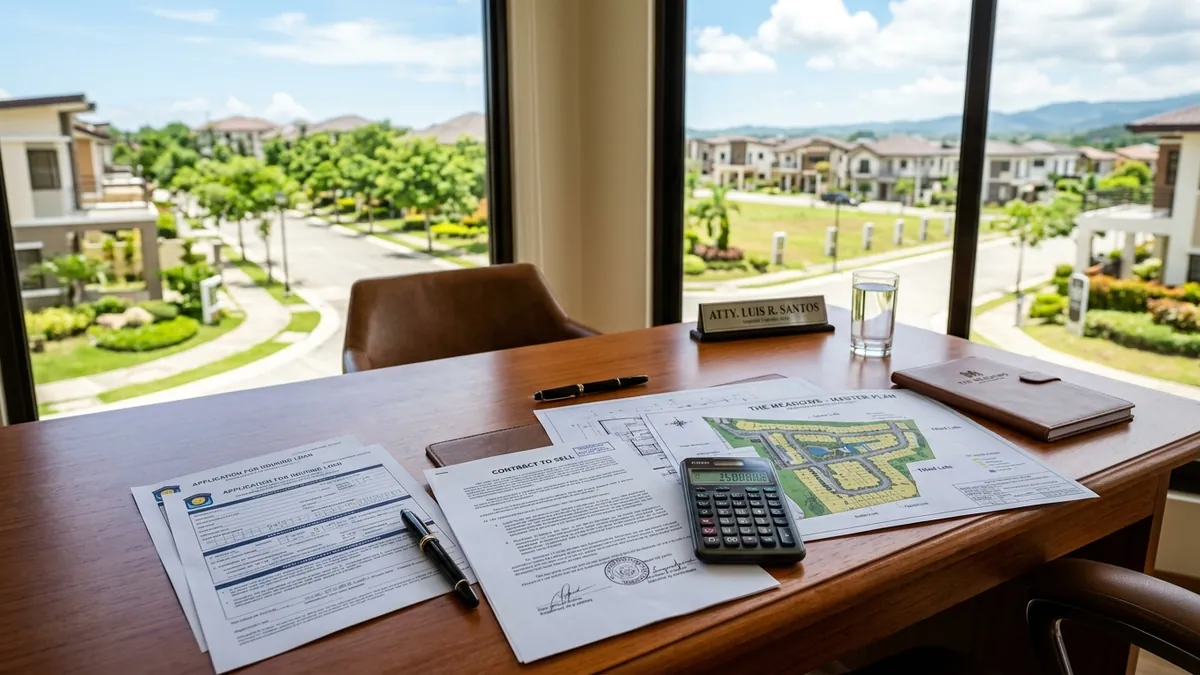
For millions of Overseas Filipino Workers (OFWs), dual citizens, and natural-born Filipinos living across North America, the Middle East, Europe, and the Asia-Pacific region, inheriting ancestral real estate in the Philippines represents both a sacred family legacy and a demanding legal responsibility. However, navigating hereditary succession across international borders presents intricate legal, procedural, and taxation hurdles that cannot be resolved through informal family discussions or casual verbal agreements.
A widespread misconception among Filipinos abroad is that acquiring foreign citizenship automatically forfeits their right to inherit Philippine land. Others believe that ancestral property passes automatically to the surviving children without formal government intervention, only to discover decades later that the land remains titled under deceased grandparents, accumulating substantial tax delinquencies, clouded titles, and unrecorded liens. Under Philippine property law, hereditary succession operates through strict statutory mechanisms established by the 1987 Philippine Constitution, the Civil Code of the Philippines, the Rules of Court, and the National Internal Revenue Code (NIRC).
As a licensed real estate broker, licensed real estate appraiser, and property conveyance practitioner handling estate settlements, boundary partitions, and title transfers across Ilocos Sur and Northern Luzon, I have structured this practitioner guide specifically for overseas Filipinos. Whether you are an OFW in Dubai, a dual citizen in California, or an overseas heir managing co-ownership with siblings in the Philippines, this guide deconstructs constitutional inheritance rights, cross-border Extrajudicial Settlement of Estate (EJS) execution under the 1961 Hague Apostille Convention, Special Power of Attorney (SPA) mandates, Bureau of Internal Revenue (BIR) estate tax compliance under Republic Act No. 11956, and realistic financial closing models for ancestral land.
Settling Inherited Land in the Philippines from Abroad?
LandMaster Realty provides comprehensive cross-border estate settlement, title verification, boundary partition surveys, and BIR estate eCAR processing for Overseas Filipino Workers (OFWs) and dual citizens. We represent overseas heirs on the ground in Ilocos Sur and Northern Luzon, ensuring seamless title consolidation without requiring you to leave your job abroad.
1. The Constitutional and Civil Code Framework of Philippine Property Inheritance
To understand your rights as an overseas heir, you must first separate voluntary property acquisitions (such as purchasing land through a Deed of Absolute Sale) from involuntary property transmissions (such as hereditary succession upon death). While the 1987 Philippine Constitution strictly restricts land ownership to Filipino citizens, it carves out an explicit, absolute exception for inheritance.
Article XII Section 7 of the 1987 Constitution: The Hereditary Succession Exception
Article XII Section 7 of the 1987 Philippine Constitution establishes the fundamental rule governing private land ownership in the republic:
“Save in cases of hereditary succession, no private lands shall be transferred or conveyed except to individuals, corporations, or associations qualified to acquire or hold lands of the public domain.”
This single clause is the bedrock of inheritance rights for overseas Filipinos. The phrase “Save in cases of hereditary succession” means that the constitutional prohibition against foreign land ownership does not apply when real property is transferred by virtue of death. Regardless of whether an heir has acquired citizenship in the United States, Canada, the United Kingdom, Australia, or any other foreign nation, their right to inherit Philippine land is constitutionally protected, provided the transmission complies with the statutory rules of succession under Philippine civil law.
Intestate vs Testate Succession: Legal Heirs and Compulsory Legitimes
Under Article 774 of the Civil Code of the Philippines (Republic Act No. 386), succession is a mode of acquisition by virtue of which the property, rights, and obligations to the extent of the value of the inheritance of a person are transmitted through death to another either by will or by operation of law. Succession is divided into two primary categories:
- Intestate Succession (Legal Succession): Occurs when the deceased property owner dies without executing a valid last will and testament, or when a will is declared void by a probate court. In intestate succession, the distribution of the estate is governed strictly by the default rules of the Civil Code, which designate legal heirs based on proximity of blood relationship and marital ties. The vast majority of ancestral estate settlements in the Philippines follow intestate succession.
- Testate Succession (Testamentary Succession): Occurs when the deceased owner executed a formal notarial or holographic will prior to death. In testate succession, the property distribution must undergo mandatory judicial probate in court before any asset can be transferred. Furthermore, the testator cannot freely dispose of their entire estate because Philippine law reserves a mandatory portion, known as the legitime, for compulsory heirs.
Compulsory Heirs and Legitimes Under Civil Code Article 887
Unlike common-law jurisdictions (such as the United States or the United Kingdom) where an individual enjoys testamentary freedom to disinherit family members or leave their entire wealth to a charitable foundation or friend, Philippine civil law enforces the doctrine of forced heirship. Under Article 886 of the Civil Code, a legitime is that part of the testator’s property which cannot be disposed of because the law has reserved it for certain heirs who are called compulsory heirs.
Article 887 of the Civil Code explicitly enumerates who qualifies as compulsory heirs:
- Primary Compulsory Heirs: Legitimate children and their legitimate descendants. These heirs take precedence and exclude secondary compulsory heirs from the inheritance.
- Secondary Compulsory Heirs: Legitimate parents and legitimate ascendants. They inherit only in default of legitimate children and descendants.
- Concurring Compulsory Heirs: The surviving legal spouse and illegitimate children. Concurring heirs inherit alongside primary or secondary compulsory heirs and are entitled to specific statutory shares from the estate.
For example, under Article 888 of the Civil Code, the legitime of legitimate children consists of one-half of the hereditary estate of the father and mother. The remaining half constitutes the free portion, which the testator may bequeath subject to the legitimes of concurring heirs such as the surviving spouse. If a parent dies intestate leaving three legitimate children, the entire estate is divided equally among the three children under Article 980, granting each child an undivided one-third share.
The Right of Representation (Civil Code Articles 979 to 982)
A frequent occurrence in cross-border families is that an OFW child passes away while working abroad before their elderly parents in the Philippines pass away. When the grandparents eventually die, the children of the deceased OFW (the grandchildren) step into the shoes of their deceased parent by virtue of the Right of Representation under Article 970 of the Civil Code.
Under Article 979, legitimate children and their descendants succeed the parents and other ascendants, without distinction as to sex or age, and whether they are born in or out of wedlock. The grandchildren divide among themselves equally the exact fractional share that their deceased parent would have inherited had they survived. This principle ensures that the bloodline of an overseas worker is never disenfranchised from family ancestral land.
2. Citizenship Comparison: Who Can Inherit Philippine Land and How Much?
One of the most critical aspects of cross-border estate planning is understanding how citizenship status affects ownership limits. Many overseas Filipinos confuse the statutory acreage limits applicable to voluntary land purchases with the constitutional rules governing inheritance. The rights of heirs differ substantially based on their legal status at the time of the decedent’s death.
| Citizenship Status of Heir | Legal Basis for Inheritance | Allowable Land Types | Acreage Limitations | Conveyancing Formalities |
|---|---|---|---|---|
| Active Filipino Citizen / OFW (Holds valid Philippine passport) |
Civil Code & 1987 Constitution Article XII Section 7 | All types (Residential, Commercial, Agricultural, Industrial) | No statutory limit (Subject only to agrarian reform retention limits of 5 hectares for agricultural land) | Standard Extrajudicial Settlement, BIR eCAR, and Registry of Deeds registration |
| Dual Citizen Under RA 9225 (Citizenship Retention & Re-acquisition Act) |
RA 9225 Section 5 & Civil Code of the Philippines | All types (Full freehold property rights identical to natural-born citizens) | No statutory limit (Enjoy full freehold rights without urban or rural caps) | Presentation of Bureau of Immigration Identification Certificate alongside standard EJS docket |
| Former Filipino Citizen (Naturalized foreigner holding foreign passport; no RA 9225) |
1987 Constitution Article XII Section 7 (Hereditary succession exception) | All types inherited through legal or intestate succession | No acreage limit under intestate succession. (BP 185 purchase caps of 1,000 sqm urban / 1 hectare rural do NOT apply to inheritance) | Proof of filiation (PSA Birth Certificate showing natural-born lineage) and certified EJS docket |
| Foreign Spouse of Filipino Decedent (Non-Filipino by birth and citizenship) |
Civil Code Article 995 & 1987 Constitution Article XII Section 7 | Undivided co-ownership share in inherited property | Limited strictly to the legal intestate legitime by operation of law | Cannot inherit through testamentary bequest of free portion; entitled only to intestate compulsory share |
| Pure Foreign National (Unrelated) (No Filipino lineage; non-spouse) |
Completely prohibited under 1987 Constitution | None (Cannot own private land) | Zero landholdings permitted (Any testamentary disposition of land to an unrelated foreigner is void ab initio) | Can only inherit monetary proceeds from the liquidation or sale of the land by Filipino heirs |
Full Freehold Rights for Active Filipino Citizens and OFWs
If you are an Overseas Filipino Worker who has maintained your Philippine citizenship, you enjoy full, unrestricted property rights. You can inherit any classification of private land in the Philippines, whether residential, commercial, industrial, or agricultural. There are no acreage restrictions on inherited land for Filipino citizens, other than the general five-hectare agricultural landholding retention ceiling imposed by the Comprehensive Agrarian Reform Law (Republic Act No. 6657) on agricultural parcels.
Dual Citizens Under Republic Act No. 9225: Full Parity
Filipinos who have naturalized in foreign countries (such as the United States or Canada) and subsequently reacquired their Philippine citizenship under the Citizenship Retention and Re-acquisition Act of 2003 (Republic Act No. 9225) possess the exact same legal standing as natural-born citizens living in the Philippines. Under Section 5 of RA 9225, dual citizens enjoy full civil and property rights. When settling an inherited estate, dual citizens can hold title to any amount of land, without being subjected to the land acquisition limits of Batas Pambansa Blg. 185.
Former Filipino Citizens: Legal Inheritance vs BP 185 Purchase Limits
This is where the most common legal error occurs. When a former natural-born Filipino citizen who has not reacquired Philippine citizenship under RA 9225 purchases land, they are strictly constrained by Batas Pambansa Blg. 185 (up to 1,000 square meters of urban land or 1 hectare of rural land for residential use) or Republic Act No. 8179 (up to 5,000 square meters of urban land or 3 hectares of rural land for commercial use).
However, when a former Filipino citizen inherits private land through legal or intestate succession, those acreage limits do not apply. Because the acquisition is by virtue of hereditary succession under Article XII Section 7 of the Constitution, the former citizen inherits their full statutory share by operation of law. A former Filipino can legally inherit a 5,000 square meter residential compound or a 10-hectare provincial parcel through intestate succession without violating the Constitution.
A crucial distinction exists in testamentary succession (where a will exists). In the landmark Supreme Court decision Ramirez v. Vda. de Ramirez (G.R. No. L-27952), the Court ruled that while a foreigner or non-citizen can inherit land through intestate succession as a legal compulsory heir, a testator cannot bequeath private land to a non-citizen through the free disposable portion of a will. Therefore, if a deceased parent leaves a will granting land to an overseas child who is no longer a Filipino citizen, that bequest is valid only up to the extent of the child’s compulsory legitime under the Civil Code. Any excess land given from the free disposable portion to a non-citizen violates the constitutional prohibition and is void.
Foreign Spouses and Pure Foreign Nationals
Under Article 995 of the Civil Code, a surviving spouse is a compulsory heir who inherits alongside legitimate children. If a foreign national was legally married to a Filipino citizen who dies intestate owning land, the foreign spouse inherits an undivided share of the estate by operation of law under the constitutional exception. However, because the foreign spouse cannot acquire land through voluntary transfers, the foreign spouse cannot purchase the shares of the other heirs or acquire additional land. In practice, foreign surviving spouses often choose to execute an Extrajudicial Settlement with Waiver of Rights or participate in an Extrajudicial Settlement with Sale to receive their share in cash rather than dealing with land co-ownership.
3. Cross-Border Extrajudicial Settlement of Estate (Rule 74 Section 1)
When a property owner passes away in the Philippines leaving real estate, the heirs cannot simply take over the property or sign a deed of sale to a buyer. The estate of the deceased owner must be formally settled, estate taxes must be cleared with the Bureau of Internal Revenue (BIR), and the existing Transfer Certificate of Title (TCT) or Original Certificate of Title (OCT) must be canceled by the Registry of Deeds to issue new titles in the names of the heirs.
In Philippine legal practice, estate settlement follows one of two routes: Judicial Settlement (through probate court proceedings) or Extrajudicial Settlement (an administrative agreement executed among the heirs without court intervention). Judicial settlement is mandatory if the deceased left a will, if there are disputed creditor claims, or if the heirs cannot agree on the partition. However, judicial settlement is slow, publicly adversarial, and expensive, often taking five to ten years in Philippine trial courts.
The preferred, cost-effective method for uncontested estates is an Extrajudicial Settlement of Estate (EJS) pursuant to Rule 74 Section 1 of the Rules of Court.
The Five Statutory Prerequisites for an Extrajudicial Settlement
Under Rule 74 Section 1, heirs can settle an estate extrajudicially only if all five statutory conditions are strictly satisfied:
- No Last Will and Testament: The decedent died intestate (without leaving a valid will). If a will exists, it must be submitted to the Regional Trial Court for judicial probate under Rule 75.
- No Outstanding Debts: The decedent left no unpaid debts, or all existing debts, mortgages, and obligations have been fully paid and discharged prior to the execution of the deed.
- All Heirs Are of Legal Age: All surviving heirs are of legal age (at least 18 years old), or any minor heirs are legally represented by their judicial guardians or parents who do not have conflicting interests.
- Execution of a Public Instrument: The agreement must be set forth in a formal written contract, known as a Deed of Extrajudicial Settlement of Estate (or an Affidavit of Self-Adjudication if there is only one sole surviving heir), duly signed and acknowledged before a notary public.
- Three-Week Newspaper Publication: Notice of the extrajudicial settlement must be published once a week for three (3) consecutive weeks in a newspaper of general circulation in the province or city where the property is located.
Executing an EJS When Heirs Are Dispersed Globally
In modern Filipino families, it is common for heirs to reside across multiple continents: one child in Dubai, another in California, a third in London, and one sibling remaining in the family home in Vigan, Ilocos Sur. Gathering all heirs physically in the Philippines to sign a single deed before a local notary public is practically impossible.
Under Philippine law and administrative regulations, cross-border families have two legally valid methods to execute an Extrajudicial Settlement:
Method A: Simultaneous Execution via Special Power of Attorney (Recommended)
The most efficient and widely used method is for the overseas heirs to execute a comprehensive Special Power of Attorney (SPA) in their respective countries of residence. The SPA appoints either the sibling residing in the Philippines, a trusted relative, or a professional conveyance broker/lawyer as their Attorney-in-Fact. This representative is empowered to negotiate the terms of partition, sign the unified Deed of Extrajudicial Settlement in the Philippines, handle all BIR tax filings, and register the new titles. This eliminates the logistical nightmare of circulating a single physical document across multiple international mail carriers.
Method B: Multiple Counterpart Deeds
Alternatively, the heirs can execute the Deed of Extrajudicial Settlement in identical counterparts. The draft deed is prepared in the Philippines and emailed to the overseas heirs. Each overseas heir prints the document, signs it, and has it formally notarized and apostilled in their respective country. The original apostilled counterparts are then physically shipped back to the Philippines, where the local heir signs before a Philippine notary public. The Registry of Deeds accepts consolidated counterpart deeds provided all signatories execute identical substantive terms.
The 2019 Hague Apostille Protocol vs Philippine Consular Legalization
Every legal document executed outside the Philippines, whether an SPA or an EJS counterpart, must be authenticated to be legally effective before Philippine administrative agencies and the Registry of Deeds.
Prior to May 14, 2019, overseas Filipinos had to submit documents to a Philippine Embassy or Consulate General to obtain the traditional “red ribbon” consular authentication. This process required taking time off work, traveling long distances to consular offices, and waiting weeks for appointment slots.
On May 14, 2019, the Philippines formally acceded to the 1961 Hague Convention Abolishing the Requirement of Legalisation for Foreign Public Documents (Apostille Convention). This accession permanently revolutionized document execution for overseas Filipinos:
- Apostille Convention Member States: If you reside in any of the 126+ member nations (including the United States, Canada, the United Kingdom, Australia, Japan, South Korea, Singapore, New Zealand, Saudi Arabia, the United Arab Emirates, and European Union nations), you no longer need to visit a Philippine consulate. You simply sign your document before a local Notary Public and submit it to the designated foreign competent authority (such as the Secretary of State in the US, Global Affairs Canada, the FCDO in the UK, or DFAT in Australia) to attach an Apostille Certificate. Once apostilled, the document is immediately valid in the Philippines without any DFA red ribbon.
- Non-Apostille States: If you reside in a jurisdiction that is not a party to the Apostille Convention, the traditional chain of legalization still applies. The document must be notarized locally, authenticated by the host country’s ministry of foreign affairs, and finally legalized by the Philippine Embassy or Consulate having consular jurisdiction.
Mandatory Special Power of Attorney Clauses for Estate Settlement
Under Article 1878 of the Civil Code, real property transactions and estate partition require express, specific authority. A standard general power of attorney will be rejected outright by the Bureau of Internal Revenue and the Registry of Deeds. When drafting an SPA for estate settlement, the instrument must contain the following specific powers:
- Specific Property Description: Full legal description of the real estate, including Transfer Certificate of Title (TCT) or Original Certificate of Title (OCT) numbers, registered lot and block numbers, survey plan numbers, location (Barangay, Municipality/City, Province), and exact land area in square meters.
- Authority to Settle and Partition: Express authority to represent the principal in the extrajudicial settlement of the estate of the deceased, to execute and sign the Deed of Extrajudicial Settlement of Estate, and to agree to the specific partition plan or fractional allocation.
- BIR Representation and Tax Settlement: Authority to apply for and secure an estate Tax Identification Number (TIN) for the decedent, secure individual TINs for the heirs via BIR Form 1904, prepare and sign BIR Estate Tax Returns (Form 1801 or Form 2118-EA for amnesty), pay assessed estate taxes, and claim the electronic Certificate Authorizing Registration (eCAR).
- Local Government Representation: Authority to pay municipal transfer taxes and real property taxes at the City or Municipal Treasurer’s Office, and apply for the transfer of Tax Declarations at the City or Municipal Assessor’s Office.
- Registry of Deeds Authority: Authority to present all necessary documents, pay registration fees, cancel the decedent’s title, and receive the newly issued Transfer Certificate of Title registered in the names of the heirs.
- Authority to Sell (Optional but Critical): If the heirs intend to immediately liquidate the property to a third-party buyer, the SPA must contain explicit authority to negotiate, execute a Contract to Sell, execute a Deed of Absolute Sale, receive sales proceeds, and deposit funds into designated bank accounts. Without this specific clause, the agent can only transfer the title to the heirs, not sell it to a buyer.
Newspaper Publication and the Two-Year Rule 74 Section 4 Lien
Two procedural safeguards under Rule 74 are frequently misunderstood by overseas heirs:
1. Three-Week Publication: Rule 74 Section 1 mandates that the extrajudicial settlement must be published in a newspaper of general circulation in the province once a week for three consecutive weeks. The publisher issues an Affidavit of Publication and newspaper clippings, which must be submitted to the BIR and the Registry of Deeds. Publication does not substitute for notifying known heirs; it serves as constructive legal notice to the public and potential creditors.
2. The Two-Year Statutory Lien: Under Rule 74 Section 4 of the Rules of Court, whenever an estate is settled extrajudicially, the Registry of Deeds automatically annotates a statutory lien on the memorandum of encumbrances of the newly issued TCT. This annotation explicitly states that the property remains subject to the rights of any omitted heir or unpaid creditor who may appear within a period of two (2) years from the date of registration.
During this two-year period, the title is legally valid, but institutional commercial banks may hesitate to accept the land as mortgage collateral, and institutional buyers may require the heirs to post an indemnity bond or escrow deposit. After the two-year period expires without challenge, the heirs can file a simple administrative petition at the Registry of Deeds to cancel the Section 4 annotation, rendering the title completely unencumbered.
4. The 6-Stage Remote Inheritance to Title Transfer Pipeline
To provide overseas heirs with a clear operational workflow, we have structured the complete cross-border inheritance journey into six sequential stages, moving from preliminary title verification to the issuance of new, clean Transfer Certificates of Title.

Stage 1: Document Gathering and Title Due Diligence
Before drafting any legal documents, your representative in the Philippines must gather the foundational records and conduct thorough due diligence:
- Registry of Deeds Certified True Copy: Secure a fresh Certified True Copy (CTC) of the Transfer Certificate of Title (TCT) or Original Certificate of Title (OCT) directly from the Registry of Deeds or via the Land Registration Authority (LRA) PhilRIS system. Verify that the title is free from mortgages, adverse claims, notices of lis pendens, or prior court attachments.
- PSA Vital Documents: Obtain Philippine Statistics Authority (PSA) Certified Death Certificate of the deceased owner, PSA Marriage Certificate (if married), and PSA Birth Certificates of all children to prove direct filiation and compulsory heirship.
- Tax Declaration and Real Property Tax Receipts: Secure certified copies of the latest Tax Declaration for both land and improvements from the Municipal or City Assessor. Obtain a Tax Clearance from the Municipal Treasurer certifying that real property taxes (amilyar) are paid up to date.
Stage 2: Drafting the EJS and Executing Apostilled SPAs Abroad
Once the title and family records are verified, a licensed Philippine legal practitioner or conveyance professional drafts the Deed of Extrajudicial Settlement of Estate along with the corresponding Special Powers of Attorney.
The overseas heirs receive the prepared SPA documents via email, print them, and execute them before a local notary public in their host country. The notarized SPA is then submitted to the designated government authority (e.g., Secretary of State in the US or Global Affairs in Canada) to obtain an Apostille Certificate. The original apostilled SPA is shipped to the Attorney-in-Fact in the Philippines via secure international courier (DHL or FedEx).
Stage 3: Newspaper Publication in the Local Province
Upon receipt of the apostilled SPAs, the Attorney-in-Fact signs the unified Deed of Extrajudicial Settlement before a Philippine notary public. The deed is immediately submitted to an accredited local newspaper of general circulation in the province where the land is located. The notice runs once a week for three consecutive weeks. At the conclusion of the publication period, the newspaper publisher issues a notarized Affidavit of Publication along with physical tear sheets of the published notices.
Stage 4: BIR ONETT Processing, Estate Tax Settlement, and eCAR Issuance
The Attorney-in-Fact compiles the complete estate tax docket and files it with the Bureau of Internal Revenue (BIR) Revenue District Office (RDO) having jurisdiction over the decedent’s last legal residence. The docket includes:
- Notarized and Apostilled Deed of Extrajudicial Settlement of Estate and SPAs.
- PSA Death Certificate and proof of heirship (PSA Birth and Marriage Certificates).
- Certified True Copies of TCTs/OCTs and Tax Declarations.
- Zonal Valuation certifications from the BIR.
- Notarized Publisher’s Affidavit and newspaper tear sheets.
- BIR Form 1904 for estate TIN and heir TIN registration.
- BIR Estate Tax Return (Form 1801 or Form 2118-EA under the Estate Tax Amnesty).
Upon review, the BIR ONETT officer computes the estate tax assessment. The Attorney-in-Fact pays the tax at an Authorized Agent Bank (AAB). Once the payment is verified, the BIR issues the official electronic Certificate Authorizing Registration (eCAR). The eCAR is the mandatory tax clearance without which the Registry of Deeds is legally prohibited from transferring title.
Stage 5: Municipal Transfer Tax and Registry of Deeds Title Registration
Armed with the BIR eCAR, the Attorney-in-Fact proceeds to the City or Municipal Treasurer’s Office where the land is situated to pay the Local Transfer Tax (typically 0.50% in provinces or 0.75% in cities) under Section 135 of the Local Government Code. The Treasurer issues a Transfer Tax Receipt and Official Tax Clearance.
Next, the complete registration docket is presented to the Registry of Deeds (RD). The RD assesses registration fees, IT fees, and entry fees under the LRA fee schedule. The RD cancels the decedent’s existing title and registers the new Transfer Certificate of Title in the names of the surviving heirs (either as undivided co-owners or as individual titleholders if a subdivision partition plan was simultaneously submitted).
Stage 6: Municipal Assessor Tax Declaration Transfer and Subdivision Partition
The final administrative step takes place at the City or Municipal Assessor’s Office. The Attorney-in-Fact presents the newly issued TCT, the BIR eCAR, the Transfer Tax Receipt, and the cancellation endorsement from the Registry of Deeds. The Assessor cancels the old Tax Declaration under the decedent’s name and issues a new Tax Declaration under the names of the heirs.
If the heirs agreed to physically divide the land rather than hold it in co-ownership, a licensed geodetic engineer conducts a boundary subdivision survey, installs concrete monuments (mojons), and submits the subdivision plan to the Land Management Services (LMS) of the DENR or the LRA for approval. Each heir then receives a separate, distinct TCT for their specific partitioned lot.
5. BIR Estate Tax Compliance: TRAIN Act vs Estate Tax Amnesty (RA 11956)
Estate taxation is the single largest financial and administrative roadblock for overseas Filipino families. In many provincial communities in Northern Luzon, properties have remained titled under deceased parents or grandparents who passed away twenty, thirty, or even fifty years ago. Under previous tax codes, unsettled estates accumulated devastating compound penalties, including a 25% surcharge, 20% annual interest, and compromise penalties that frequently exceeded the market value of the land itself.
Fortunately, overseas heirs today can take advantage of two critical legislative frameworks: the ongoing Estate Tax Amnesty under Republic Act No. 11956 and the modernized estate tax rules under the TRAIN Act (Republic Act No. 10963).
Republic Act No. 11956: Key Amnesty Benefits and the June 14, 2026 Deadline
Originally enacted as Republic Act No. 11213 and subsequently amended by Republic Act No. 11956, the Philippine Estate Tax Amnesty provides a once-in-a-generation window of relief for unsettled estates. Every overseas heir must understand the primary provisions of this law:
- Crucial Statutory Deadline: The amnesty period is formally extended until June 14, 2026. Heirs who fail to file their amnesty applications on or before this date will permanently lose amnesty protections and be subjected to standard regular tax rates and penalties.
- Coverage Period: Covers the estates of decedents who died on or before May 31, 2022, whether resident or non-resident, whose estate taxes remained unpaid or accrued as of that date.
- Flat Amnesty Rate of 6%: The estate tax is computed at a flat rate of 6% based on the net undeclared estate at the time of death.
- 100% Penalty Forgiveness: Total waiver of all accumulated penalties, including the 25% to 50% late-filing surcharges, the 12% to 20% annual delinquency interest, and compromise penalties. Heirs pay only the pure base tax.
- Minimum Amnesty Tax: If the allowable deductions equal or exceed the gross estate, the minimum amnesty tax payable is a nominal fee of only 5,000 PHP per decedent’s estate.
- Installment Payment Relief: RA 11956 allows heirs to pay the assessed estate amnesty tax in installments within two (2) years from the date of filing, without civil penalties or interest.
TRAIN Act (RA 10963) Rules for Deaths Occurring After January 1, 2018
For deaths occurring from January 1, 2018 onward, the Tax Reform for Acceleration and Inclusion (TRAIN) Act permanently overhauled the National Internal Revenue Code (NIRC), introducing highly favorable tax deductions that make estate settlement remarkably affordable:
- Flat 6% Rate: Abolished the old graduated estate tax brackets (which reached as high as 20%) and replaced them with a flat rate of 6% based on the net estate.
- 5,000,000 PHP Standard Deduction: Under Section 86(A)(1) of the NIRC as amended, citizen and resident estates are entitled to an automatic standard deduction of 5,000,000 PHP without requiring any receipts, substantiation, or expense proof.
- 10,000,000 PHP Family Home Deduction: If the decedent owned a family home (residential house and lot), the estate is entitled to deduct the current market value of the family home up to a maximum ceiling of 10,000,000 PHP, provided the property was the actual family dwelling.
- Total Potential Deductions: A typical estate in provincial cities like Vigan or surrounding towns in Ilocos Sur with a modest family home valued at 4,000,000 PHP can claim up to 9,000,000 PHP in combined deductions (5M standard deduction + 4M family home). Because allowable deductions far exceed the asset value, the net taxable estate is zero, meaning zero estate tax is due to the BIR. The heirs pay only nominal administrative processing fees.
- Filing Deadline: Under the TRAIN Act, the Estate Tax Return (BIR Form 1801) must be filed within one (1) year from the date of the decedent’s death. The BIR may grant an extension of up to 30 days upon meritorious grounds.
Valuation Rules for Real Estate Under NIRC Section 88
When computing gross estate value for BIR estate tax, the law does not rely on subjective estimates or actual market sale prices. Under Section 88(B) of the NIRC, real property is valued at whichever is higher between:
- The Zonal Value established by the Commissioner of Internal Revenue for the specific barangay and street; and
- The Fair Market Value shown in the schedule of values issued by the Provincial or City Assessor (reflected on the Tax Declaration).
For estates falling under the Estate Tax Amnesty (deaths on or before May 31, 2022), the valuation is based on the prevailing zonal value or assessor FMV at the time of the decedent’s death, not current 2026 values. Because historic zonal values from 10 or 20 years ago were significantly lower than modern land values, the resulting base tax is exceptionally low.
6. Worked Financial Settlement Model: Inheriting Ancestral Land in Ilocos Sur
To demonstrate how these statutory provisions translate into actual financial figures, let us examine a realistic practitioner scenario handled regularly by LandMaster Realty in Northern Luzon.
Case Scenario Profile
- Deceased Property Owner: Widowed parent who passed away intestate in Metro Vigan, Ilocos Sur in October 2020 (covered by RA 11956 Estate Tax Amnesty).
- Subject Property: A 1,200 square meter titled residential parcel with a single-storey ancestral concrete residence located in Metro Vigan.
- Valuation at Time of Death (October 2020):
- Land Zonal Value: 2,500 PHP per sqm x 1,200 sqm = 3,000,000 PHP
- Assessor FMV of Ancestral House: 1,000,000 PHP
- Total Gross Estate Valuation: 4,000,000 PHP
- Surviving Compulsory Heirs: Three adult children:
- Heir 1 (Eldest son): Overseas contract worker residing in Dubai, UAE.
- Heir 2 (Daughter): Naturalized dual citizen residing in California, United States.
- Heir 3 (Youngest son): Resident professional living in Ilocos Sur, serving as the local Attorney-in-Fact.
Comprehensive Estate Settlement and Titling Expense Breakdown
The three siblings agreed to settle the estate extrajudicially, maintain equal one-third undivided shares, and obtain a clean Transfer Certificate of Title registered under their three names.
| Expense Item | Statutory Basis / Agency | Amount (PHP) | Operational Notes |
|---|---|---|---|
| Gross Estate Value | NIRC Section 88 (Zonal Land + FMV House) | 4,000,000 | Based on official valuation at time of death in 2020 |
| Allowable Deductions | TRAIN Act (RA 10963) Standard Deduction | (5,000,000) | Standard deduction of 5M PHP exceeds gross estate |
| Net Taxable Estate | Gross Estate minus Deductions | 0 | Deductions reduce taxable base to zero |
| BIR Estate Tax Amnesty Due | Republic Act No. 11956 (Minimum Amnesty Fee) | 5,000 | Statutory minimum fee applies when deductions exceed estate; 100% penalties waived |
| BIR Documentary Stamp Tax & Certs | BIR ONETT eCAR Certification & DST | 630 | Certification fee (100 PHP), eCAR processing fee, and documentary stamps |
| Local Transfer Tax | Provincial Treasurer (0.50% of gross value) | 20,000 | Provincial rate for Ilocos Sur (0.50% of 4,000,000 PHP) |
| Newspaper Publication | Accredited Provincial Newspaper (3 weeks) | 8,500 | Includes 3 consecutive weekly insertions and notarized Publisher’s Affidavit |
| Registry of Deeds Registration Fees | LRA Graduated Fee Schedule + IT Fees | 14,850 | Entry fees, registration fees for 4M PHP valuation, and title issuance fee |
| Geodetic Relocation Survey | Licensed Geodetic Engineer | 18,000 | Boundary verification, monument resetting (mojons), and certified relocation plan |
| Apostille & Consular Logistics | US Secretary of State + UAE Apostille + Courier | 16,500 | California apostille ($26), UAE notary/apostille, plus international express DHL delivery |
| PSA Certs & Certified True Copies | PSA Serbilis + Registry of Deeds CTCs | 3,200 | Death certificate, birth certificates, marriage certificate, and title CTCs |
| Legal Documentation & Notarization | Philippine Notary Public & Document Drafting | 25,000 | Preparation of comprehensive EJS deed, SPAs, and formal legal acknowledgment |
| TOTAL ESTATE SETTLEMENT COST | Complete End-to-End Closing Outflow | 111,680 | Total cash outlay to cancel decedent’s title and issue new TCT |
Net Out-of-Pocket Contribution Per Heir
Because the three siblings agreed to split the settlement expenses equally, the cash contribution is distributed as follows:
- Total Combined Settlement Budget: 111,680 PHP
- Equal Share Per Heir: 37,226.67 PHP (approximately $665 USD or 2,440 AED at prevailing exchange rates).
For less than $700 USD per heir, this overseas family successfully cleaned a multi-million-peso ancestral title, eliminated all risk of government penalties, secured a brand-new Transfer Certificate of Title registered under their names, and preserved their family wealth for future generations.
7. Five Critical Pitfalls for Overseas Heirs to Avoid
During our extensive field experience resolving clouded ancestral titles across Northern Luzon, we regularly witness overseas families making costly mistakes that tie up properties in litigation for decades. Here are the five most dangerous pitfalls every overseas heir must avoid:
Pitfall 1: Selling the Inherited Property to a Buyer Before Settling the Estate
A very common mistake occurs when heirs receive an attractive purchase offer from an outside buyer and attempt to execute a Deed of Absolute Sale immediately, promising the buyer that they will “fix the title later.” Under Philippine law, a deceased person cannot sell land, and the heirs cannot convey clean title to a buyer until the estate has been formally settled, estate taxes paid, and the eCAR issued. Attempting to bypass estate settlement results in clouded transactions, buyer breach-of-contract lawsuits, and frozen purchase funds.
If all heirs agree to liquidate the land, the legally correct mechanism is an Extrajudicial Settlement of Estate with Simultaneous Absolute Sale. In this unified instrument, the heirs first adjudicate the estate unto themselves and then convey the property to the buyer in a single transaction, allowing the BIR to process the estate tax and capital gains tax simultaneously.
Pitfall 2: Relying Solely on Tax Declarations Without Verifying the Registry of Deeds Title
Many overseas Filipinos proudly pay the annual real property taxes (amilyar) at the Municipal Treasurer’s Office, believing that possessing a Tax Declaration under their parent’s name proves undisputed ownership. As established under Philippine jurisprudence, a Tax Declaration is not conclusive evidence of ownership; it is merely an administrative tool for local taxation. If the original land was titled under the Torrens system and a distant relative or third party holds an uncancelled TCT, that registered title completely defeats the Tax Declaration. Always verify the status of the original title at the Registry of Deeds before spending money on estate settlement.
Pitfall 3: Preterition and Excluding an Heir (Vitiated Settlement)
Family dynamics can be fraught, especially when one sibling has lived abroad for decades and fallen out of contact, or when there are children from a prior relationship. Some local heirs deliberately omit an overseas sibling or illegitimate child from the Extrajudicial Settlement, executing an Affidavit of Self-Adjudication or an EJS claiming that they are the only surviving heirs. Under Articles 1104 and 1105 of the Civil Code, the total exclusion of a compulsory heir (known as preterition) vitiates the settlement. The excluded heir has the legal right to file an action in court to annul the fraudulent extrajudicial settlement, cancel the resulting titles, and prosecute the offending heirs for perjury and falsification of public documents.
Pitfall 4: Missing the June 14, 2026 Estate Tax Amnesty Deadline
Many overseas families adopt a relaxed attitude toward estate taxes, assuming the government will continuously extend amnesty programs. This is a hazardous assumption. Republic Act No. 11956 explicitly sets June 14, 2026 as the final date to file estate tax amnesty returns. When this window closes, estates of decedents who died prior to 2018 will revert to the punitive pre-TRAIN graduated tax rates (up to 20%) alongside a 25% surcharge and 20% annual compounding interest dating back to the year of death. An estate tax liability that could have been settled for 5,000 PHP under the amnesty could instantly escalate into hundreds of thousands of pesos in penalties after June 2026.
Pitfall 5: Failing to Conduct an On-the-Ground Boundary Relocation Survey
Settling the legal paperwork in Manila or provincial capitols is only half the battle. While overseas heirs are away, neighboring property owners, agrarian tenants, or informal occupants may gradually encroach upon ancestral boundaries. Before finalizing the partition or distributing shares, commission a licensed geodetic engineer to perform a physical boundary relocation survey. The engineer locates the original concrete boundary monuments (mojons), cross-references the technical descriptions on the TCT, and flags any existing encroachments before the new titles are subdivided.
8. Frequently Asked Questions About Philippine Property Inheritance for OFWs
1. Can an OFW inherit land in the Philippines if they are now a citizen of another country?
Yes. Under Article XII Section 7 of the 1987 Philippine Constitution, hereditary succession is an express exception to the prohibition against foreign land ownership. Natural-born Filipinos who acquired foreign citizenship can inherit land through legal (intestate) succession without acreage limits. In testate succession (with a will), they can inherit land up to the extent of their compulsory legitime under the Civil Code.
2. What is the difference between an Extrajudicial Settlement and Judicial Settlement of Estate?
An Extrajudicial Settlement is an out-of-court administrative contract executed among all heirs under Rule 74 Section 1 of the Rules of Court, applicable only when the decedent left no will and no unpaid debts. It is fast, private, and cost-effective. A Judicial Settlement requires formal court proceedings, mandatory for estates with a will (probate), contested creditor claims, or disputes among heirs where agreement cannot be reached.
3. Can heirs execute an Extrajudicial Settlement of Estate with Absolute Sale in a single document while abroad?
Yes. Under Philippine conveyancing practice, an Extrajudicial Settlement with Absolute Sale is a legally recognized unified instrument. The overseas heirs execute apostilled Special Powers of Attorney specifically authorizing their Attorney-in-Fact to settle the estate and simultaneously convey the property to a designated buyer, allowing the BIR to process estate taxes and capital gains taxes in a synchronized docket.
4. What happens if one sibling or co-heir refuses to sign the Extrajudicial Settlement?
Rule 74 Section 1 requires unanimous consent among all heirs. If even a single heir refuses to sign, the estate cannot be settled extrajudicially. The cooperating heirs must either negotiate an amicable buyout of the dissenting heir’s share, conduct mediation through family legal counsel, or file a formal judicial action for Partition of Property under Rule 69 of the Rules of Court in the Regional Trial Court.
5. Can an overseas heir waive their inheritance rights in favor of another sibling?
Yes. An heir may execute a formal Waiver of Hereditary Rights. However, the taxation depends on how the waiver is structured: a general, unremunerated waiver in favor of all co-heirs equally is not subject to donor’s tax under BIR Revenue Regulations. However, a specific waiver executed in favor of a single designated sibling is treated as a donation of real property and attracts a 6% Donor’s Tax under the National Internal Revenue Code.
6. Is an OFW required to physically appear at the Bureau of Internal Revenue to pay estate taxes?
No. An overseas Filipino does not need to travel back to the Philippines to process BIR estate taxes. By executing a properly apostilled Special Power of Attorney under Civil Code Article 1878, your designated Attorney-in-Fact or licensed conveyance professional can secure your TIN via BIR Form 1904, file the estate tax return, pay assessed taxes at an Authorized Agent Bank, and receive the official eCAR on your behalf.
7. What is the deadline to avail of the Philippine Estate Tax Amnesty under Republic Act No. 11956?
The final statutory deadline to file an Estate Tax Amnesty application under Republic Act No. 11956 is June 14, 2026. This amnesty covers all decedents who died on or before May 31, 2022, offering a flat 6% tax rate with total forgiveness of accumulated penalties, interest, and surcharges. Filing after June 14, 2026 will subject the estate to standard tax codes and decades of compounding late penalties.
9. Professional Estate Settlement and Partition Representation in Northern Luzon
Settling an inherited estate across international time zones does not have to be an overwhelming, adversarial, or legally risky ordeal. When managed with procedural precision, adhering strictly to the Civil Code, the 1961 Hague Apostille Convention, and BIR tax compliance standards, cross-border inheritance allows overseas Filipino families to preserve generational wealth and secure clear, marketable Torrens titles.
At LandMaster Realty, we specialize in assisting Overseas Filipino Workers, dual citizens, and overseas heirs with end-to-end estate settlement, boundary relocation surveys, property partition, and title transfer services throughout Ilocos Sur and Northern Luzon. From archival title research at the Registry of Deeds to drafting customized apostille SPAs, managing local newspaper publication, and securing BIR estate eCARs, our licensed team represents your family’s interests on the ground with absolute transparency and legal integrity.
Ready to Settle Your Ancestral Estate in Northern Luzon?
Do not let your family’s ancestral land remain clouded by unrecorded inheritance, mounting real property taxes, or missing titles. Contact LandMaster Realty today for an authoritative document audit and full cross-border estate settlement representation.